Digital Transformation Trends Across Korean Industries
In this post, we look at digital transformation trends across major industries in Korea.
Banks Are Doubling Down on Platforms
Banks are moving quickly to make their contactless platforms more accessible. With the center of gravity of banking channels shifting from face-to-face to contactless, they are focusing on delivering differentiated customer experiences.
They are also embracing new technologies—introducing artificial intelligence into remote consultations and expanding blockchain-based identity verification. Some are innovating their physical branches by installing kiosks and smart teller machines (STM). Going forward, consumers are expected to be able to use financial and non-financial services in a variety of forms, both online and offline.
Actively Using Blockchain and AI—Transforming into Everyday-Life Apps
Shinhan Bank, NH Nonghyup Bank, and KakaoBank recently applied mobile driver’s licenses to their banking apps using blockchain-based decentralized identity (DID) technology. The mobile driver’s license is a digital ID issued to an individual’s smartphone through the Ministry of the Interior and Safety app, usable for identity verification both in person and remotely. Blockchain technology makes it tamper-proof and greatly reduces the risk of fraudulent use in contactless transactions.
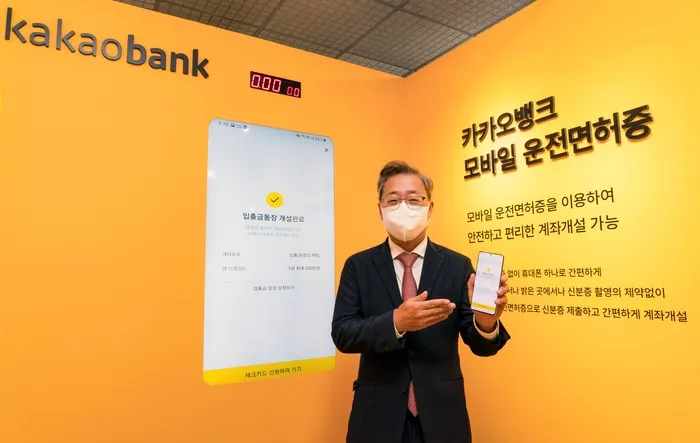
KakaoBank issues mobile driver’s licenses / Source: KakaoBank
According to these banks, replacing the old method—photographing a physical ID during identity verification—with a digital ID stored on the smartphone improves the accessibility of their banking apps. Woori Bank has also launched a digital credential wallet service that uses decentralized identity technology to issue and use professional licenses and certifications.
Beyond blockchain, AI is also making its way into banking apps. On the 28th, Hana Bank introduced an AI banker in its mobile app, Hana 1Q. The AI banker briefs customers on a range of financial information, including financial markets and exchange rate outlooks. Built on deep learning, its mouth movements, gestures, and expressions feel as natural as an explanation from a real bank teller.
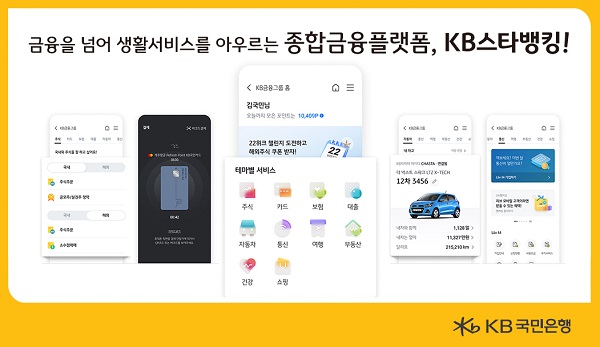
KB Kookmin Bank revamps KB Star Banking to offer everyday-life services / Source: KB Kookmin Bank
KB Kookmin Bank has fully revamped ‘KB Star Banking’ in a bid to transform it into an app centered on daily life. On the 28th, KB Kookmin Bank improved the in-app menu of KB Financial Group services with a UI (user interface) organized around customer interests. The idea is to let customers intuitively access services through 10 categories closely tied to daily life—stocks, cards, automobiles, telecom, and more—so that even customers encountering KB Star Banking’s affiliate content for the first time can use it easily.
Bank Branches Inside Convenience Stores Are Multiplying
One of the hottest topics in banking today is the ‘innovation’ of physical branches, and the heart of that innovation is digitalization. Newly emerging innovative branches sharply reduce or eliminate staff, replacing them with kiosks and smart teller machines (STM) that let customers handle transactions themselves. While conventional ATMs handled little more than deposits, withdrawals, and transfers, STMs can process tasks once reserved for the teller window, such as opening new accounts and issuing debit cards. Customers can even handle some banking after the 3–4 p.m. close of business or on weekends. Banks expect digitalization to cut operating costs while improving consumer convenience.
As of August, the five major banks operated a total of 71 digital innovation branches nationwide—counting unmanned digital branches, branches staffed only by guides, and branches that also run regular teller windows. Unmanned branches account for the largest share (55), many of them conversions of closed conventional branches. At unmanned branches, customers handle their own banking through kiosks and STMs. They can open new accounts, get product consultations, make various account changes, and receive credentials (OTP devices, security cards, and the like); depending on the bank, they can also have bankbooks or debit cards issued and apply for loans. ID verification happens remotely via scanners, and consultations with staff take place by video. Tasks such as overseas remittances are still possible only via mobile or in-person tellers, but banks plan to gradually widen the range of services digital branches can handle.
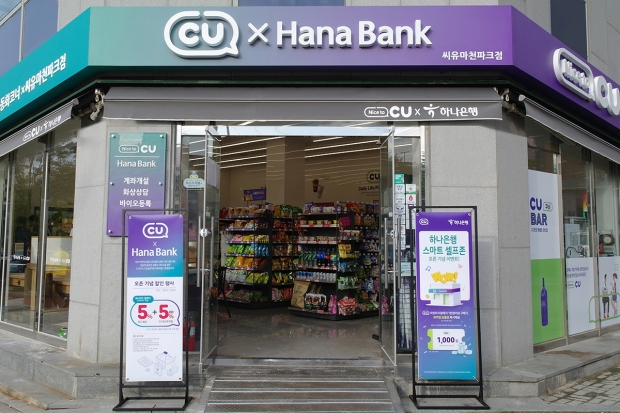
A bank inside a convenience store / Source: Hana Bank
There are also partnership branches located inside convenience stores—a strategy that leverages a key advantage of digital branches: with equipment alone and no teller counter, a ‘mini bank’ can fit into a small space. Shinhan Bank partnered with GS Retail to open its first partnership branch in Jeongseon, Gangwon Province, last October, and this year opened its second and third near Konkuk University in Seoul’s Gwangjin District and in Bukbu-dong, Gyeongsan, North Gyeongsang Province. Hana Bank opened partnership branches with CU in Macheon-dong, Gangdong District, Seoul last year and in Bisan-dong, Anyang, Gyeonggi Province this year, while KB Kookmin Bank opened a partnership branch with E-Mart in Bunpyeong-dong, Cheongju, North Chungcheong Province in May this year.
Insurers Are in the Midst of Digital Innovation
Insurance companies are delivering consumer-centric services through digital innovation.
Same-Day Claims Payment Through AI
The Korea Life Insurance Association said, “Through digitized underwriting procedures, cases eligible for automated review are processed quickly, and steps such as document submission and information collection have been minimized to improve customer convenience.” Review used to take 3 to as many as 10 days; now, after installing the mobile application and completing joint certification, customers can have their National Health Insurance Service checkup history verified and sign up for insurance quickly.
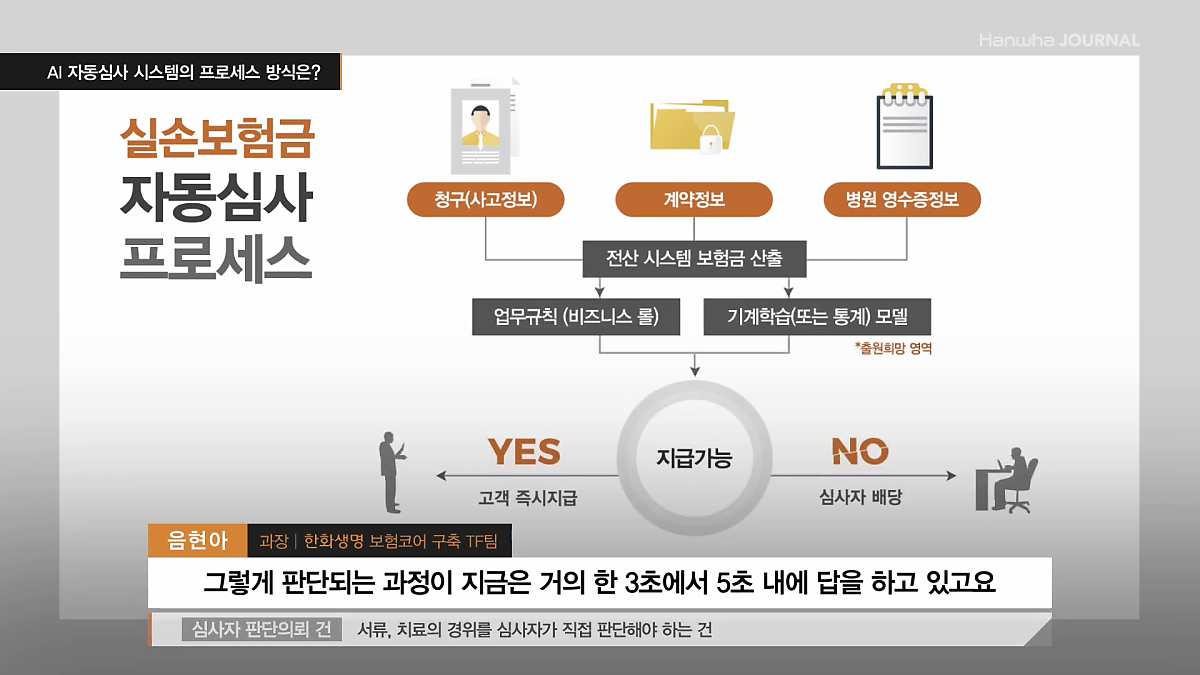
Hanwha Life’s AI automated underwriting system / Source: Hanwha Life
On claims payment, the association noted, “With one-stop financial platforms in operation, claims can be filed via mobile, and AI automated review enables payment on the very day of application, increasing customer benefit.” When filing a claim, entering simple personal information automatically links the hospital’s treatment records, eliminating separate document submission for every type of coverage except death—including diagnoses, hospitalization, and outpatient care.
On policy management, it explained, “With cloud-based digital service counters and integrated customer service apps, customers can now get 24-hour, customer-centered service through video consultations, chatbots, and other contactless channels—without visiting a service center or waiting on a phone consultation.”
24-Hour Service with Digital ARS
Mirae Asset Life Insurance has launched ‘Digital ARS,’ a mobile-only service for quick and easy consultations via smartphone. Accessible 24 hours a day with no call waiting or app installation, it will let Mirae Asset Life customers handle their business more easily, free of business-hour constraints and the inconvenience of waiting for an agent.
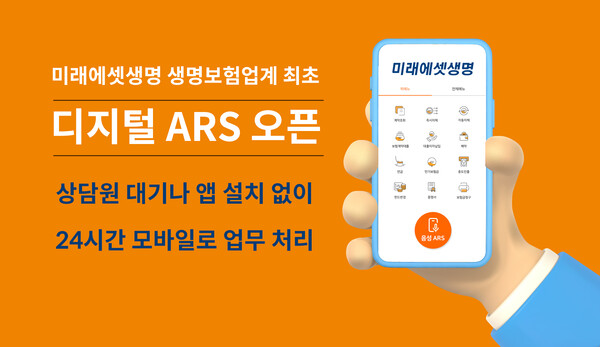
Mirae Asset’s Digital ARS / Source: Mirae Asset
‘Digital ARS’ automatically connects smartphone callers to the digital system, with voice guidance, when they phone the Mirae Asset Life call center. Unlike voice ARS, there is no call waiting, and customers can select tasks on screen and complete them immediately. With no separate sign-up or app installation required, even customers unfamiliar with digital environments can use it comfortably. Those who want an agent can press the ‘voice ARS’ button at any point to complete their business through a representative.
Mirae Asset Life designed the ‘Digital ARS’ screens to be intuitive, improving customer convenience. The tasks expected to be used most—policy inquiries, immediate transfers, loans—are implemented as quick screens to minimize customers’ mobile journeys. Identity verification is kept simple, with easy passwords and Naver certification, to speed things up, and voice guidance on every screen means digitally underserved customers can complete their business without difficulty.
The Era of Digital Construction Begins
Construction sites—long defined by dust and noise—are changing, as builders race to bring ‘smart construction technology’ to their sites. Given the industry’s vulnerability to serious accidents, the digitalization of construction sites is expected to spread as a way to strengthen safety management. The government is also pushing regulatory improvements, judging that the industry’s production base must shift from people and job sites to equipment and factories. With workforce aging a particularly pressing issue, construction companies are hurrying their digital transformation (DT) to prepare for it and reduce safety accidents.
Daewoo E&C Pushes Development of Wearable Robots for Construction
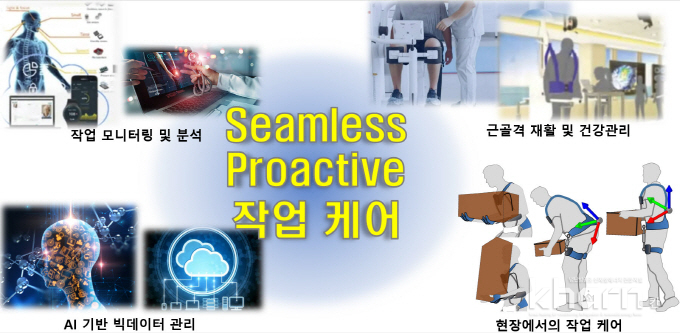
Overview of Daewoo E&C’s wearable robot business model pilot / Source: Daewoo E&C
Daewoo E&C is developing wearable robots for use on construction sites. The plan is to develop worker wearables in two types—waist-support robots and gait-assist robots—and then deploy them in the field. Through this, the company intends to measure the loads transmitted to workers and analyze working hours and task frequency, taking steps to prevent various ailments and sustain productivity.
A Daewoo E&C official said, “Developing wearable robots for construction will go a long way toward preventing safety accidents and raising productivity on sites, and once the robots’ safety and effectiveness are proven, we plan to expand them into other industries. This project is the first achievement of the open innovation program we are pursuing, and we will create more results with outstanding startups to become a leader in smart construction technology.”
Hyundai E&C Builds an AI Disaster Prediction System
Hyundai E&C has built its own ‘AI disaster prediction system’ and is applying it to construction sites nationwide. The system delivers information on past accidents and disasters—vehicle rollovers on icy stretches, falling materials, and more—to site managers. Based on this, work sites carry out preemptive risk inspection procedures.
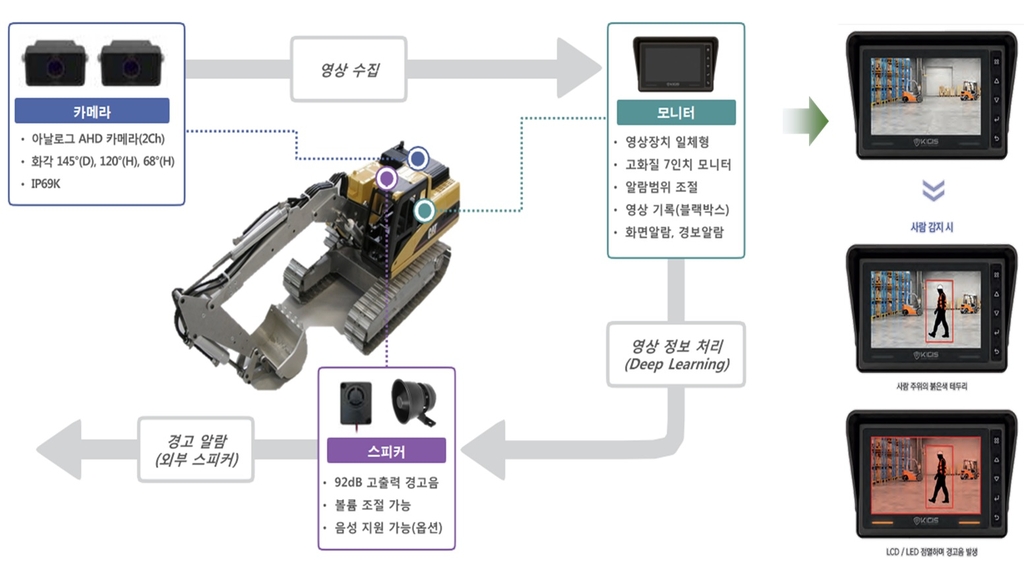
Hyundai E&C’s AI disaster prediction system / Source: Hyundai E&C
For safe tunnel construction, the in-house AI disaster prediction system analyzes safety risks based on big data to manage safety effectively, and the construction stages of the TBM, a specialized machine, have been built into a VR (virtual reality) simulator, allowing every construction step to be experienced virtually along with immersive safety training.
In addition, through HIoS (Hyundai IoT Safety System), an IoT sensor-based safety management system developed with Hyundai E&C’s proprietary technology, and mobile AI CCTV, worker locations are monitored in real time. AI-based worker-recognition cameras have been installed on all wheeled construction equipment on site to prevent caught-between accidents, putting the company at the forefront of preventing worker safety accidents in management blind spots.
Building on this technical know-how, Hyundai E&C is expanding site smartization in stages. Many sites—including the Incheon New Port Phase 1-2 container terminal substructure project, its flagship smart port site—are using advanced smart technologies, contributing to a paradigm shift in the field.
Pharma Accelerates Its Digital Shift
COVID-19 brought sweeping changes to the pharmaceutical industry as well, leading to a variety of initiatives: online platforms for medical professionals, online symposiums, digital brochures, and more. Pharmaceutical companies that are strengthening and leading digital transformation as part of reinforcing contactless business systems are drawing attention.
Handok Builds a Smart Factory
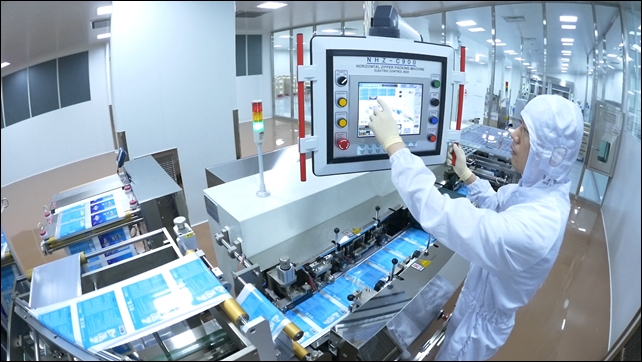
Handok smart factory / Source: Handok
To optimize its digital work processes, Handok carried out a project upgrading its enterprise resource planning system from SAP ERP to cloud-based SAP S4·HANA. This established an IT system built on the latest technology and improved processes, raising the reliability of management information and automating previously manual work to boost efficiency. Handok automated manual and repetitive routine tasks across all areas—finance, costing, sales, production, inventory, and quality—and strengthened system accessibility and user convenience.
It also strengthened the links between systems to improve accuracy and efficiency. In particular, it tightened the integration of the advanced automation systems running in its production plants: the manufacturing execution system (MES), the laboratory information management system (LIMS), and the production planning system (FP). Through this, Handok plans to realize a smart factory in which the plant manages production, process control and repairs, and workplace safety on its own.
The digital strategy office is using the collaboration platform Microsoft Teams to establish a collaborative framework that genuinely helps employees in their work and reduces working hours. On top of this, it is standardizing and redefining user metrics analysis, company-wide master data, and interfaces to advance digital-based work.
Pharma Is Moving to E-Commerce
Pharmaceutical and bio companies are strengthening B2B online malls for pharmacists while also building their own malls and launching D2C e-commerce platforms that sell directly to consumers.
The major companies actively energizing B2B online malls for pharmacists include Hanmi Pharmaceutical, Daewoong Pharmaceutical, Ildong Pharmaceutical, JW Pharmaceutical, and Kwangdong Pharmaceutical. They are broadening their assortments with exclusive products and a wide range of medicines, and support multiple payment methods. They are also winning customers over with each company’s own differentiated services, such as AI product recommendation systems that provide drug information. Thanks to this, Daewoong Pharmaceutical’s ‘The Shop’ mall grew operating profit 41% last year versus 2020, and Ildong Pharmaceutical’s ‘Ildong Shop’ has recorded average growth of 20% over the past three years.
Beyond strengthening B2B online malls, pharmaceutical and bio companies are also actively expanding D2C online mall businesses targeting general consumers. Representative examples include Kwangdong Life Health, Dong-A Pharmaceutical, JW Life Health, and Huons. They mainly sell health functional foods such as vitamins and probiotics, diet and healthcare products, functional beauty and hair-loss products, and feminine hygiene products.
The main reason the pharma and bio industry is shifting to D2C sales is that digital transformation has become the tide of the times. COVID-19 made relatively young MZ-generation pharmacists partial to contactless drug purchasing, and this dovetailed with the industry’s need to raise sales and administrative efficiency by moving online. Payment inconveniences and delivery issues remain to be solved, but most pharmaceutical companies and pharmacists agree that online ordering will gradually become the mainstream.