“Cold air escapes every time the door opens.”
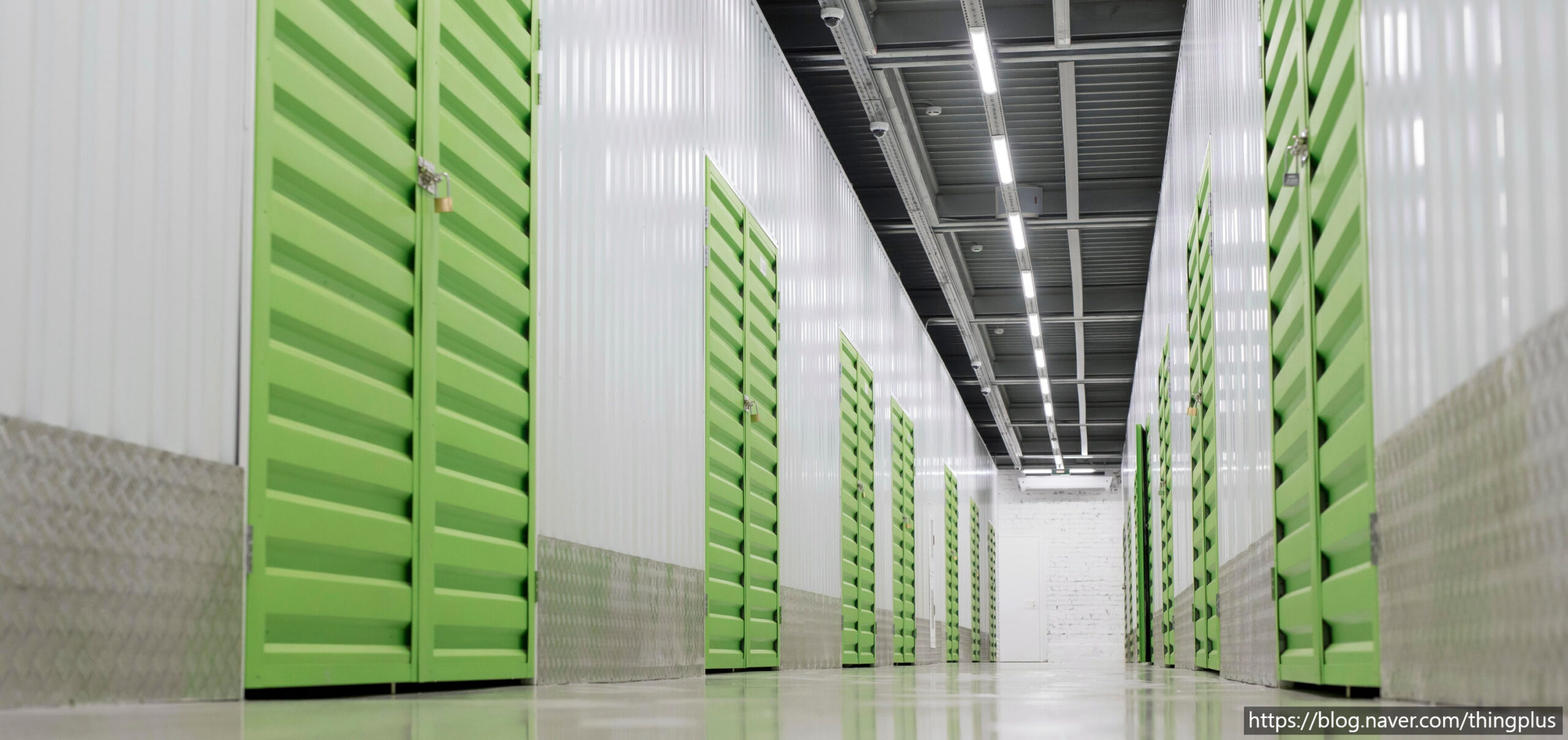
If you have ever managed a refrigerated or frozen warehouse,
“Temperature recovery is far too slow every time the door opens and closes.”
“The more loading and unloading we do, the more the electricity bill soars.”
You have probably heard remarks like these at least once.
In summer in particular, the gap with the outdoor temperature is large,
so when a door opens, the indoor temperature can rise by 2~3℃ in just a few seconds.
The refrigeration units then run at full capacity to restore the temperature,
and a power peak (peak load) occurs within a short time.
As a result,
– Soaring power charges
– Increased equipment strain
– Shortened cooling equipment life
repeat in a vicious cycle.
Why does this happen?
Given the structural characteristics of cold storage,
doors should be opened as little as possible to maintain temperature,
but in real operations, entries are frequent and the movement of people and goods never stops.
Yet the conventional control approach is simple.
“Even when the door opens, the cooling unit keeps running at the same output.”
This results in cooling waste that fails to account for heat loss.
In addition, after cold air is lost, the cooling unit enters the peak power zone,
and cooling efficiency drops sharply.
Can AI control detect even ‘door openings’?

Yes, it can.
An AI-based HVAC control system
does not merely measure temperature;
it analyzes door open/close sensor and temperature sensor data together.
Through this, when the door opens,
“ease cooling briefly, then restore it quickly once the door closes” —
this kind of intelligent control becomes possible.
📍 Example of operation with AI HVAC control applied
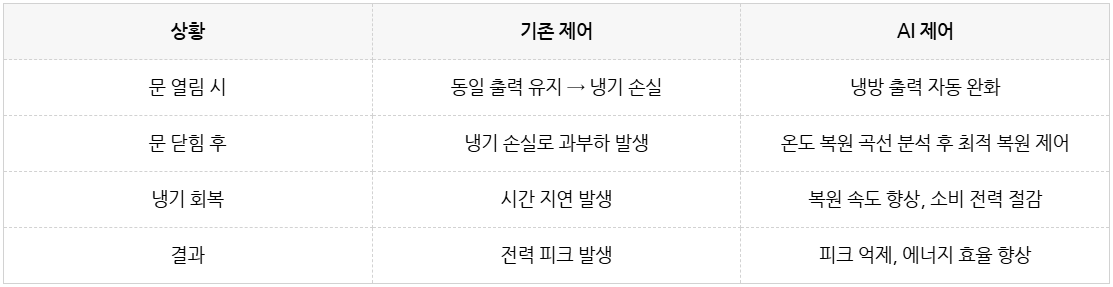
As it learns from this process repeatedly,
the AI can respond to entry frequency, time of day, and outdoor temperature by
adjusting HVAC operating patterns on its own.
How much can be saved?
For logistics centers with frequent door openings,
introducing AI control produces up to 15~20% savings in cooling power.
Suppressing peak load also reduces additional costs under the power tariff structure,
and optimizing refrigeration run time extends equipment life as well.
How much can be saved?
Q. How can cooling waste in cold storage be prevented?
A. By integrating door sensors, temperature sensors, and an AI control system,
cooling output can be adjusted automatically according to door opening and closing conditions.
This minimizes cold air loss and unnecessary energy waste.
Q. Can it be applied without replacing the refrigeration units?
A. Yes, it can.
While keeping the existing HVAC control signals unchanged,
it can be integrated by simply adding an AI control module and sensors.
✅ 2025 Special Event
We are selecting 10 companies to receive a free PoC (proof of concept) service.
Run a quick self-assessment to see if it fits your site, then apply and your application will be reviewed with priority.