Leading the COVID Era: Worker Temperature Monitoring Use Cases
As the COVID-19 pandemic drags on, fatigue is mounting among workers who must comply with distancing and quarantine guidelines. Remote work was widespread early in the pandemic, but workplaces have since settled back into full on-site or hybrid arrangements — so even with far more confirmed cases and a higher risk of infection, workers are more exposed to the virus than before. On top of that, untraceable infections are on the rise, and not knowing when or where they might be infected is fueling workers’ anxiety.
This calls for developing and adopting technologies that let workers practice distancing as part of their daily routine, without inconvenience, and with their safety assured. Accordingly, many companies are investing in technology so that workers can keep doing their jobs safely and conveniently throughout the pandemic.
Worker Safety Management System Case Studies
Coupang: Automated Systems
Coupang has automated its quarantine-related processes, including an automatic temperature check system based on QR codes. Beyond QR-code clock-in and clock-out, employees’ body temperatures are captured automatically via Bluetooth thermometers linked to a mobile app and managed through QR codes. The company says it can check the health status of more than 30,000 workers a day without any manual work and efficiently manage workers who need attention. When a suspected case arises, it can also respond quickly, for example by identifying contacts. QR-code management applies equally to visitors as well as employees.
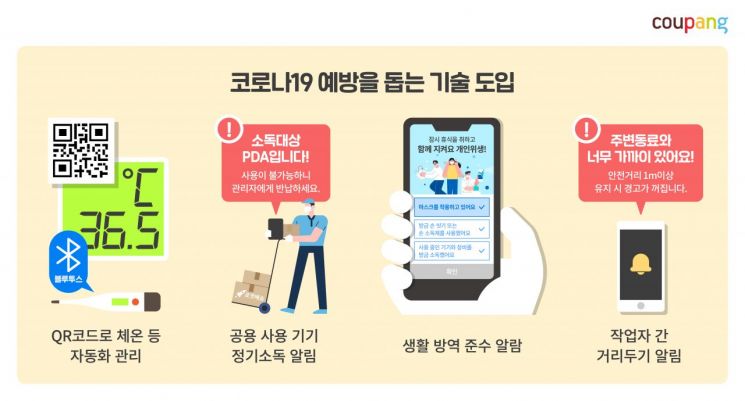
Coupang also uses its app to encourage workers to follow everyday quarantine practices, creating a work environment where people can feel secure. Regular alerts sent to each worker prompt them to wear masks and sanitize their hands, and shared devices such as PDAs and PCs must be disinfected before the next person can use them whenever multiple users are involved. Barcodes attached to work uniforms and shoes track when they were last washed and disinfected. In one example, Coupang developed its own distancing app that runs on workers’ PDAs, creating an environment where safe distances are maintained without workers even having to think about it. The company is also investing in workplace safety, including hiring a roughly 2,400-strong ‘COVID-19 safety monitoring team’.
National Health Insurance Service: Contactless Identity Verification
In response to COVID-19, the National Health Insurance Service became the first public institution to build a contactless identity verification system. For the safety of citizens and staff, it installed camera-based contactless ID scanners at 1,133 service counters across 178 branch offices, 54 satellite offices, and 5 service centers for foreign nationals nationwide.
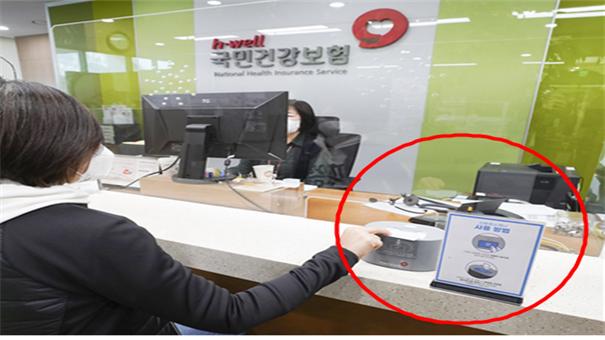
With contactless verification, visitors place their ID on the scanner themselves; it is photographed and displayed on the staff member’s monitor, removing the risk of COVID-19 transmission from handing IDs back and forth and creating a safer environment for citizens and employees alike. For visitors, the improved process means protection against infectious disease, less exposure of personal information, and shorter waiting times — making service centers safer and more convenient to use.
Worker Safety Management System Case Studies
In labor-intensive industries — construction first among them — where large workforces carry out many tasks at once, systematic and effective management and deployment of personnel, along with rigorous safety management, matter more than anything. On construction sites in particular, safety accidents occur frequently due to hazards inherent in the site environment and small moments of worker carelessness, resulting in the devastating loss of valuable human resources.
Worker safety management systems have therefore been actively developed to prevent on-site accidents before they happen and to alert managers and workers to hazardous conditions. With COVID infection now an added concern, the need has grown for systems that efficiently manage not only worker safety but also health status and signs of infection.
Thingplus SmartPatch Service
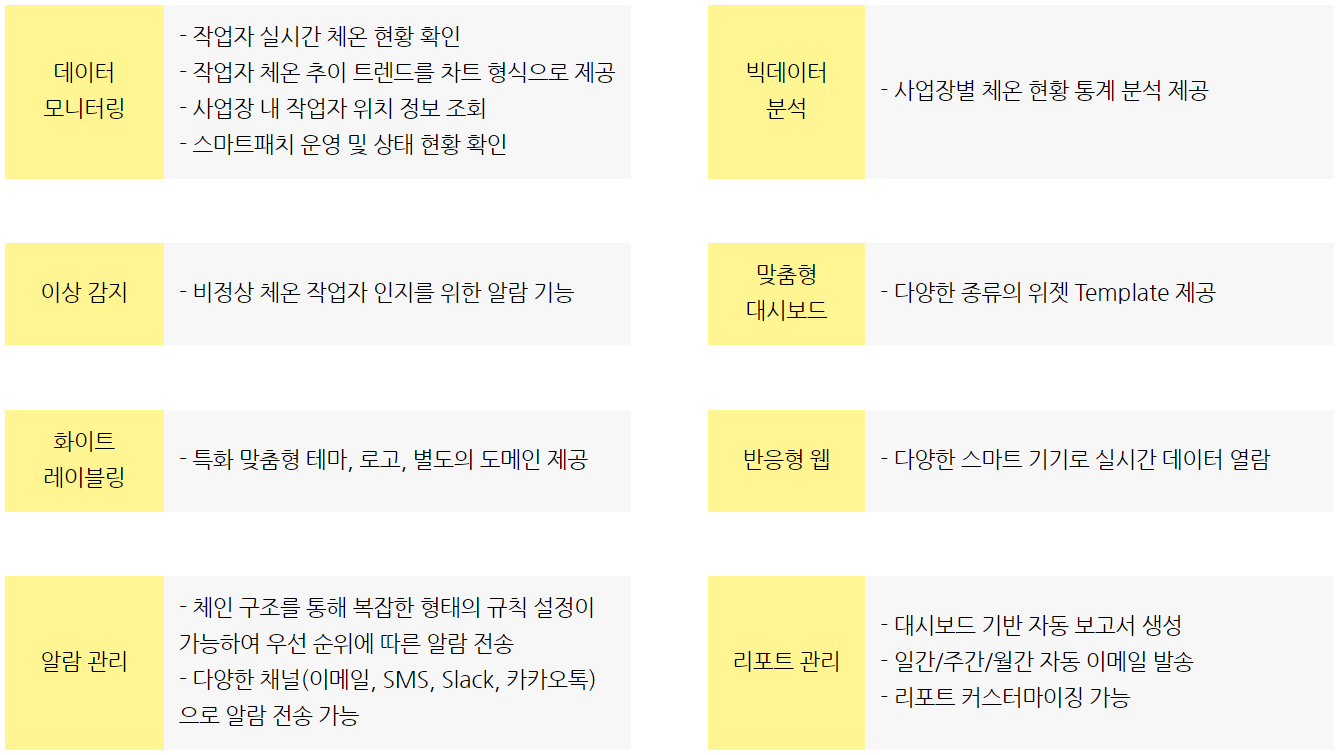
The Thingplus SmartPatch service is an IoT service for real-time monitoring of worker body temperature and for checking worker locations across the worksite. Workers wear a smart patch. The smart patch measures the worker’s body temperature and connects to a smartphone app or gateway, feeding data into the Thingplus IoT cloud platform. Through the dashboard, managers can check the real-time status of personnel and SmartPatch devices and receive statistical reports analyzing temperature trends by worksite. The service also provides alarms that flag workers with abnormal temperatures, enabling an immediate response the moment something is wrong. This makes it possible to prevent infectious disease in advance and improve the workplace into a safer environment for workers.
Key Features
Construction sites bring together workers from many different trades, each performing their own tasks. Compared with the number of workers, managers are extremely few, and in outdoor areas where a site manager’s oversight and control are limited, site personnel are not managed efficiently or accurately. Safety accidents and inefficient workforce management on construction sites drive up overall construction costs, reduce productivity, and extend project timelines.
The SmartPatch service enables efficient worker management. When something is wrong with a worker, you can respond immediately and prevent infectious disease before it spreads.
Thingplus develops systems that build sustainable work environments through IoT and sharpen your safety management competitiveness. Eliminate business risk and put safety management into practice with IoT services that keep your workers safe!