Thingplus Smart Farm: Farm Monitoring and Remote Control
The smart farm business is expected to make agriculture more efficient across the board — raising productivity and improving crop quality — by applying the foundational technologies of the Fourth Industrial Revolution to a farming sector struggling with labor shortages from rural depopulation and aging, shifting cropping systems driven by climate change, and rising pest and disease pressure. The stronger agricultural competitiveness this brings is seen as a way to withstand the market-opening pressures of globalization.
Shall we take a look at the Thingplus smart farm service, which monitors the farm environment in real time as it shifts with a range of external factors and creates the optimal growing environment through automatic equipment control based on growth environment data?
What Is a Smart Farm?
A smart farm is commonly defined as:
1. Agriculture capable of autonomous control, built around information processing and control capabilities
2. A farm that applies information and communication technology to greenhouses, livestock barns, orchards, and more, allowing the growing environment of crops and livestock to be properly controlled remotely and automatically
In general, the aim is to optimize the growing environment of crops and livestock to improve efficiency and effectiveness, applying science and ICT across the entire agricultural value chain.
Thingplus Smart Farm Service
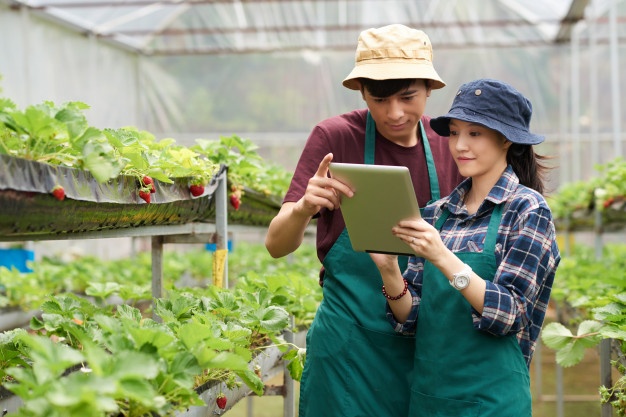
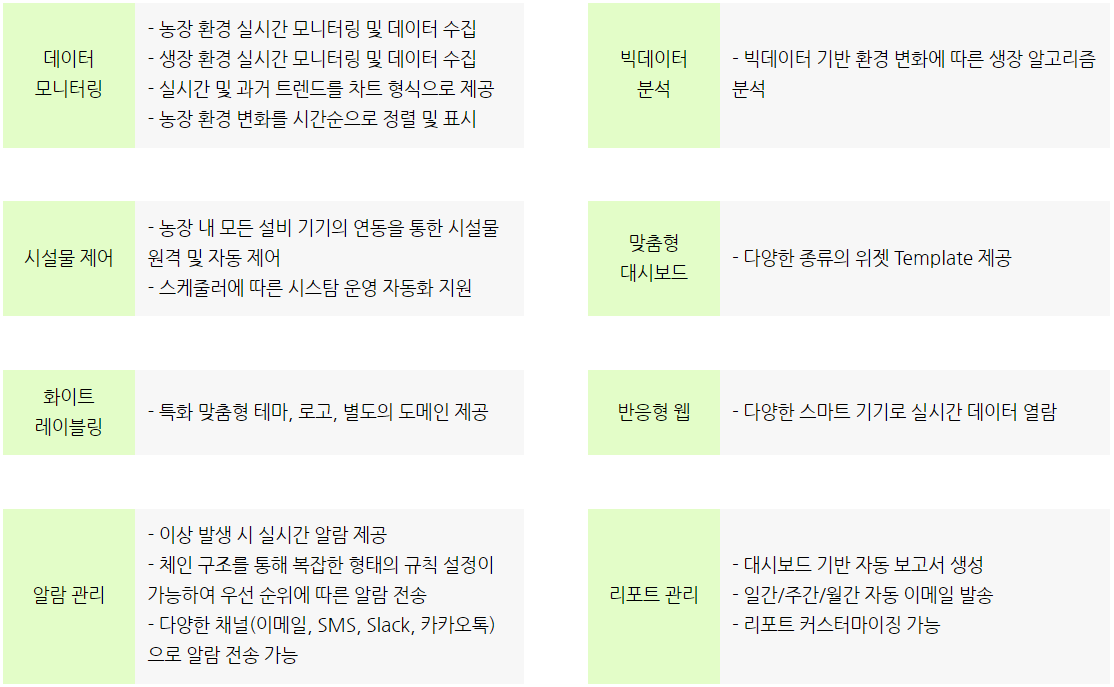
The Thingplus smart farm service is an IoT service for real-time farm environment monitoring and for creating the optimal growing environment. It brings the valuable data generated on the farm into a digital environment, visualizes it so users can put it to work, and supports controlling facilities as the farm environment changes. It is also customizable, making it easy to develop new features to a client’s requirements and to deliver a tailored service optimized for the client’s environment.
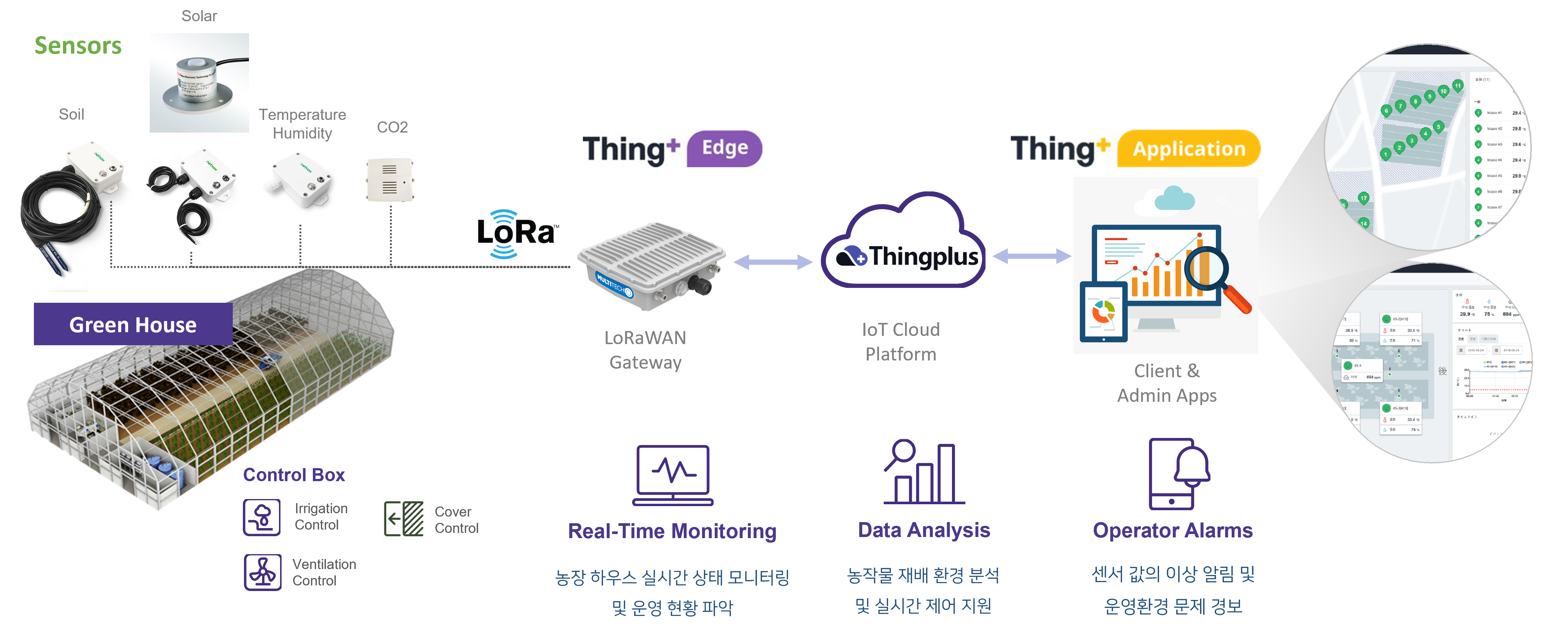
Key Features
The farming population continues to shrink, with elderly households making up a growing share, while the number of large farms is rising — driving rapid polarization between small-scale elderly farm households and large-scale farms run by middle-aged operators. Weather is arguably the most important factor in agricultural production, and the global temperature rise and deepening weather uncertainty brought on by climate change are multiplying the changes and risks in the production environment.
Smart farms are becoming increasingly essential — not only to minimize labor and improve profitability, but also to monitor in real time the changes in a production environment made ever more uncertain by climate change and to support the decisions that make optimal farm management possible.
Thingplus supports the entire process of adopting a smart farm service — from consulting and service / system design to communications / device recommendations and service delivery. Bring in Thingplus and cover every aspect of smart cultivation!