This is Part 8 of the series ‘Cooling Cost Savings Strategies You Can Start Today.’
Part 1: 🌡️ Does the Bill Balloon the More You Run the AC? How to Save with HVAC AI
Part 2: 💨 Smart Cooling Even for Franchise Stores: The Savings Potential of IR Control
Part 3: 🧍♂️ Factory Cooling That Switches Itself On and Off: The Evolution of Occupancy Detection
Part 4: 🎛️ Remote or Wired? A Comparison of AC Control Methods
Part 5: 💰 Cut Cooling Costs with Government Support! Energy Efficiency Strategies for Small Businesses and Factories
Part 6: ⚠️ More Than Cooling — AI HVAC Management That Detects Power Anomalies and Equipment Faults
Part 7: 🌱 Cutting Carbon with a Single HVAC Unit? A Savings Solution Tied to ESG Management
Why HVAC Load by Industry Matters
HVAC is essential in every industry, but load share and operating patterns differ sharply by sector. Cold-storage warehouses must hold a constant temperature 24 hours a day, and manufacturers depend on cooling for production stability and worker safety. Franchise stores, meanwhile, tie cooling directly to customer dwell time and sales, while military bases and public facilities extend it into policy KPIs and ESG metrics.
Understand your industry’s characteristics and apply AI-based HVAC control accordingly, and both the savings potential and the ripple effects change.
Savings Potential Compared Across Industries
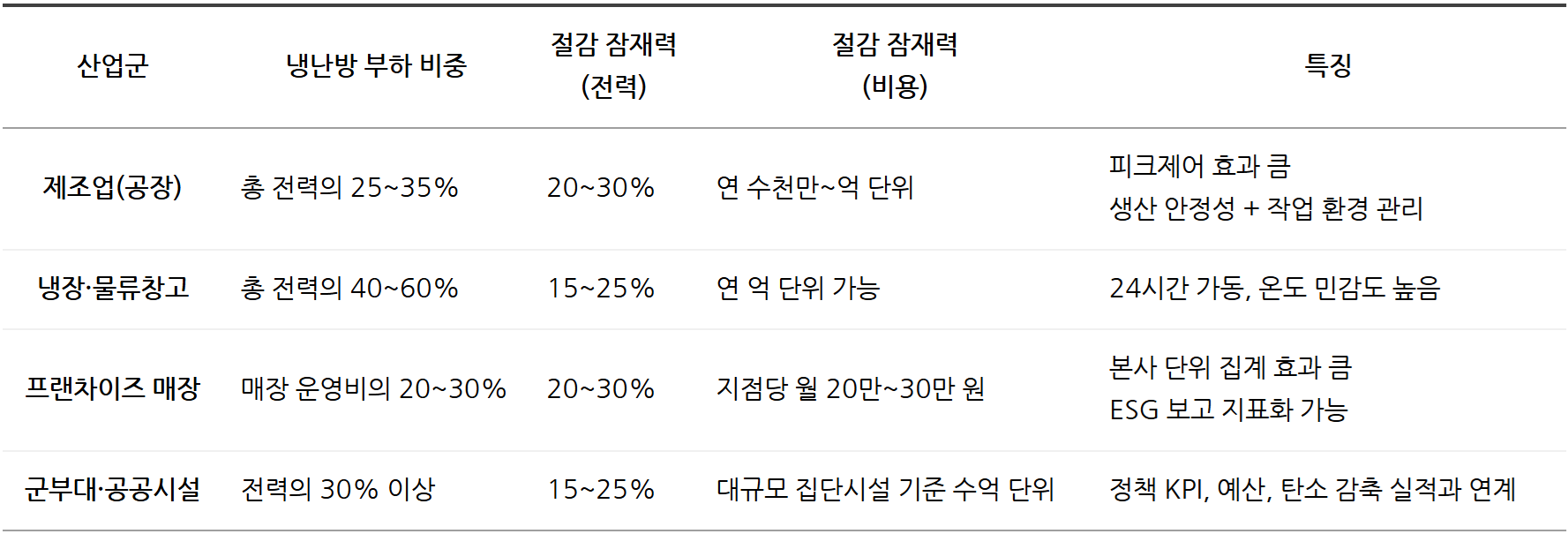
📌 Savings vary with site size, operating hours, and HVAC specifications; actual results should be confirmed through a preliminary assessment
HVAC Management Points by Industry
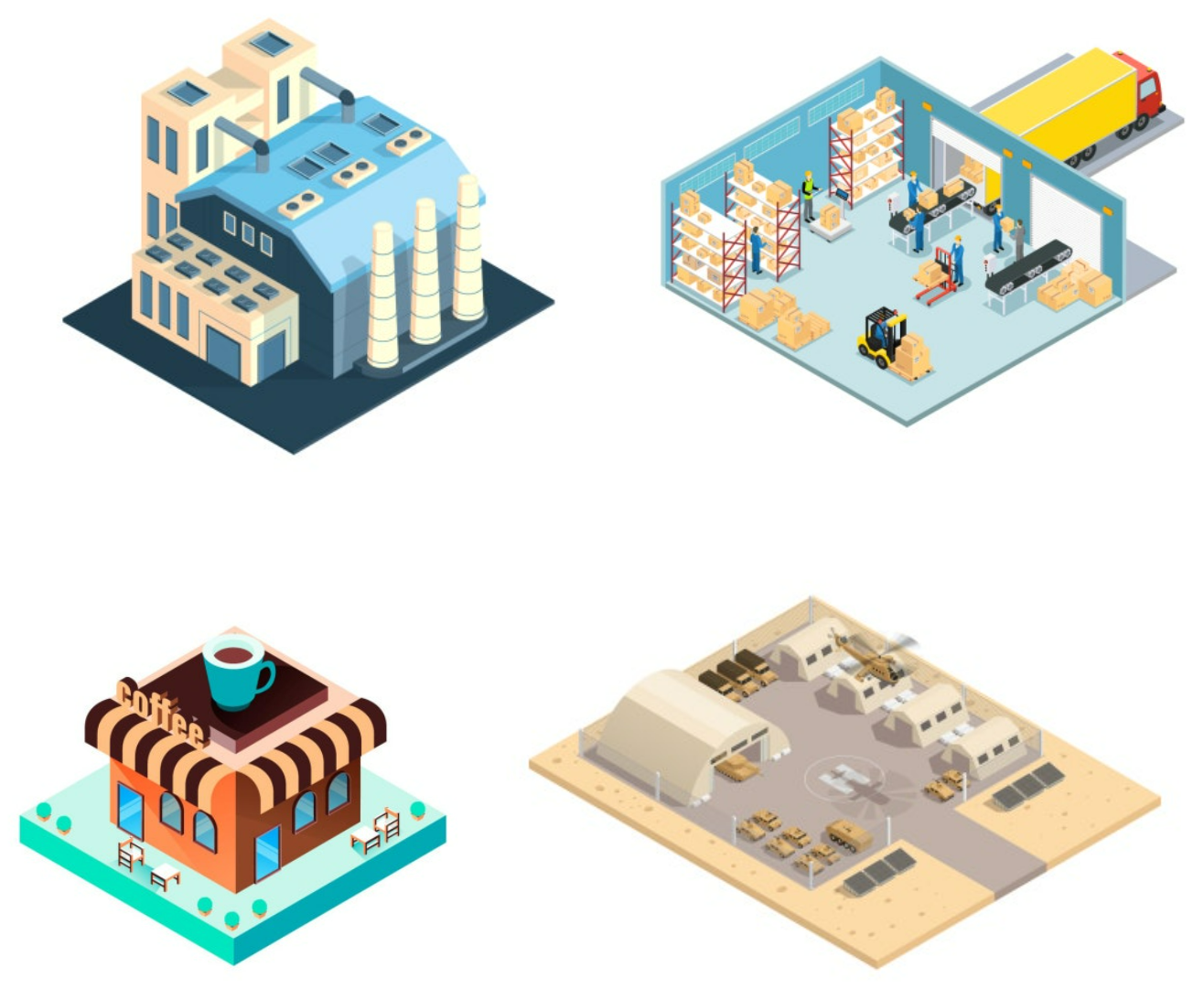
– Manufacturing: peak power control and equipment schedule optimization determine ROI
– Cold storage: basic efficiency improvements alone yield major savings; temperature stability is key
– Franchise: per-store automation + headquarters aggregation strengthen management efficiency and ESG reporting
– Military/public facilities: independent control across large zones → policy KPI achievement and carbon-neutrality results
Pre-Adoption Checklist
☑️ What share of the load does HVAC represent in our industry?
☑️ How much of our annual electricity bill goes to HVAC?
☑️ Do energy savings connect to quality, customer experience, or policy outcomes?
☑️ Do we plan to use ESG reporting or government support programs?
Conclusion: Know Your Industry’s Expected Returns Before You Start

In every industry, HVAC control is an investment with clear ROI — but the savings vary greatly with each sector’s characteristics.
The AI-based Energy Saving solution provides optimization strategies tailored to each industry, going beyond simple savings to deliver competitiveness, ESG, and policy results as well.
✅ Recommended Reading
Does the Bill Balloon the More You Run the AC? How to Save with an AI-Based HVAC Control System