For manufacturers running smart factories, raising energy efficiency alongside process automation is essential. Cutting energy costs, in particular, is a key factor in improving operational efficiency and strengthening profitability. In this post, we look at how a precision parts manufacturer (Company A), a chemical manufacturer (Company B), and a pharmaceutical manufacturer (Company C) each adopted a FEMS (Factory Energy Management System) and successfully cut their energy costs.
Precision Parts Manufacturer Company A – An HVAC Cost Savings Success Story
The Problem: Seasonal Spikes in Heating and Cooling Costs
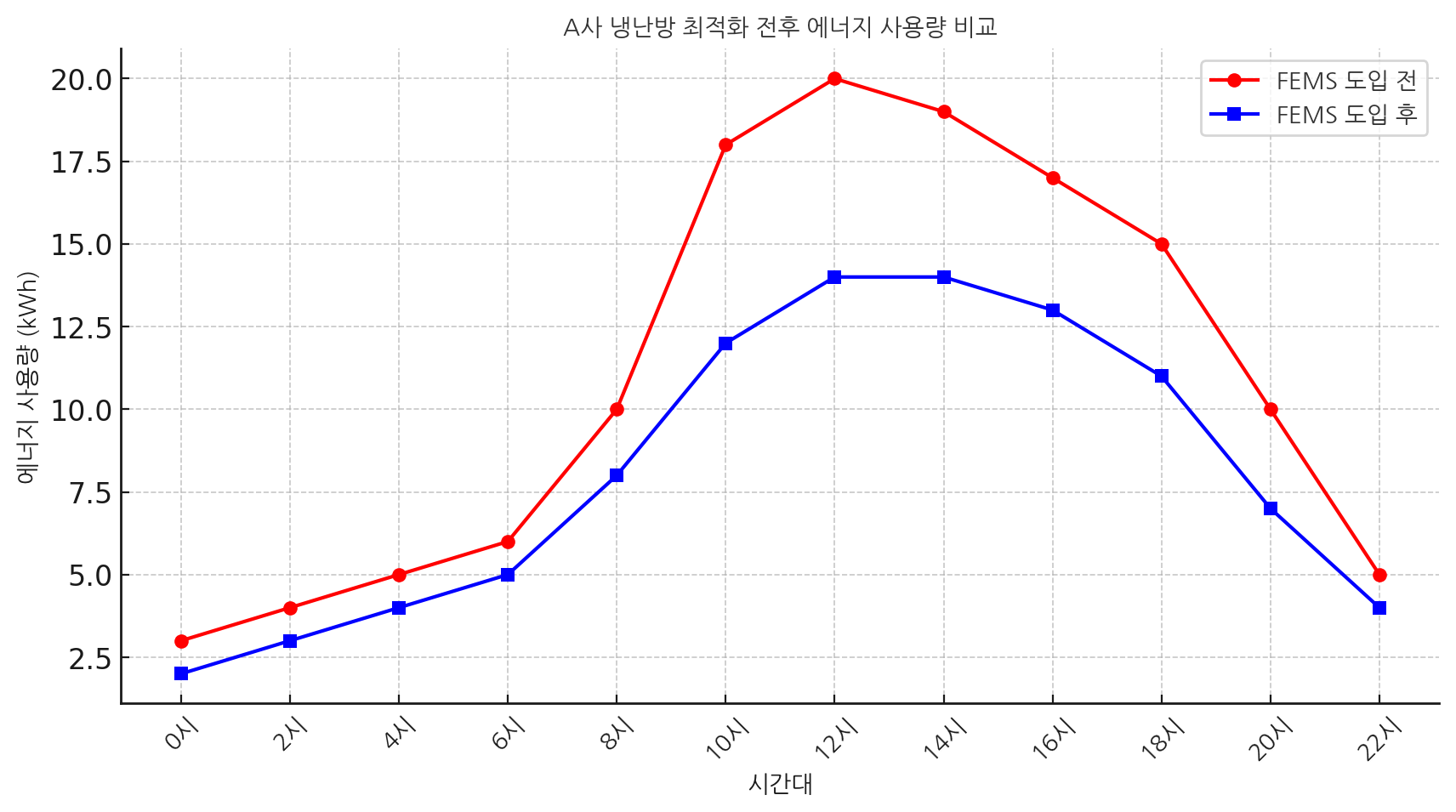
Company A manufactures precision parts, and temperature and humidity control are essential to its processes. But heating and cooling costs spiked with the seasons, putting a heavy annual energy burden on the company. In summer and winter especially, average monthly electricity bills frequently exceeded KRW 50 million.
The Solution: An Automated HVAC Control System
After adopting FEMS, Company A put the following automation in place.
– Automatic HVAC control based on indoor temperature and working hours: heating and cooling run only during the hours employees are on site
– Real-time temperature adjustment using IoT sensors: temperatures are sensed zone by zone so only specific work areas are heated or cooled
– HVAC overload prevention: energy use beyond what is needed is cut off
The Result: Power Costs Down 20%
– In the six months after adopting FEMS, monthly power costs fell from around KRW 50 million to around KRW 40 million
– Reduced unnecessary HVAC operation cut operating costs and extended equipment life
Chemical Manufacturer Company B – An Air Compressor Optimization Story
The Problem: Rising Air Compressor Operating Costs
Company B runs a chemical manufacturing plant where the continuous operation of air compressors was driving excessive power consumption. On top of that, air leaks and unnecessary compressed air use were causing tens of millions of won in energy losses every year.
The Solution: Air Compressor Optimization
Using FEMS, Company B analyzed its compressors’ operating patterns and implemented optimization measures.
– Adjusted compressor operating hours: automatic shutdown outside working hours
– Prevented compressed air losses: air leak detection and optimized maintenance intervals
– Introduced smart timers: compressors run only when needed
The Result: Over KRW 15 Million Saved Annually
– After compressor optimization, annual power costs fell by KRW 15 million
– Resolving the air leak problems improved productivity and safety
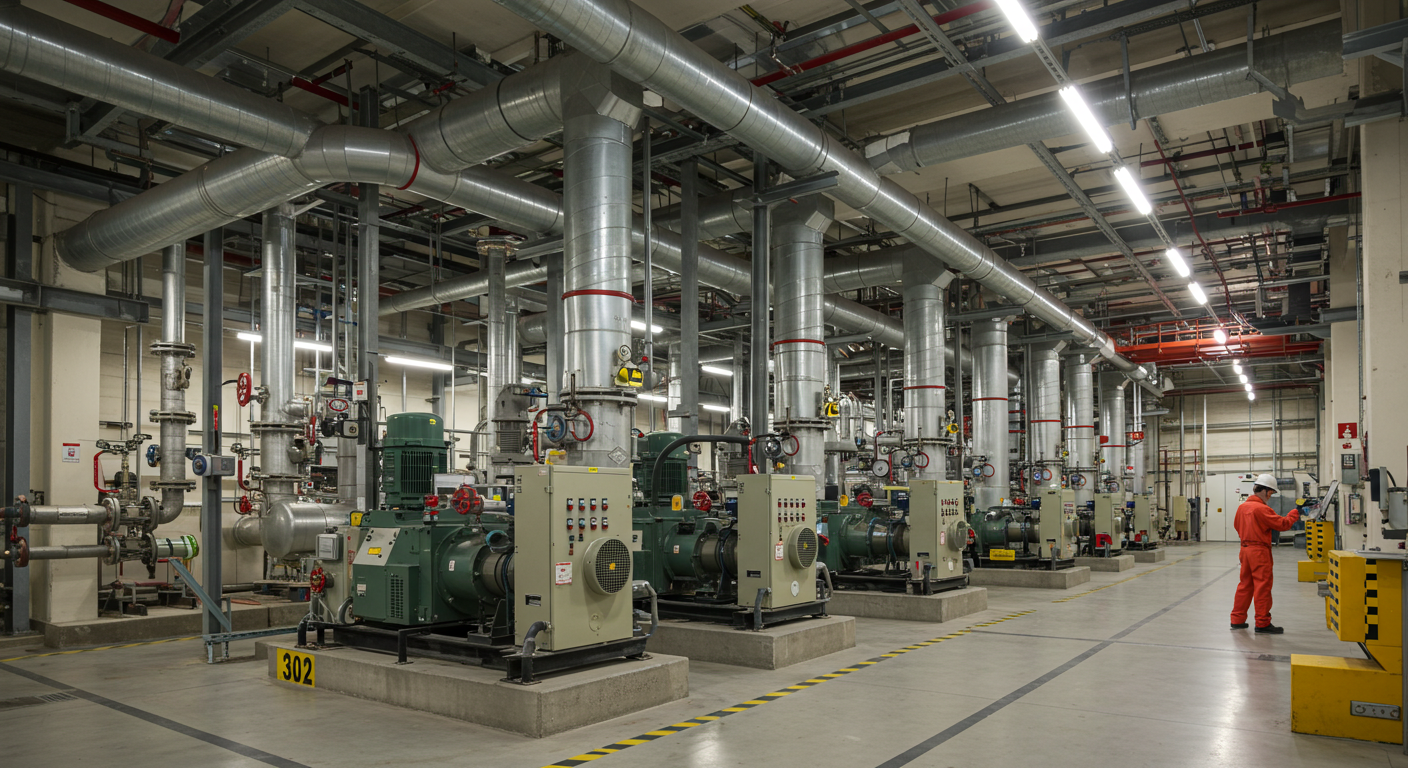
Company B’s air compressor
Pharmaceutical Manufacturer Company C – A Peak Power Management Success Story
The Problem: Soaring Electricity Bills from Exceeding Peak Power
Company C manufactures pharmaceuticals and relies on a wide range of equipment essential to its processes. But starting all of that equipment at once at the beginning of the workday sent peak power soaring. Exceeding peak power pushed up the unit price of electricity and inflated the company’s total power bill.
The Solution: A Peak Power Management System
Company C used FEMS to analyze real-time power usage patterns and took the following steps.
– Rearranged equipment start-up order at the beginning of the day: power-hungry equipment starts sequentially
– Applied automatic peak power detection: real-time monitoring triggers automatic adjustment when overloads occur
– Distributed the power load: usage concentrated in specific time slots is spread out
The Result: Electricity Bills Down 18%
– After adopting FEMS, electricity bills fell by an average of 18%
– The extra costs from exceeding peak power were eliminated
– Optimized morning start-up procedures improved the working environment
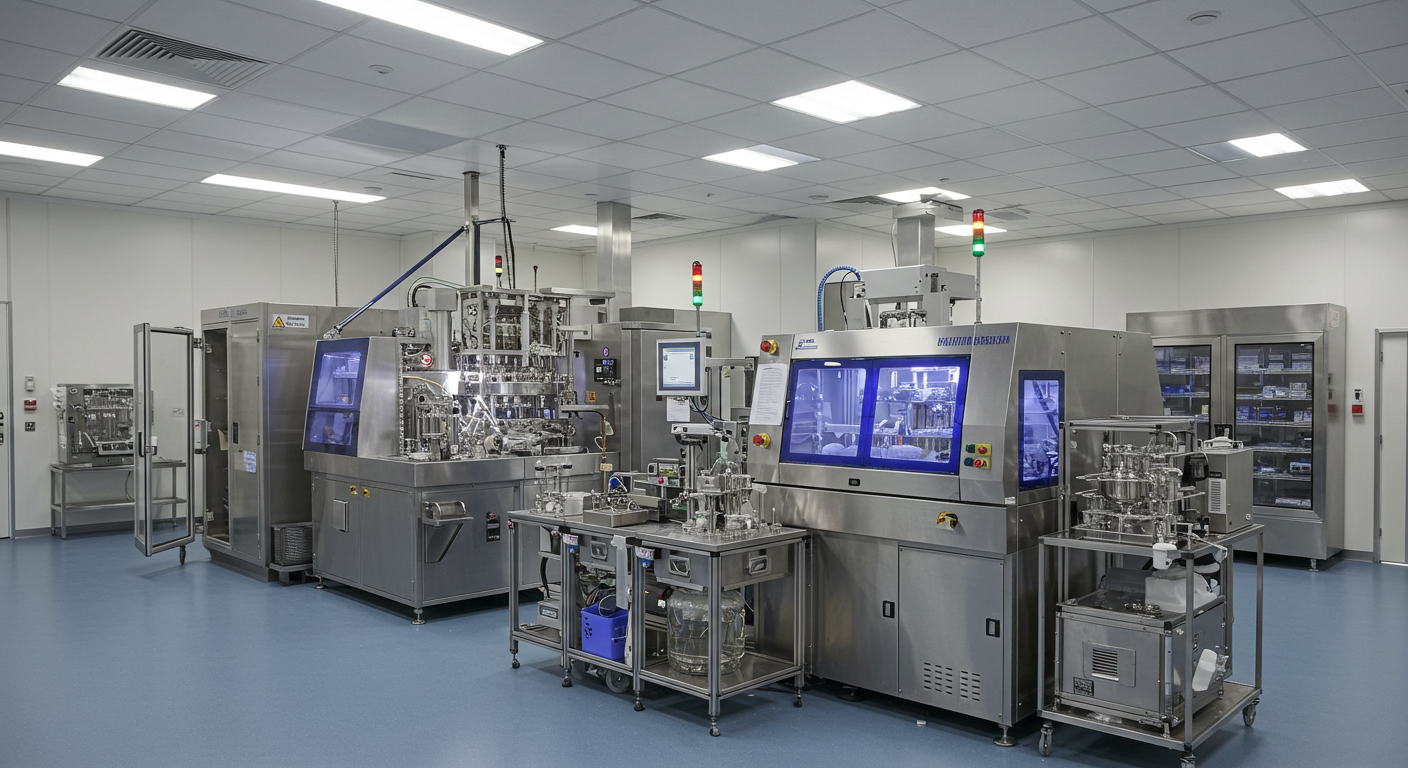
A photo of a facility similar to Company C’s interior. 🙂
Conclusion: Energy Savings and Operational Efficiency with FEMS
As the stories of Companies A, B, and C show, FEMS can deliver tailored energy-saving solutions across many kinds of manufacturers. Energy consumption patterns differ from company to company, but with FEMS’s real-time monitoring and automation, unnecessary costs can be cut and operational efficiency maximized.
Small and mid-sized manufacturers, too, can achieve cost savings and productivity gains at the same time by adopting FEMS, and government support programs can ease the initial investment burden. If your company is looking for ways to save energy, why not take a serious look at adopting FEMS?