Energy is one of the most significant cost factors in manufacturing. For companies running smart factories in particular, maximizing energy efficiency to raise productivity and cut costs is essential. To meet this challenge, manufacturers are adopting FEMS (Factory Energy Management System). FEMS has established itself as a core technology that monitors and optimizes a factory’s energy use in real time to eliminate unnecessary waste. In this post, we look at what FEMS is and at the energy-saving technology it brings to the smart factory.
1. What Is FEMS?
FEMS (Factory Energy Management System) is a system for managing and saving energy efficiently in a smart factory. It monitors and analyzes the factory’s consumption data for electricity, gas, water, and other energy sources in real time and recommends the optimal way to use energy.
It is also worth emphasizing that FEMS goes beyond simple energy savings to contribute to factory safety and to ESG (Environment, Society, Governance) management. For example, an effective approach is to collect real-time data using digital power meters, temperature sensors, pressure sensors, and dry contact sensors, and to run automated energy savings and equipment maintenance on top of that data.
Recent research points to an ever-expanding role for FEMS built on IoT sensors, with particular attention on LoRa-network device connectivity enabling low-cost, long-range, real-time monitoring. FEMS can also automatically watch the operating status of key factory equipment (for example, air compressors, HVAC systems, and chemical storage), improving equipment safety and energy efficiency at the same time.

Architecture and UI of EnergyQ, the Daliworks FEMS solution
2. Why Is FEMS So Effective at Saving Energy?
FEMS does more than save energy: it ties energy to factory productivity and delivers the optimal way to operate. Its main advantages are as follows.
– Real-time monitoring: See the factory’s energy usage patterns in real time and cut unnecessary consumption.
– Data-driven analysis: Analyze energy usage data to identify the processes that need improvement.
– Automatic control: Adjust energy consumption automatically according to the targets you set.
– Maintenance support: Detect inefficient equipment early and optimize maintenance.
– ESG contribution: Continuously collect and analyze environmental data to help cut carbon emissions and strengthen sustainability.

Installation of a power meter, a FEMS component
3. How to Save Energy with FEMS in a Smart Factory
There are several ways to use FEMS to save energy in a smart factory.
3.1 Analyze and Optimize Energy Consumption Patterns
Collecting and analyzing energy usage data by time of day and by piece of equipment through FEMS reveals where consumption is unnecessary. Examples include reducing non-essential equipment operation during peak hours, or switching to low-power mode at night. In one real case, equipment was found cycling periodically during idle overnight hours, and power management was tightened as a result.
In addition, IoT sensors on a LoRa network enable more precise monitoring, and consolidating data across the whole factory yields even more effective energy-saving measures.
3.2 Apply Automated Energy-Saving Systems
Linked with smart sensors and IoT technology, FEMS can adjust energy use automatically. For example:
– Control lighting and HVAC in real time to prevent unnecessary power use
– Adjust variable frequency drives (VFDs) and similar devices according to equipment utilization to keep power consumption optimal
– In one case, analyzing an air compressor’s operating pattern and applying a timer cut unnecessary run cycles by more than 60% and saved energy.
3.3 Analyze Equipment Efficiency and Optimize Maintenance
FEMS analyzes the energy efficiency of individual pieces of equipment, identifying inefficient machines early. Proactive maintenance on that basis prevents energy waste and raises productivity as well.
In one real case, two identical machines both appeared to be running normally, but power metering revealed that one was drawing excessive power; an inspection found the fault and it was repaired.
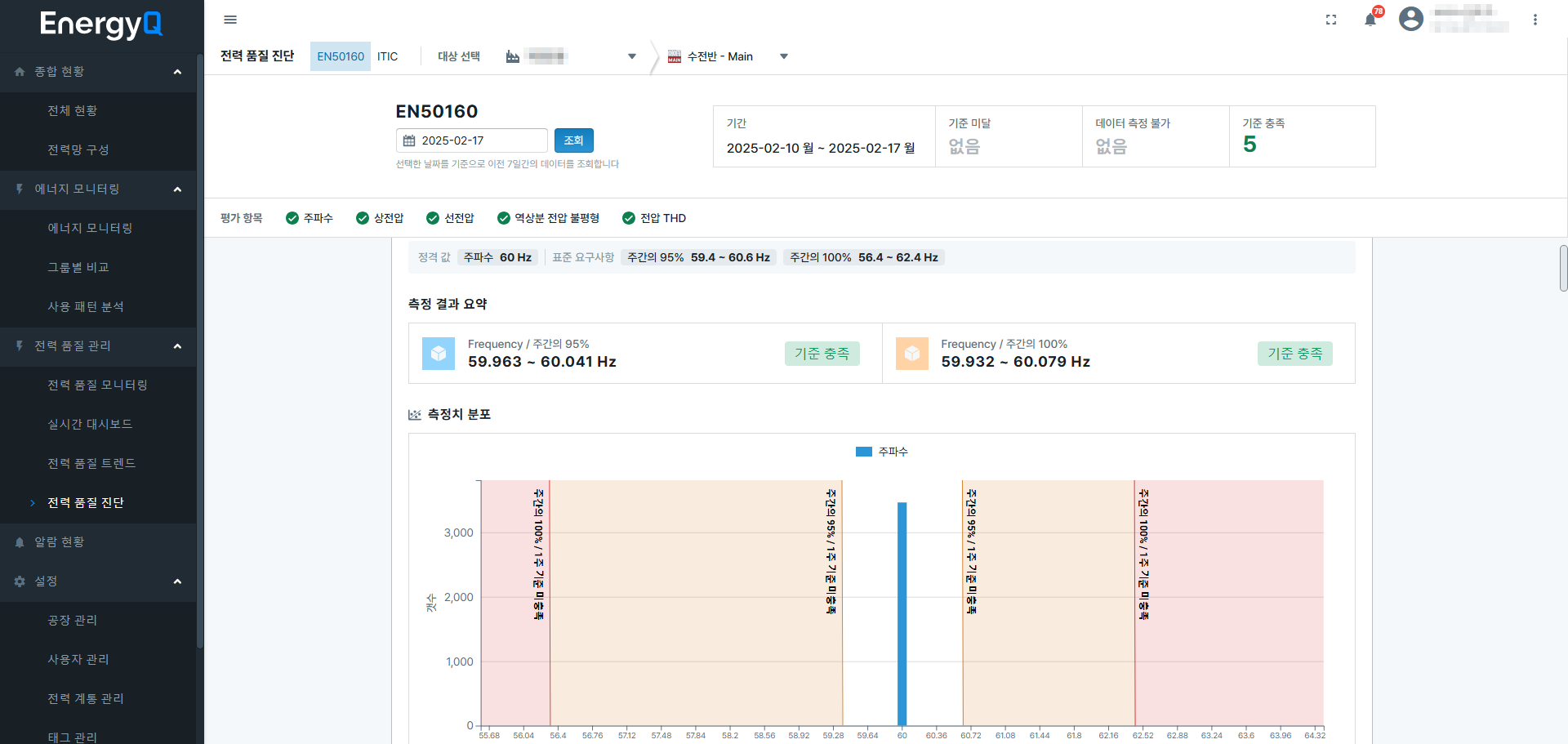
Power quality diagnostics in FEMS
4. What to Expect from Adopting FEMS
Adopting FEMS brings benefits like these.
– Lower energy costs: Cutting unnecessary energy waste reduces a manufacturer’s operating costs.
– Longer equipment life: Optimal operation and maintenance extend the life of equipment.
– Environmental protection: Energy savings cut carbon emissions and build greener production processes.
– Government incentives: Some countries offer tax breaks or subsidies to companies that adopt energy-saving systems.
– Improved safety: Real-time monitoring with IoT sensors helps prevent accidents such as equipment overloads, fires, and hazardous gas leaks.
5. Conclusion
FEMS has become an essential element of the smart factory, playing a major role in cutting manufacturers’ costs and raising sustainability through efficient energy management. Beyond simple energy savings, automated systems built on IoT sensors and LoRa networks make truly smarter operations possible.
If your company wants to run energy efficiently in a smart factory, take a serious look at adopting FEMS today!