Challenges Faced During Motor Diagnostics and How to Solve Them
Motors play a central role in a wide range of industrial and household machinery. Over time, however, performance degradation and failures can occur, making periodic diagnostics essential. This article covers the most common problems encountered during motor diagnostics and effective ways to solve them.
Common Problems During Motor Diagnostics
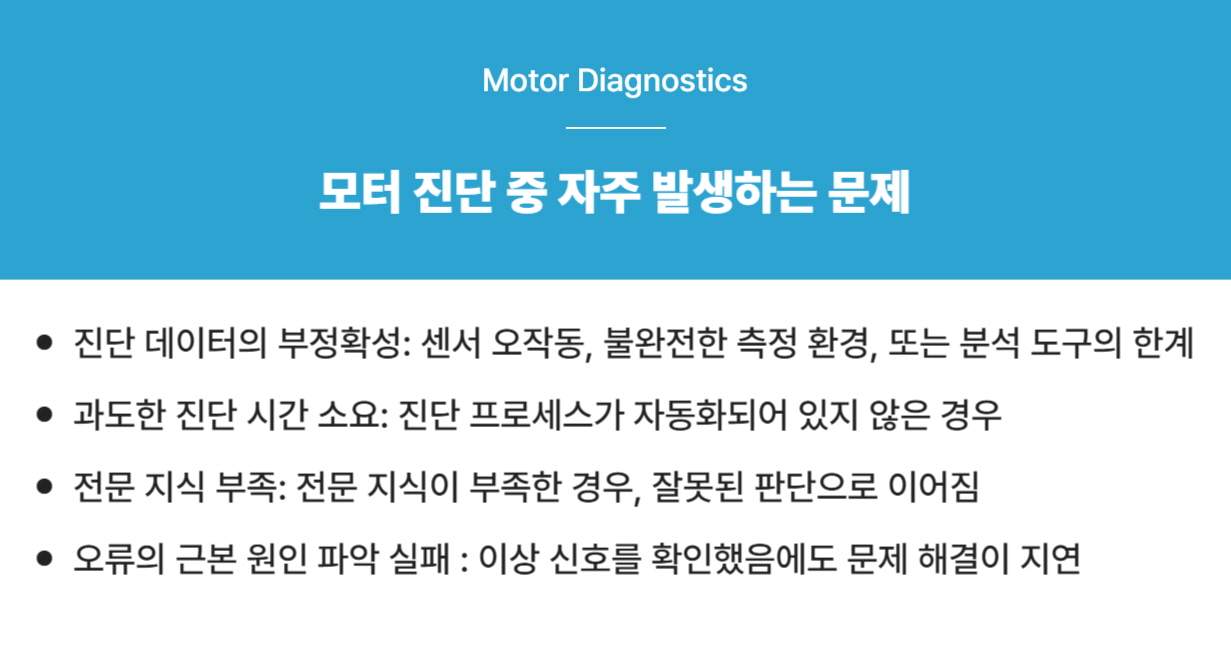
1. Inaccurate Diagnostic Data
Without reliable data, it is difficult to pinpoint the cause of a motor problem. Common culprits include sensor malfunctions, imperfect measurement conditions, and the limitations of analysis tools.
– Example: Environmental noise contaminating vibration analysis data during collection.
2. Excessive Diagnostic Time
When motor diagnostics proceed slowly, downtime increases and productivity suffers. The problem is especially severe when the diagnostic process is not automated.
3. Lack of Specialized Expertise
Diagnostic tools are sophisticated, but without the expertise to interpret their output, they can lead to incorrect judgments.
4. Failure to Identify the Root Cause
Even when diagnostics confirm an abnormal signal, the root cause often goes unidentified, delaying resolution.
– Example: Difficulty determining whether motor overheating stems from an electrical or a mechanical issue.
Effective Solutions
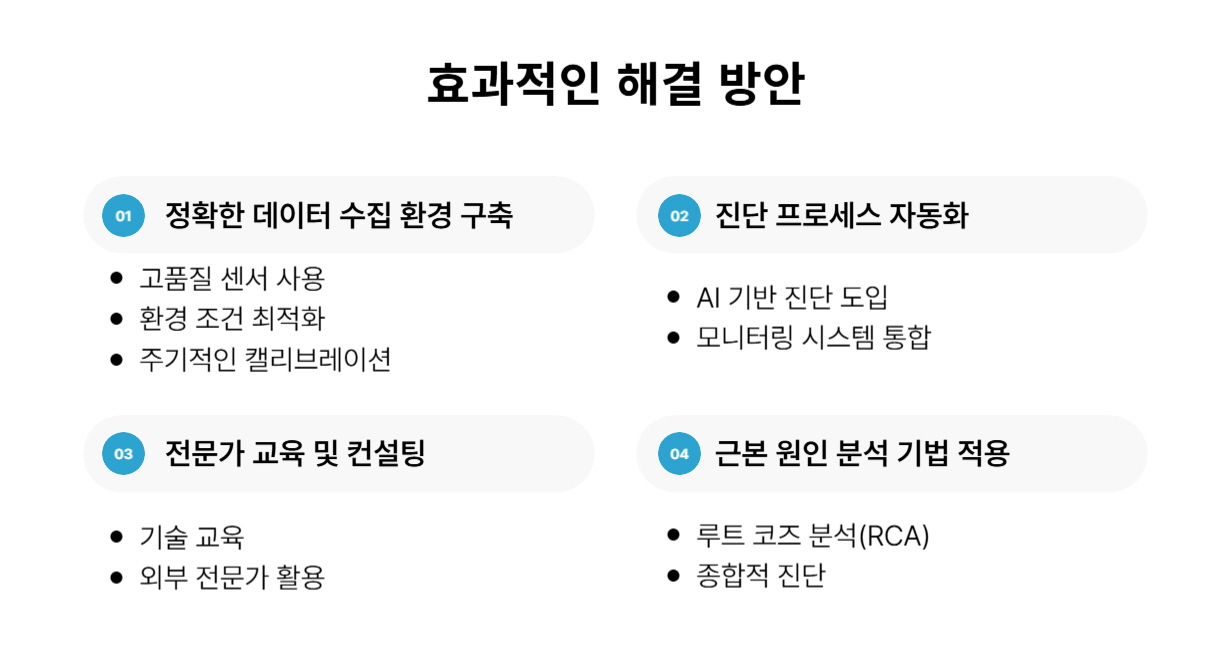
1. Build an Accurate Data Collection Environment
– Use high-quality sensors: Choose sensors that reduce noise and deliver high precision.
– Optimize environmental conditions: Minimize external vibration and noise during measurement.
– Calibrate periodically: Regular checks are needed to maintain the accuracy of sensors and diagnostic equipment.
2. Automate the Diagnostic Process
– Adopt AI-based diagnostics: Use artificial intelligence solutions that analyze data and identify abnormal patterns.
– Integrate monitoring systems: A monitoring system that provides real-time data can significantly shorten diagnostic time.
3. Expert Training and Consulting
– Technical training: Systematic training is needed on how to use diagnostic tools and analyze data.
– Engage outside experts: Resolve complex problems through consulting with external specialists.
4. Apply Root Cause Analysis Techniques
– Root Cause Analysis (RCA): Structurally analyze the core cause behind the problem.
– Comprehensive diagnostics: Check electrical, mechanical, and thermal issues individually, then make an overall judgment.
Closing Thoughts
The problems that arise during motor diagnostics are varied. Solving them requires combining multiple diagnostic methods and strengthening data analysis capabilities. Regular system inspections and maintenance are also essential to ensure system reliability.
✅ Recommended Reading
Motor Diagnostic Equipment Guide: Essential Tools and Selection Criteria