Data Collection and Processing for FEMS Predictive Analytics
A Factory Energy Management System (FEMS) is an essential tool for manufacturers looking to boost energy efficiency and cut costs. At its core, FEMS collects and analyzes vast amounts of data to forecast future energy consumption and establish optimal energy management strategies. This article takes an in-depth look at data collection and processing methods for FEMS predictive analytics and presents strategies for effective data management.
1. Data Collection Methods
To run predictive analytics in a FEMS, collecting high-quality data comes first. The data a FEMS needs to collect falls broadly into the following categories.
– Energy consumption data: Consumption by energy source — electricity, gas, steam, and more — both real-time and historical
– Production data: Everything related to production activity, including output, utilization rates, product types, and process stages
– Environmental data: Data affecting the production environment, such as temperature, humidity, and outdoor conditions
– Equipment data: Data on equipment condition, including operating hours, maintenance records, and failure history
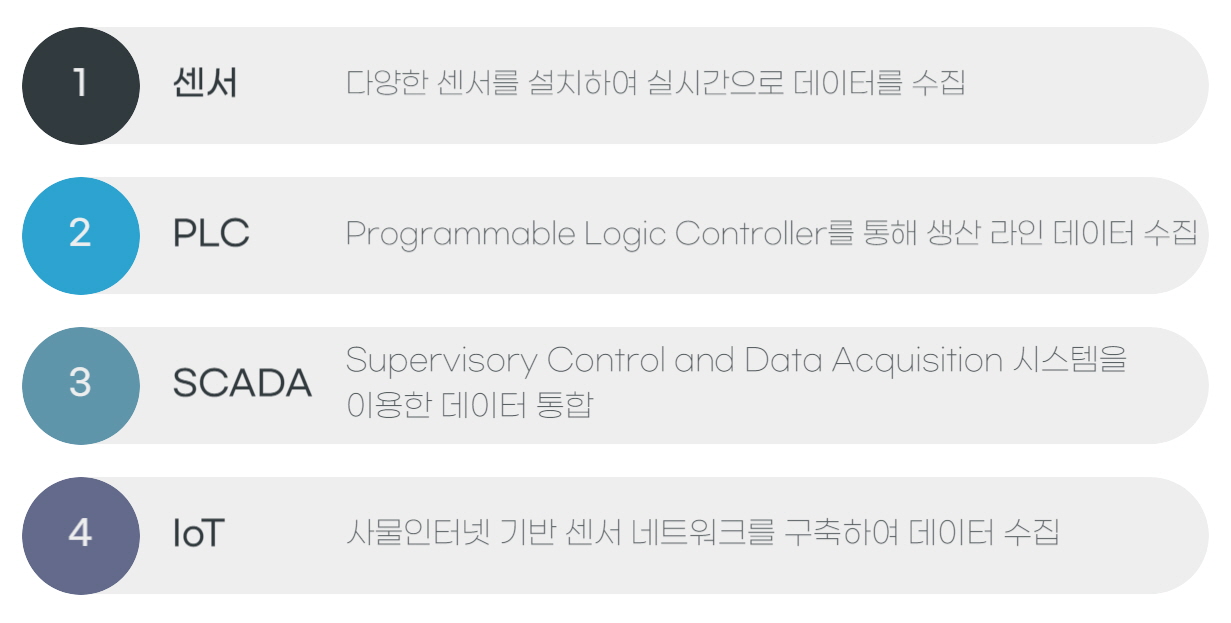
FEMS data collection approaches fall into three main types: sensor-based collection, control system integration, and IoT devices.
Sensor-Based Data Collection
Sensors that measure real-time data such as temperature, pressure, humidity, and power consumption are installed on equipment to collect data. Sensors provide real-time information on energy usage, equipment condition, and environmental factors, supplying the foundational data needed for predictive analytics.
Control System Integration
A FEMS can collect data by integrating with existing SCADA (Supervisory Control and Data Acquisition) or PLC (Programmable Logic Controller) systems. This approach leverages the data collection and control systems already in place at the factory, reducing additional installation costs while improving the accuracy of the data needed for predictive analytics.
IoT Devices
IoT (Internet of Things) devices are now widely used to collect data from factory equipment over the network. IoT devices can transmit and consolidate data from a wide range of equipment into a central system, making it easier to monitor data and build the datasets needed for predictive analytics.
2. Data Processing and Management
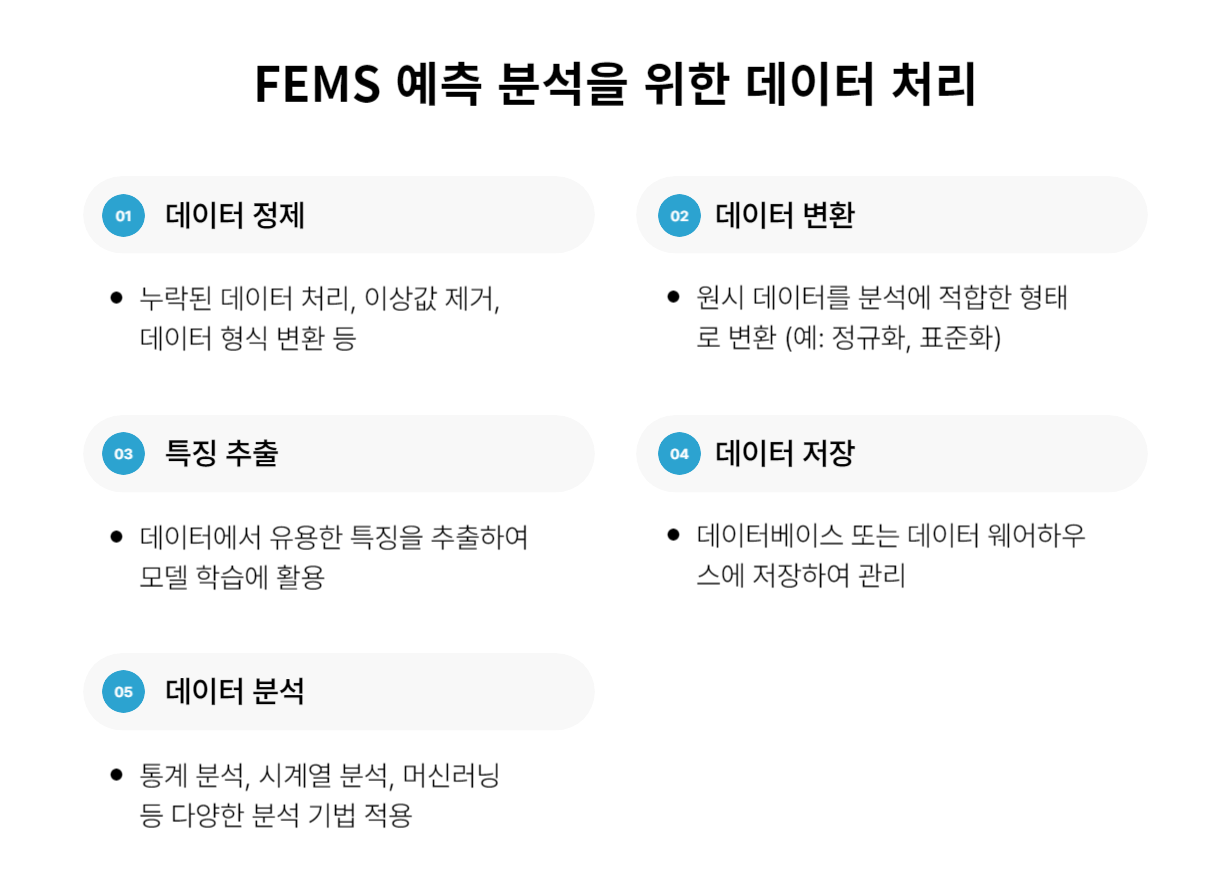
Data collected by the FEMS is transformed into an analyzable state through data processing. This stage involves data cleansing, data storage, and data transformation — a core process for improving the accuracy and efficiency of predictive analytics.
Data Cleansing
This is the process of removing or correcting errors, duplicates, and missing data that can occur during collection. It is essential for accurate predictive analytics and uses techniques such as missing-value handling and outlier removal.
Data Storage
Cleansed data is stored in a database (DB) or cloud system. The key at this stage is designing an efficient data structure to improve accessibility and processing speed when the data is later needed for predictive analytics. Typically, **relational databases (RDBMS)** or big data stores (e.g., Hadoop, NoSQL) are used to ensure data efficiency.
Data Transformation
This is the process of converting stored data into a form suitable for analysis. Techniques such as data preprocessing, feature engineering, and scaling are used for predictive modeling. For example, data that changes over time is converted into time series data to identify trends or predict specific patterns.
3. Predictive Analytics Models
A variety of models can be used for FEMS predictive analytics.
– Linear regression models: Model the linear relationship between energy consumption and production output
– Time series analysis models: Forecast future energy consumption based on historical data
– Machine learning models: Learn complex patterns using models such as random forest, SVM, and neural networks
– Deep learning models: Use models specialized for time series analysis, such as LSTM and GRU
Closing Thoughts
Data collection and processing for predictive analytics play a vital role in factory energy management with FEMS. Using a FEMS effectively requires accurate data collection and systematic data processing. Through these processes, you can improve energy efficiency, reduce costs, and maximize the overall productivity of factory operations.
✅ Recommended Reading
Why FEMS Predictive Analytics Matters: Benefits and Advantages