Corporate Energy Saving Success Stories: Cost Savings and Efficiency Gains
In recent years, companies have made energy saving a key strategy for sustainable management and cost reduction. Reducing energy use delivers value far beyond lower costs — it also protects the environment, ensures regulatory compliance, and puts corporate social responsibility (CSR) into practice. In this article, we examine real corporate energy saving success stories and analyze the benefits they produced.
1. Case Study: Energy Savings at a Battery and Chemical Products Manufacturer
Company Overview
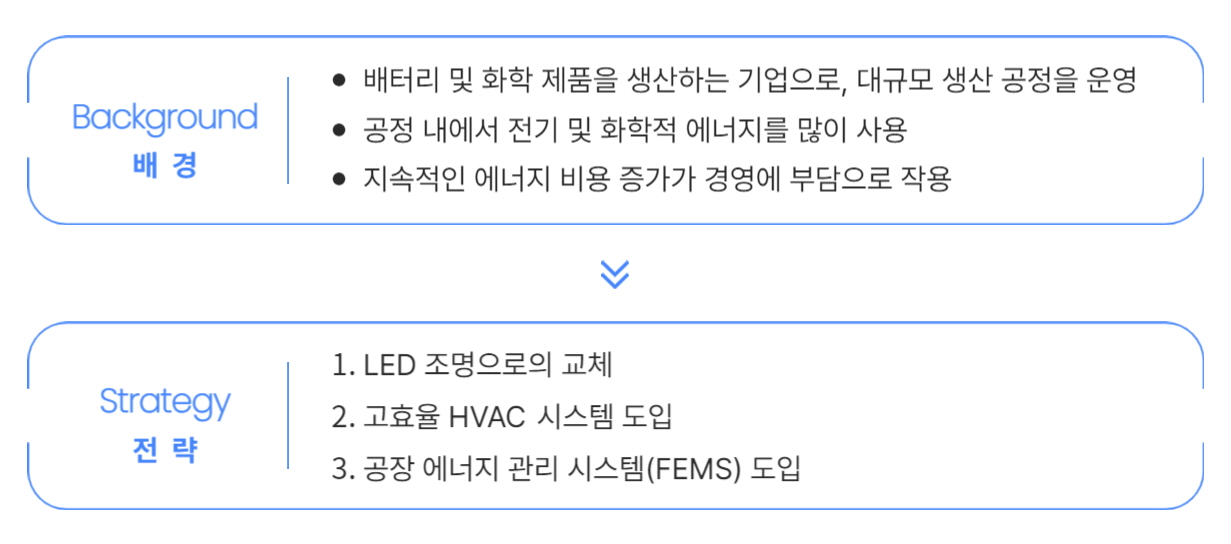
This company produces batteries and chemical products, using large amounts of electrical and chemical energy in its processes. As a manufacturer running large-scale production lines, its heavy power usage accounts for a major share of operating costs. With high electricity and gas consumption in particular, continually rising energy costs had become a burden on the business.
Energy Saving Strategy
The company adopted a multi-pronged approach to saving energy.
1. Switching to LED Lighting
Replacing all existing lighting in the factory and offices with LED lighting cut power usage by more than 25%. There was an upfront investment, but it was recovered within a year of the switch.
2. Adopting a High-Efficiency HVAC System
The energy-hungry heating and cooling (HVAC) system was replaced with high-efficiency equipment, and smart thermostats were installed for real-time temperature control. This delivered annual energy savings of 15%.
3. Deploying a Factory Energy Management System (FEMS)
The company introduced an energy management system capable of monitoring and analyzing all power usage data across its processes in real time. The system uncovered inefficiently operating equipment, and the resulting improvements achieved an additional 10% in annual savings.
2. The Impact of Energy Saving: Lower Costs and Higher Efficiency
Through these energy saving efforts, the manufacturer was able to cut its energy costs by roughly 30% per year. Beyond that, internal operational efficiency also improved significantly.

– Cost savings: Direct savings from reduced energy use reached hundreds of millions of won per year, creating room to reinvest in additional equipment and research and development (R&D).
– Environmental benefits: Lower energy consumption significantly reduced carbon dioxide emissions, which helped the company earn environmental certification and enhanced its corporate image.
– Regulatory compliance and incentives: By complying with government energy saving policies and regulations, the company received tax benefits and energy saving incentives, translating into further financial gains.
3. Lessons Other Companies Can Apply
As this case shows, saving energy goes beyond cutting costs — it delivers company-wide efficiency, environmental protection, regulatory compliance, and more. Here are a few lessons other companies can take away.
1. Energy saving is a strategy that turns short-term investment into long-term profit. The upfront costs may feel burdensome, but over time they generate far greater returns.
2. Technical approaches such as deploying a factory energy management system enable real-time monitoring and increase operational transparency and efficiency.
3. Making full use of government incentives is another important strategy. Governments offer a range of subsidies and tax benefits to promote energy saving, and companies that use them well can capture even greater economic benefits.
Closing Thoughts: Energy Saving Is Essential to Future Competitiveness
Energy saving goes beyond cost reduction — it strengthens corporate sustainability and plays an important role in fulfilling social responsibility. The case above is a clear success story, and other companies that adopt similar strategies can secure long-term growth and sustainability of their own.
✅ Recommended Reading
Energy Efficiency UP, Power Quality KEEP: The EnergyQ Service