What Is a Smart Factory? Concept and Benefits
As we enter the era of the Fourth Industrial Revolution, the manufacturing paradigm is changing rapidly. Moving beyond traditional manufacturing methods and building a more efficient, flexible production system through digital innovation has become essential. At the center of this transformation is the ‘smart factory’. By using advanced technologies to automate and optimize production processes, smart factories are maximizing the competitiveness of manufacturing. In this article, we look at the concept of the smart factory, its key technologies, and the many benefits you can expect from adopting one.
The Smart Factory Concept
The smart factory is the new standard for the factory of the future and a core technology driving innovation in manufacturing. A smart factory is a manufacturing environment that applies advanced information and communication technology (ICT) to maximize productivity and increase the flexibility of production processes. Unlike traditional manufacturing plants, smart factories use technologies such as the Internet of Things (IoT), artificial intelligence (AI), and big data analytics to monitor and optimize the entire process in real time. This makes it possible to predict and respond to potential problems in the production process before they occur.
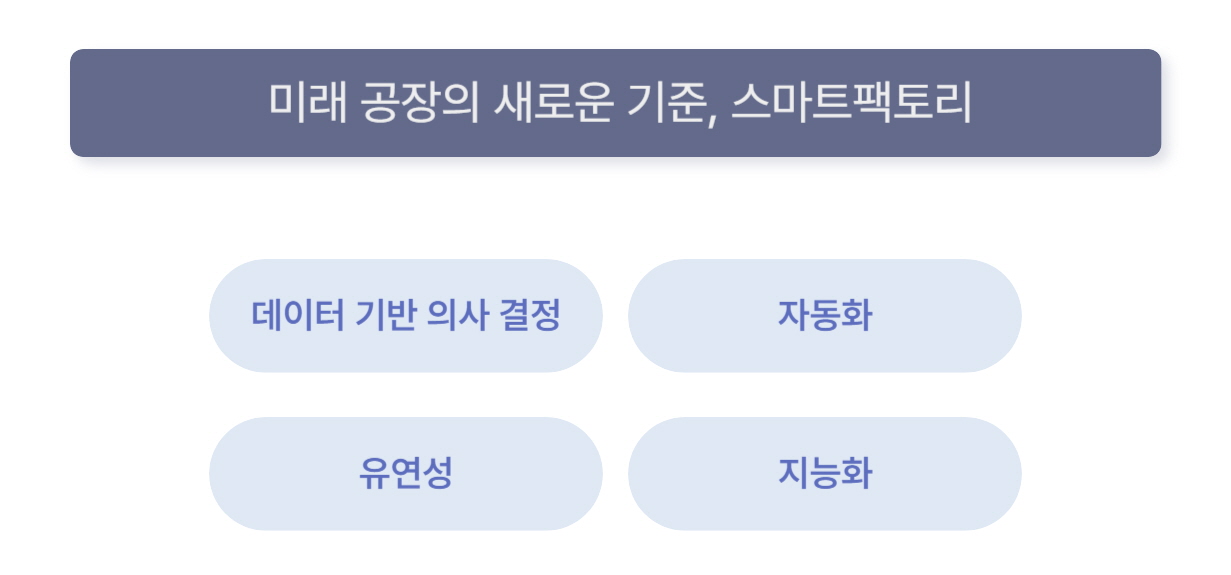
– Data-driven decision-making : Real-time data collected through sensors is analyzed to increase production efficiency and predict problems in advance.
– Automation : Automating much of the production process reduces labor costs and improves productivity.
– Flexibility : Respond flexibly to high-mix, low-volume production and adapt quickly to market changes.
– Intelligence : Artificial intelligence (AI) enables the factory to learn and evolve on its own, establishing optimal production plans.
Components of a Smart Factory
– Sensors : Collect the various data generated during production.
– Network : Transmits and shares the collected data in real time.
– Software : Analyzes data, controls systems, and supports decision-making.
– Equipment : Includes production machinery and robots, operating according to instructions from the software.
Key Smart Factory Technologies
– Internet of Things (IoT) : Connects every device and piece of equipment in the plant to the network to collect and share data in real time.
– Artificial Intelligence (AI) : Analyzes collected data to improve production efficiency and respond quickly when anomalies occur.
– Big data analytics : Analyzes massive volumes of data to optimize production planning and predict quality control and maintenance schedules.
– Cloud computing : Stores data in the cloud so it can be accessed and managed anytime, anywhere.
– Automated robots : Automate repetitive and hazardous tasks to improve productivity and ensure worker safety.
Benefits of the Smart Factory
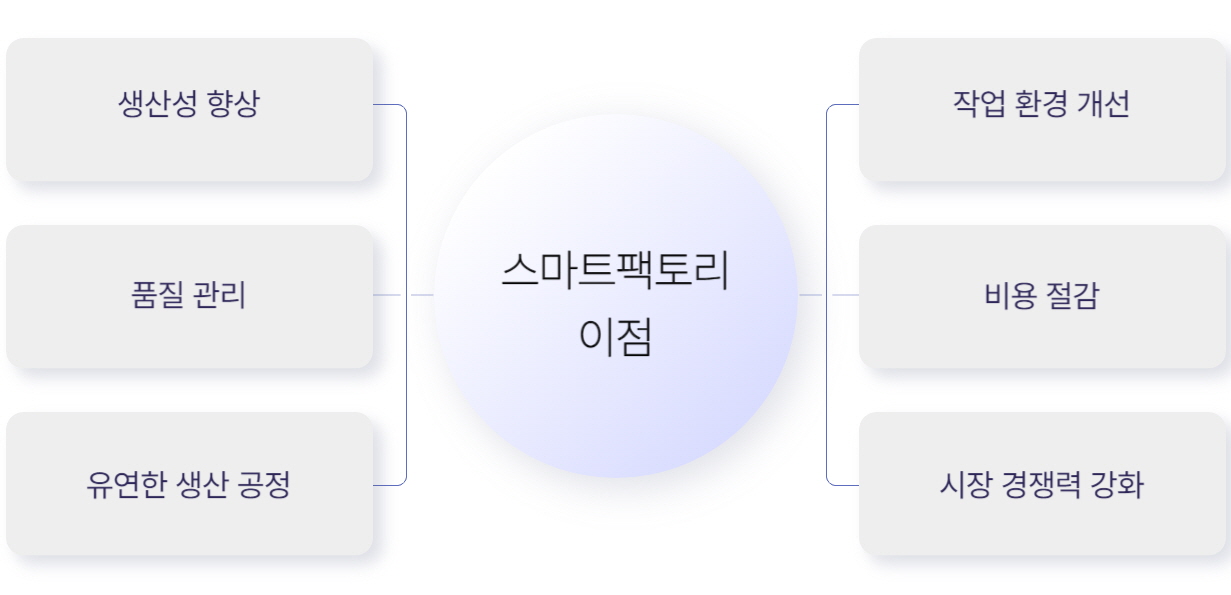
– Improved productivity : Real-time data analytics and automation systems maximize productivity, reducing production time and costs.
– Quality control : By monitoring the entire production process and analyzing data, quality issues can be detected and resolved in advance, ensuring consistent product quality.
– Flexible production processes : Build flexible production processes that can respond quickly to changing customer requirements.
– Better working conditions : Automation allows robots to take over dangerous and repetitive tasks, improving worker safety and the overall work environment.
– Cost savings : Efficient resource management and production planning optimize raw material and energy use and eliminate unnecessary costs.
– Stronger market competitiveness : Respond flexibly to rapid market changes and strengthen competitiveness through customized product manufacturing.
Considerations for Smart Factory Adoption
Adopting a smart factory can require significant upfront investment, and once the technology is in place, staff must be trained to operate it. Security is another important consideration. Because every device and all data in the plant are connected to the network, preparing for security threats is essential.
Conclusion
The smart factory has become a key driver of innovation in manufacturing. By leveraging advanced technologies to improve productivity and build flexible, efficient production processes, the smart factory is at the heart of the future of manufacturing. Although there are challenges such as initial adoption costs and workforce training, from a long-term perspective the smart factory delivers clear benefits.
✅ Recommended Reading