FEMS FAQ: Everything You Need to Know About Energy Management
FEMS (Factory Energy Management System) plays a critical role in efficiently managing and optimizing energy consumption at industrial sites and improving power quality. In this blog post, we answer the questions that most often come up when considering FEMS adoption.
How much energy can FEMS actually save?
Adopting FEMS typically reduces energy consumption by 15% to 30%. For example, in one case where IBM’s Watson was deployed, a building’s energy consumption was reduced by 20%. This is because real-time monitoring and data analytics eliminate inefficient energy use and identify optimal energy usage patterns.
What power quality improvements can I expect from FEMS?
FEMS goes beyond simply reducing energy consumption — it offers a range of capabilities that can significantly improve power quality. These capabilities increase the efficiency of the power system and deliver substantial cost savings over the long term. Here are the main ways FEMS improves power quality.
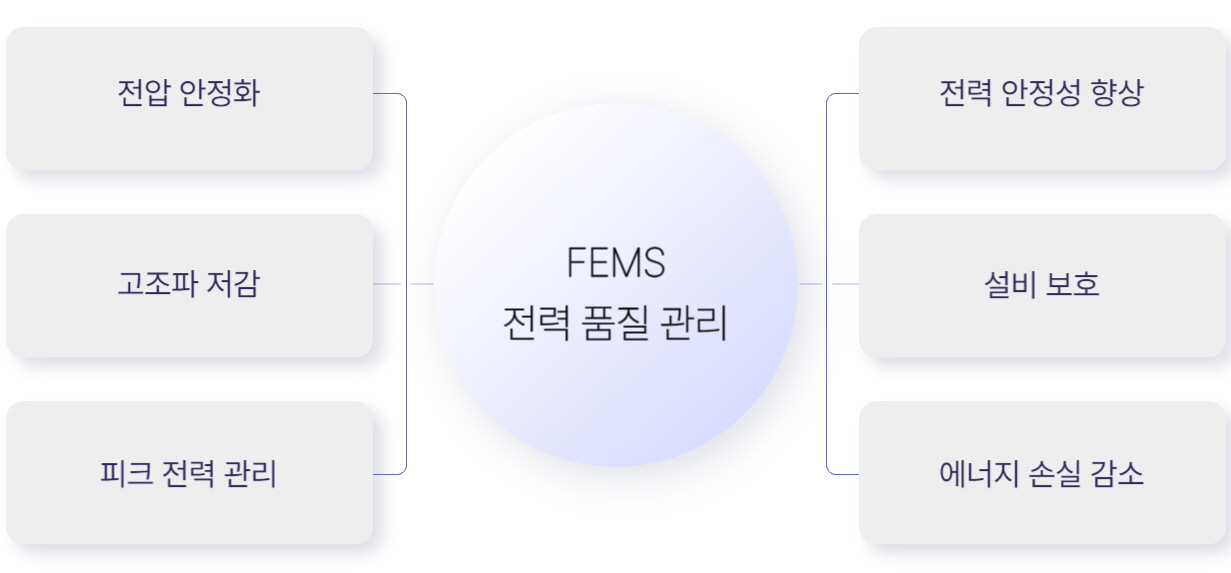
– Voltage stabilization: FEMS detects fluctuations in the power supply in real time and stabilizes them, improving voltage quality.
– Harmonics reduction: Reduces harmonics generated in the power system to improve power quality. This helps extend the life of electrical equipment and reduce failures.
– Peak power management: Manages power usage during peak hours to cut electricity costs and reduce the load on the power grid.
– Improved power stability: Real-time monitoring maintains a stable power supply and detects irregular usage patterns early so they can be addressed.
– Equipment protection: Early detection of anomalies prevents equipment overloads and failures, extending equipment life.
– Reduced energy losses: Optimized power usage patterns minimize energy losses.
How much does FEMS implementation cost?
FEMS implementation costs vary depending on the size and characteristics of the facility and the system you choose. In general, you can expect costs of roughly 10,000 to 30,000 KRW per pyeong (3.3㎡) of facility space. This includes initial installation and maintenance costs.
What are the investment costs and returns of FEMS adoption?
The investment required for FEMS adoption includes initial installation costs and ongoing system maintenance costs. However, most companies can recover their initial investment within 2 to 3 years through energy savings. For example, Google’s data centers achieved strong returns after adopting FEMS, saving millions of dollars in energy costs each year.

What kind of expert help do I need when adopting FEMS?
When adopting FEMS, it is best to work with experts who can analyze the characteristics of your facility, select the right system, and support system implementation and operation. With the support of consultants or engineers who specialize in energy management systems, you can implement FEMS efficiently and effectively.
What does the future hold for FEMS technology?
FEMS will continue to evolve through convergence with artificial intelligence (AI), big data, and IoT technologies.
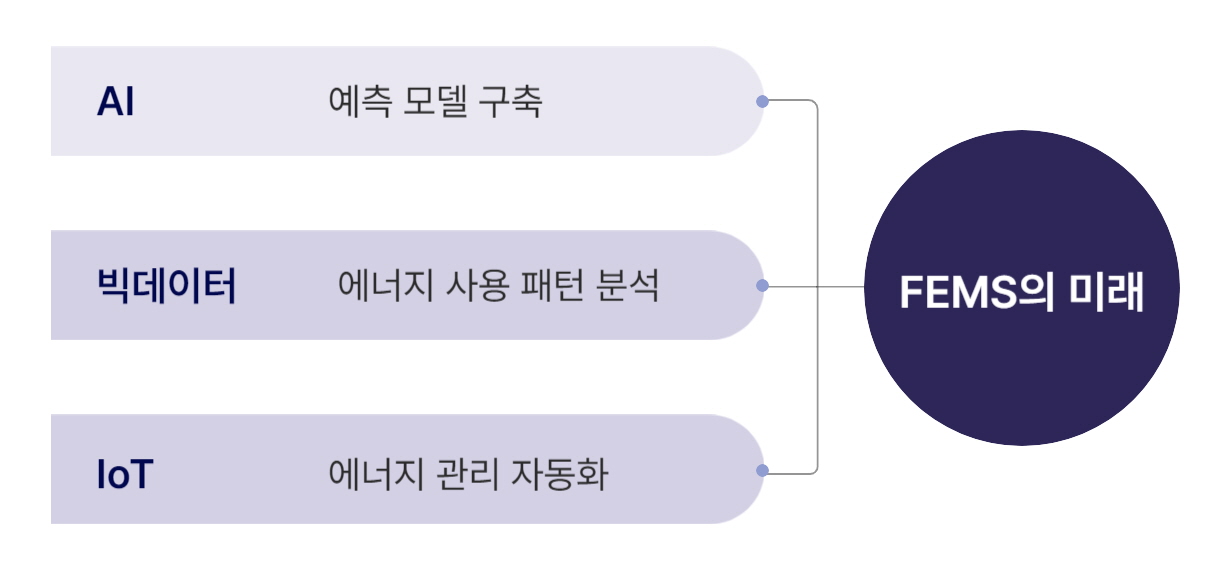
– Artificial intelligence: AI can analyze energy usage patterns and build predictive models to deliver even more efficient energy management.
– Big data: Big data can be used to analyze energy usage data and derive optimal energy management strategies.
– IoT: IoT technology connects a wide range of devices and sensors to collect real-time data, enabling automated energy management based on that data.
Conclusion
FEMS technology will continue to advance, playing a key role in maximizing energy efficiency and improving power quality. Through it, industries can achieve economic benefits and environmental protection at the same time. For more detailed information on FEMS adoption, please consult a qualified expert.
✅ Recommended Reading