FEMS Success Stories ┃ FEMS Solutions and Innovative FEMS Applications
As energy efficiency and sustainability emerge as key factors that determine corporate competitiveness, many manufacturers are adopting the Factory Energy Management System (FEMS). In this article, we look at how FEMS solutions are being applied successfully through real-world cases.
What Is FEMS?
FEMS is a system that efficiently manages and controls a variety of energy resources, with a focus on optimizing energy use in manufacturing plants. It optimizes energy consumption through real-time data collection and analysis, automated control systems, and forecasting and simulation technologies.
The importance of FEMS stands out in the following areas.
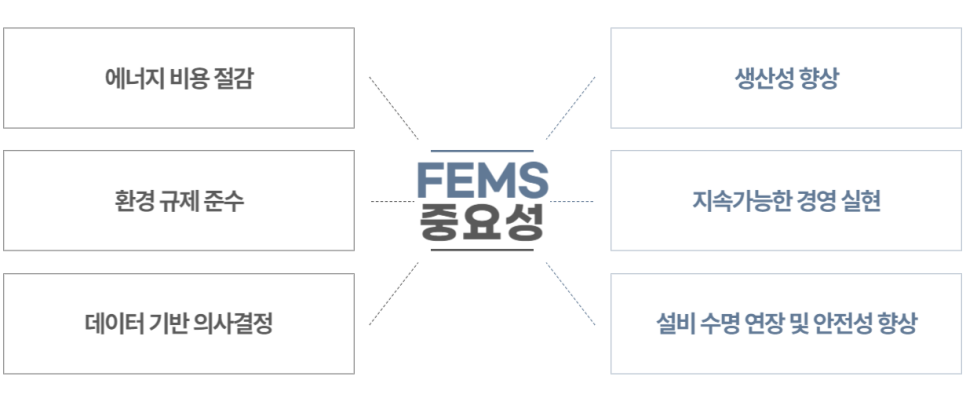
So why are companies adopting FEMS?
- Cost savings: Energy is one of a manufacturer’s major operating costs. Optimizing energy use through FEMS enables significant cost reductions.
– Stronger competitiveness: Improved energy efficiency translates into lower production costs, boosting a company’s competitiveness.
– Regulatory compliance: Respond effectively to increasingly strict environmental regulations and carbon emission limits.
– Data-driven decision-making: FEMS provides detailed energy usage data to support informed decision making by management.
– Extended equipment life: Analyzing energy usage patterns enables early detection of equipment anomalies and preventive maintenance.
– ESG management in practice: Energy efficiency is a key environmental (E) initiative, and adopting FEMS contributes to improving a company’s ESG performance.
For these reasons, many companies now regard FEMS as a core management tool and are moving quickly to adopt it. Let’s now examine real-world cases of successful FEMS implementations and take a closer look at their effects and impact
Case 1: Automotive Manufacturing Plant

Background
A global automaker adopted FEMS to address high energy costs and inefficiencies in its production processes. With annual energy costs reaching millions of dollars, reducing energy waste was an urgent priority for the plant.
Solution
– Real-time data monitoring: Energy usage data was collected and analyzed in real time for each production line to identify energy consumption patterns.
– Automated control systems: A control system was built to automatically reduce energy use during high-consumption periods.
– Predictive maintenance: Energy consumption patterns of machinery were analyzed so equipment likely to fail could be serviced in advance.
Results
After adopting FEMS, the plant cut annual energy costs by 20% and significantly improved energy efficiency. It also succeeded in boosting productivity by reducing unexpected machine failures.
Case 2: Large Data Center

Background
A large data center was burdened with high operating costs due to server power consumption and cooling system inefficiencies. The data center sought to optimize its energy management through FEMS.
Solution
– Big data analytics: Energy usage data from servers and cooling systems was analyzed in depth using big data techniques.
– Smart cooling systems: Cooling system operation was automated and optimized so it ran only when needed.
– Energy usage optimization: A range of technologies was applied to optimize server power consumption.
Results
The data center reduced annual power costs by 15% and dramatically improved the efficiency of its cooling systems. It also increased the transparency of its energy use, achieving more environmentally friendly operations.
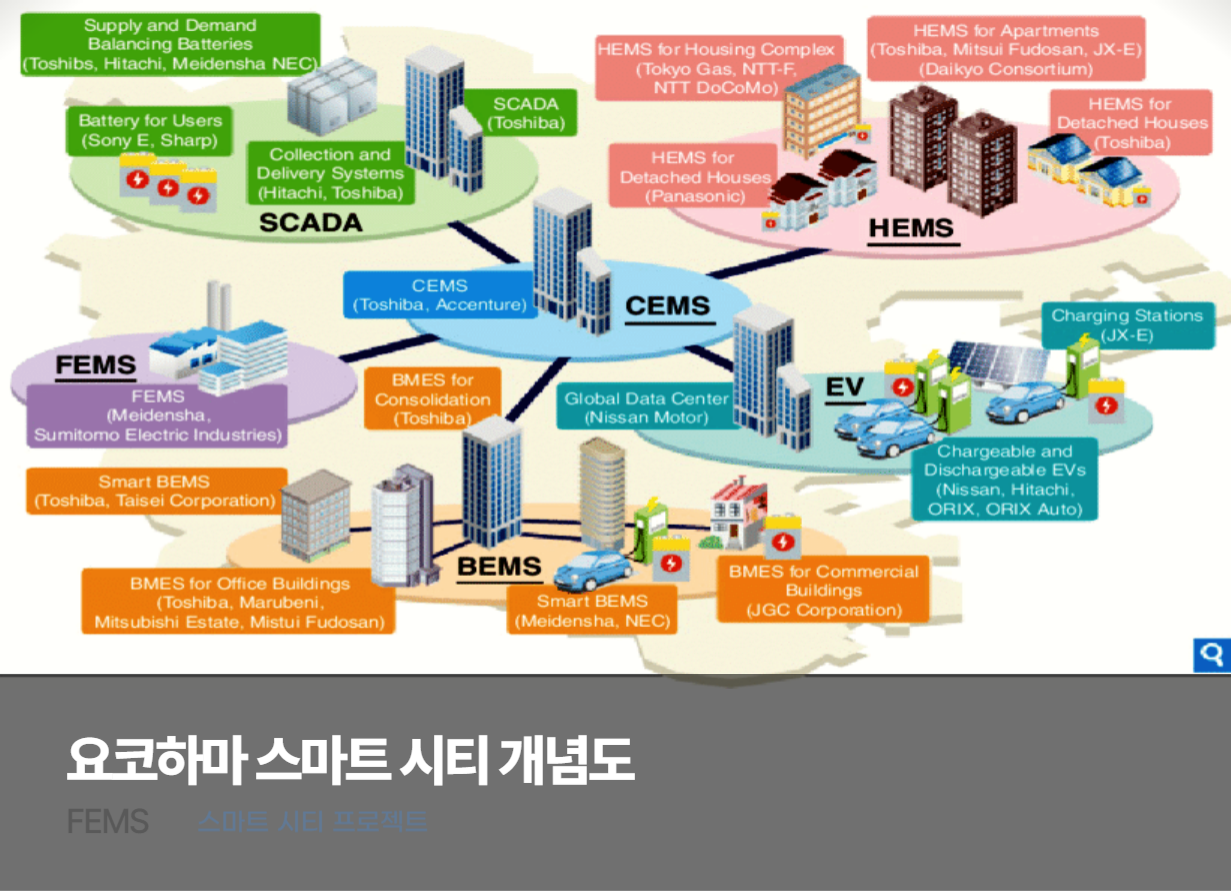
Case 3: Smart City Project
Background
A large-scale smart city project adopted FEMS to integrate and optimize energy management across the entire city. The project aimed to improve the energy efficiency of public facilities and transportation systems.
Solution
– Centralized energy management: Energy usage data from across the city was managed in an integrated way to monitor and optimize overall energy consumption.
– Transportation system optimization: Energy use in public transit and signaling systems was optimized to achieve energy savings.
– Renewable energy integration: Solar and wind energy were effectively integrated and managed to realize sustainable energy use.
Results
The project reduced citywide energy consumption by 10% and greatly improved the energy efficiency of public facilities. It also expanded the use of renewable energy, contributing to environmental protection.
Conclusion
FEMS is a key technology for a sustainable future, improving facility operational efficiency through energy savings and better power quality. The success stories above show how FEMS can deliver real, tangible change, and demonstrate that FEMS technology is being used effectively across a wide range of fields. If you are considering adopting FEMS, review FEMS market analysis and information on innovative solutions, and consult with experts to choose the FEMS solution that best fits your needs.
✅ Recommended Reading