Three Digital Transformation Success Stories
Digital transformation—often abbreviated as DT or DX—has become the surest way to respond to a rapidly changing environment by weaving evolving digital technologies into the business. This shift encompasses every type of digital application, from cybersecurity to artificial intelligence (AI) and automation. It is expected to lead companies toward higher gross margins on revenue and stronger overall profits. The primary goal of any digital transformation is to expand digital capabilities and make the business more efficient—and the ultimate aim of these efforts is to accelerate revenue growth.
Since the spread of COVID-19, large enterprises around the world have moved quickly on digital transformation, while small and midsize businesses have struggled with a range of obstacles. Major countries are supporting SME digital transformation through stronger access to information, funding for digital technology adoption, and digital capability building. Overseas SME digital transformation cases fall broadly into three categories: improving production efficiency, enhancing customer experience, and adopting new business models.
Korean SMEs need to make an all-out effort to quickly spot and harness the global digital transformation trend to stay competitive. Companies should identify digital transformation initiatives from the perspectives of production efficiency, customer experience, and new business models, and secure momentum by taking advantage of supportive policies.
With that in mind, here are three digital transformation success stories to inspire small and midsize businesses.
JetBlue Airways: Digital Innovation Through Data Optimization
JetBlue Airways in the United States is enjoying multiple benefits from migrating its data to the cloud.
In the wake of the COVID-19 pandemic, the airline and travel industry went through major upheaval and uncertainty. In 2020, JetBlue concluded that its competitive edge depended on IT—specifically, on digitally transforming its ‘data stack’ so it could consolidate data operations, incorporate customer feedback, reduce the downstream effects of weather and delays, and ensure aircraft safety.

Source: JetBlue Airways
JetBlue began the digital transformation of its data stack in 2020. The goals were to access more data in real time, consolidate data from all critical systems in one place, and remove the compute and storage limitations that had made it impossible to build advanced analytics products.
Previously, JetBlue’s data operations revolved around an on-premises data warehouse that stored information from core systems. Data was updated daily or hourly depending on the data set, but latency problems persisted. As a result, the company could not build self-service reporting products using real-time data, and all operational reporting had to be built on the operational data storage layer. That layer was severely constrained, since only a limited amount of compute could be allocated for reporting purposes.
Data availability and query performance were also problems. Because the on-premises data warehouse was a physical system with pre-provisioned storage and compute, queries and data storage had to fight over resources. Since analysts could not be stopped from querying the data they needed, the warehouse could not integrate as many additional data sets as desired—in practice, ‘compute’ requirements took priority over storage. The system was also limited to 32 concurrent queries at a time, creating daily query queues and lengthening query execution times.
A Real-Time Data Engine
JetBlue partnered with data cloud specialist Snowflake to digitally transform its data stack. First, JetBlue’s data was moved from the legacy on-premises system to the Snowflake Data Cloud, which relieved the most pressing problems.
Next, JetBlue’s data team focused on integrating critical data sets that analysts previously could not access on the on-premises system. The team created more than 50 real-time data feeds for analysts, spanning JetBlue’s aircraft movement system, crew tracking system, booking system, notification management, check-in system, and more. Data from these feeds is available through Snowflake within one minute of being received from the source systems. Snowflake allowed the company to scale data delivery effectively, ultimately providing more than 500% of what had been available in the on-premises warehouse.
JetBlue’s data transformation journey has only just begun, because moving data to the cloud is just one piece of the puzzle. The next task is to give analysts an easy way to interact with the data available on the platform. The person in charge said, “We have done a lot of work so far to refine, organize, and standardize data delivery, but there is still a way to go. Once the data is consolidated and refined, the focus must shift to data curation.” Adding that data curation is critical to how every analyst interacts with JetBlue’s data, they noted, “Building a single, easy-to-use ‘fact’ table that can answer common questions about data sets will remove the barriers to entry that existed before.”
The data is also being used as input for machine learning models. JetBlue’s head of data science and analytics explained, “We have started accelerating our internal data science initiatives. Over the past year and a half, a new data science team has been formed, and we are using the data in Snowflake to build machine learning algorithms that not only predict operational conditions but also develop a detailed understanding of our customers and their preferences.”
JetBlue’s data science team is now also developing a large-scale AI product to fine-tune efficiency. The product is based on a secondary curated data model built through collaboration between the data engineering and data science teams to refresh the feature store used in its machine learning products. A growing ecosystem of ML product derivatives will form the foundation of a long-term strategy to support each JetBlue team with predictive insights.
A Data-Driven Mindset
Every company has its own problems, but a data-driven mindset is a key building block for supporting large-scale change. In particular, it is important to help executives understand current problems and the technology options in the market that can help mitigate them.
Gaining insight into every data problem in a large organization can be difficult. JetBlue surveys its data users every year to gather feedback. This informs strategy and identifies which areas are going well and which need improvement. Collecting feedback is easy—real change comes from acting on it.
Direct collaboration with leaders who can put data to work across the enterprise is also essential. A data stack is only as valuable as the value it delivers to its users. As a technical data leader, you can spend your time curating complete and accurate information, but if no one uses it to make decisions or keeps consulting it, it has no real value. Building relationships with leaders who can put data to use will help realize its full value.
Digital Transformation at Wonderla Holidays Amusement Parks
Wonderla Holidays Ltd., operator of the Wonderla amusement parks, expects both annual visitor numbers and per-capita spending to rise 5% thanks to an innovative and environmentally friendly digital transformation.

Source: Getty Images
As the COVID-19 pandemic subsided and visitors returned to Wonderla’s parks, the Bengaluru-headquartered company found itself at a crossroads. It operates three amusement parks—opened in Kochi in 2000, Bengaluru in 2005, and Hyderabad in 2016—and plans to open two more in Chennai and Bhubaneswar soon. But outdated processes were holding the company back in two critical areas: operational efficiency and customer experience (CX).
Wonderla saw that the most important parameters for smooth, successful park operations were managing crowds and helping visitors make better use of rides and facilities through proper time management. But because visitors and managers had no way of knowing how many people were at other rides and facilities, guests spent much of their time standing in lines—ultimately hurting the customer experience.
Wonderla believed that if it could provide real-time occupancy information for its various zones—rides (land and water), pools, restaurants, changing rooms—that information would help visitors choose routes that maximize a positive park experience. Displays offering clear communication about ride availability and expected wait times for each ride were expected to significantly improve CX.
Other areas of the park had problems to solve as well. Multiple paper bands were used to tag captured photos and videos. Visitors had no way to track lost belongings. Meanwhile, the marketing, food and beverage (F&B), and retail teams were missing out on enormous revenue opportunities. Digital transformation was essential to overcoming all of these bottlenecks.
The RFID-Based Wonderband
To deliver personalized services while enhancing engagement and experience, Wonderla decided to adopt RFID technology in the form of a wearable band called the ‘Wonderband,’ and the project is currently under way.
With the band, Wonderla can identify each visitor’s favorite rides, preferred routes, and favorite food and merchandise while they are in the park. Based on real-time information generated from that data, it can also extend personalized services. Visitors can use the band to enjoy rides on land and water, use lockers, and pay at both restaurants and shops. Photos and videos captured on rides and around the park can be linked to the band or purchased later.
According to Wonderla, the key is aligning RFID chipsets on two different frequencies. Multiple RFID combinations were tried to achieve optimal range. Because RFID performance is inversely related to body contact, the mold was designed and developed so that surface contact with the body is minimal.
One RFID chipset frequency handles all payments and locker operations, while the second is used for guest tracking. Each band is expected to send roughly 3,000 to 5,000 pulses per millisecond. Since a single pulse transmits 150 bytes of data, each band can send 500KB to 750KB of data. To process the vast volumes of data generated, work is also under way to build a data lake, data warehouse, and real-time analytics tools in a hybrid model: all band data is pushed to the cloud for analytics, while the infrastructure handling all cash transactions is deployed on premises.
The project, expected to cost $400,000, will be piloted at the Bengaluru park in 2023.
Business Opportunities Built on the Band
The Wonderband is used for tickets, as a wallet, for lockers, and for rides. In addition, the data captured by the bands and processed on the back end can give the company critical information for taking action.
Manual data logging to understand visitors’ ride cycles and utilization is replaced by the band tracking entry and exit at each ride. Ride usage can also be analyzed by criteria such as gender, adult, and child. The company can track how many rides each visitor takes, which rides are the most thrilling, ride preferences among families and children, and peak and idle times for facilities.
Virtual queue reservations for rides are made through the mobile application and confirmed with the band. The multiple paper bands once used to tag captured photos and videos can be consolidated into a single band. Lost-and-found tracking will also improve based on visitors’ routes.
The marketing, food and beverage, and retail teams can also build personas to optimize media spending and partnerships and improve operations. Because likely routes can be identified by time of day and use case and messages sent accordingly, proximity-based marketing becomes possible. ADMP (all-day meal plan) bookings can be mapped to the band and checked at restaurant kiosks.
Wonderla expects per-capita spending to improve, both because the Wonderband delivers a better experience than cash payments and because more digital transactions will flow through the band. It also reduces the chance of visitors running into mobile network problems with UPI and card transactions.
Wonderla anticipates roughly 5% more visitors annually and 5% additional revenue per guest. Beyond that, the bands cut ticket printing costs, and because they are reusable, they generate no waste—making them environmentally friendly as well.
XPO Logistics: Optimizing Freight Delivery with IT
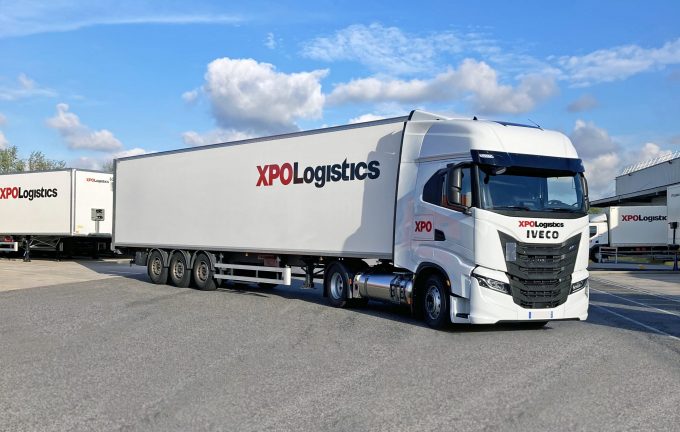
XPO Logistics is pressing ahead with upgrades to its IT platform for handling LTL (less-than-truckload) freight operations. The investment is already paying off.
Source: LoadstarEditorial
LTL, which refers to shipping smaller freight loads, is a freight transport model that delivers products for multiple customers, each with its own transit times, delivery deadlines, costs, footprints, pallet sizes, and various shipping requirements. Customers share a single truck with other customers. For XPO, that means optimizing inventory transport in ways that call for a wide range of information technologies.
To that end, XPO’s IT engine uses a combination of internally developed freight applications and the cloud, with data as its fuel. Jay Silberkleit was named XPO’s new CIO on November 1, as XPO spun off its RXO brokerage business into a separate public company. Having worked at XPO Logistics for more than a decade, he has driven the company’s digital transformation alongside the former CIO and new CEO, Mario Harik, backed by an investment of more than $3 billion. The goal was to elevate the services delivered to some 25,000 accounts, including blue-chip companies such as Dow, John Deere, and Tractor Supply.
Separated from the RXO brokerage business, XPO will now focus solely on freight transportation. The focus on technology is seen as a positive for the company. XPO also assesses that it has become an ‘innovator’ in the enterprise transportation market.
In-House App Development and the Cloud
XPO handles more than 13 billion shipments a year. Because each truck carries shipments for multiple customers, its IT team of more than 430 people, including 12 data scientists, has built a massive proprietary network to optimize for cost, efficiency, and damage-free transport.
Built on a suite of GCP-based, internally developed applications—including Google BigQuery as the data lake, Google Apigee as the API gateway, and Google’s recently launched Vertex AI platform—the freight carrier’s network is equipped to deliver industry-leading value.
XPO’s use of GCP and Kubernetes orchestration for containerization (GCP&Kubernetes orchestration engine) has played an important role in handling day-to-day workloads. But the true differentiator of XPO’s IT platform is the effort the company pours into in-house app development, such as data analytics for freight optimization and consolidation.
For example, XPO has developed a set of APIs that capture real-time freight opportunities, a dynamic pricing tool, and more. It has also built proprietary cost-modeling capabilities that improve profitability while keeping customers satisfied. The platform helps optimize pickup and transport routes and even guides decisions on how to consolidate freight.
XPO says the sheer scale of the project is a challenge in itself. Its network handles 150,000 shipments a day across roughly 300 North American service centers, generating millions of data points in real time. These data points must be analyzed to create the most efficient transportation service for each customer. A technology platform like this requires a flexible, scalable architecture—and the cloud provides it.
Data as the Driving Force
Strong data operations are also essential to smooth freight transportation. XPO’s business is now unmistakably data-driven. Looking at XPO’s digital transformation and the journey behind it, much of it rests on how the company analyzes data.
For XPO, the data volumes involved are substantial. Trucks are equipped with GPS location and telematics, feeding in information about engines on the road. Every service center employee carries a handheld device, and every shipment carries a barcode. All of these data points flow in, consolidated, into Google BigQuery.
XPO Logistics’ large team of data analysts and programmers developed the company’s own web portal. Through the portal, customers request shipments, track pickup and delivery dates, receive status updates, and pay their bills. XPO uses Google’s API engine along with IoT components and internally developed applications to connect and integrate with customers’ internal systems. The company’s data scientists have also built machine learning models using Google’s Vertex AI platform.
Running a dynamic LTL model requires integrating freight data from many points and analyzing the roads that connect to each destination. Having a dynamic network means having machine learning models that calculate the optimal routes and density with which freight should move through the network. Thanks to XPO’s dynamic network, analysts can focus on loading trailers instead of spending their time planning how to load them.
XPO’s employees review what is being picked up every day. They also use machine learning to maximize density at minimum mileage while still delivering the best service. Machine learning models push instructions to handheld devices that can guide workers to load freight in a specific way.
Customers, in turn, can track shipments at a much finer level of detail. Using APIs, XPO taps customized data requests from its data lake to provide real-time feedback on where a specific customer’s goods are and how long they will take to arrive. XPO is one of the only carriers with piece-level tracking that lets customers see the location and status of each pallet in detail when they enter a shipment number.
The Fruits of Digital Transformation
XPO’s digital transformation has played a central role in the company’s growth. In the third quarter of 2022, the LTL portion of XPO’s total business generated $1.2 billion in revenue, up 12% year over year. In its SEC filings, XPO said its technology is a key driver of growth and operational efficiency, and that it expects cost optimization from digital transformation to contribute 3 to 4 percentage points of its estimated 11% to 13% annual growth from 2021 through 2027.
Dave McCarthy, research vice president for cloud infrastructure services at IDC, predicts that roughly 25% of companies planning major business transformations over the next five years will use cloud services to achieve those goals. But companies like XPO that develop their own applications and analytics to get the most out of the cloud will see especially strong results, he added.
McCarthy explained, “For large enterprises, this means significant investment in software as well as in people skilled in data platforms, machine learning, and analytics. The potential to improve operational efficiency and customer experience through automation is regarded as essential to creating and sustaining competitive advantage.”