IoT Services for Solving Social Problems
We face a range of social challenges, including future population decline and climate change. Aging continues to advance, yet the systems needed to protect the vulnerable have not been sufficiently expanded, and proactive responses are needed to the environmental problems driven by rapid climate shifts and global warming.
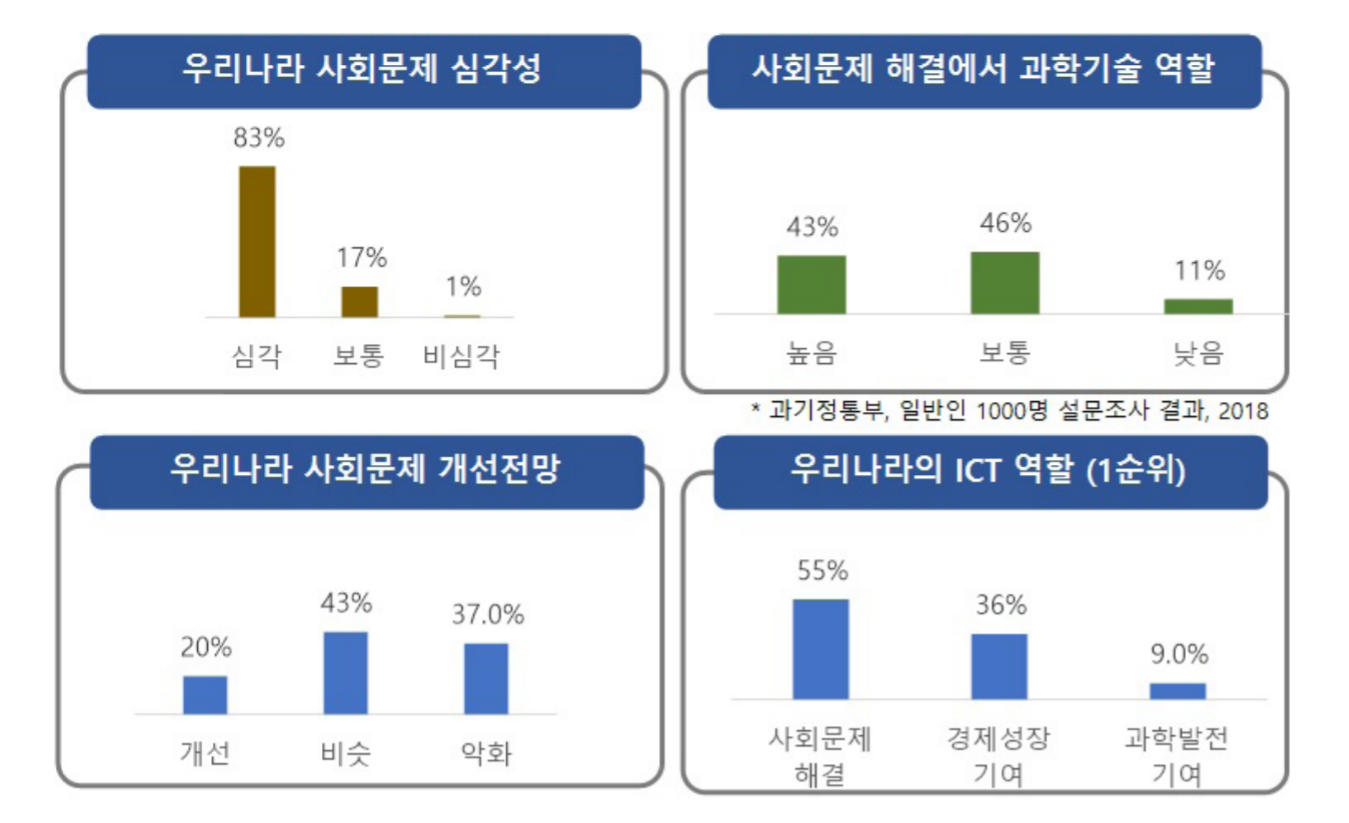
To address these challenges, ICT convergence services powered by artificial intelligence (AI) are expected to be of great help in overcoming these social difficulties. According to a survey by ETRI’s Technology Policy Research Division, Koreans take future social problems seriously and expect ICT to play an active role in solving them.
So what are the challenges ahead, and what services can help solve them?
Aging and Labor Shortages
Korea is aging faster than any country in the world has before, and after 2025 it is projected to enter an unprecedented super-aged society in which the elderly account for more than 20% of the population. Meanwhile, it is the only OECD country with a total fertility rate below 1, the lowest birth rate in the world.
The demographic shifts Korea faces, including population decline, low birth rates, and accelerating aging, will lead to quantitative labor shortages and declining workforce capabilities, a surge in welfare blind spots and reduced quality of life, and shrinking military manpower and weakened social safety infrastructure. It is important to prepare preemptive responses to the social problems these demographic changes will cause.
As Internet of Things (IoT) technology draws attention as a solver of social problems, demand in the public sector is growing. What IoT services are being actively used to address the challenges of an aging society?
IoT Services for Preventing Solitary Deaths
KT provided LED lights fitted with its self-developed smart IoT sensors to 80 households of seniors living alone in single-room occupancy neighborhoods as a pilot program. Through motion detection, the smart IoT sensors are expected to help prevent solitary deaths among seniors living alone.
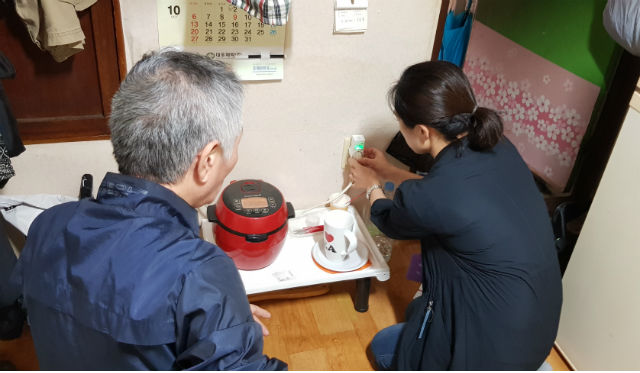
Local governments are actively pursuing ‘smart plug’ programs as a way to prevent solitary deaths. The idea is that anyone spending long hours at home cannot avoid using electricity. A ‘smart plug’ is connected to the power plug of a TV or other home appliance, and if no change in indoor light levels or electricity usage occurs within a set period, a danger-level text message is automatically sent to the senior’s one-to-one matched care worker. Text alerts can be set at tiered intervals of 50, 36, or 24 hours for general, at-risk, and high-risk groups. A key advantage is that even seniors who oppose installing devices with cameras and motion detection over privacy concerns, or who find motion-sensor products difficult to use because of pets, can use it without reservation.
The ‘Maeum e-Ssok’ program, which uses digital biomarker technology, is also being rolled out for households at risk of solitary death. Digital biomarkers are a technology for measuring a person’s physiological data using digital devices. Once participants install a physiological data measurement app on their smartphone, it measures a range of indicators such as social activity levels, emotional changes, and sleep patterns, detects warning signs, and delivers suicide and solitary death prevention information to the local government.
IoT Services That Ease Labor Shortages
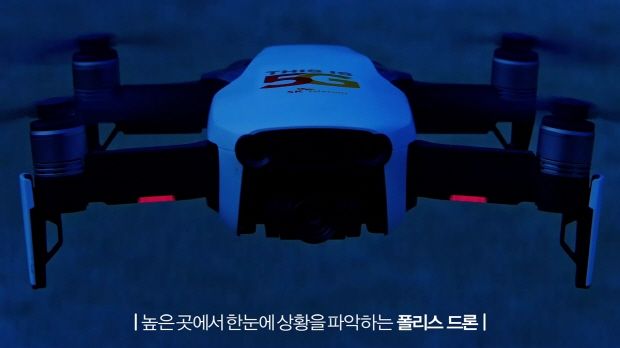
Gangwon Province has the largest area covered per firefighter in Korea, and its mountainous terrain makes emergency response difficult, challenges it is overcoming with ICT. Body cameras and monitoring drones that serve as firefighters’ eyes and feet have been introduced to quickly assess disaster situations, and video from the field is transmitted without interruption over the LTE network across the entire province. To respond effectively to all kinds of disasters, the Gangwon Fire Headquarters introduced 230 body cameras worn by firefighters, four monitoring drones, and the ‘T Live Caster’ real-time video control system. This equipment has been deployed to the special rescue unit and the 16 fire stations under its jurisdiction, and additional ways to apply it systematically across disaster responses are being explored.

The Daegu Metropolitan Police Agency has built a solution that monitors real-time video feeds from patrol cars and drones in the police station’s situation room, strengthening its field response capabilities. Combining video from multiple patrol cars and airborne drones enables three-dimensional analysis. Connected to the thermal imaging camera mounted on a search drone, it can also be used to search for missing persons or track a suspect’s movements in environments that are hard to see with the naked eye, such as at night or in mountainous areas.
The Environmental Crisis
Despite the government’s strong commitment to carbon neutrality, Korea remains one of the highest carbon-emitting countries in the OECD. On the environmental front, Korea faces challenges on many fronts: insufficient per-capita greenhouse gas reductions, urban environments and transportation systems that fall short of eco-friendly standards, inadequate efficiency in renewable energy production and consumption, and a surge in natural disasters driven by climate change.
With the launch of everyday IoT services tied to emerging social concerns such as fine dust and clean energy, IoT is stepping up as a ‘solver’ of social problems.
Environmental IoT Services
The government is pursuing a ‘smart environmental monitoring demonstration project’ that uses IoT to quickly identify causes and respond when environmental incidents such as odor or noise occur. The project installs IoT environmental sensors in Gangseo-gu, Busan, where complaints about odors have surged due to its dense industrial complexes, to detect the sources and points of origin of various odors. Data collected by the sensors is transmitted to the Gangseo-gu Smart City Center in Busan around the clock in real time and used to assess pollution conditions and respond quickly to environmental incidents through cooperation among the environmental department and other related agencies.
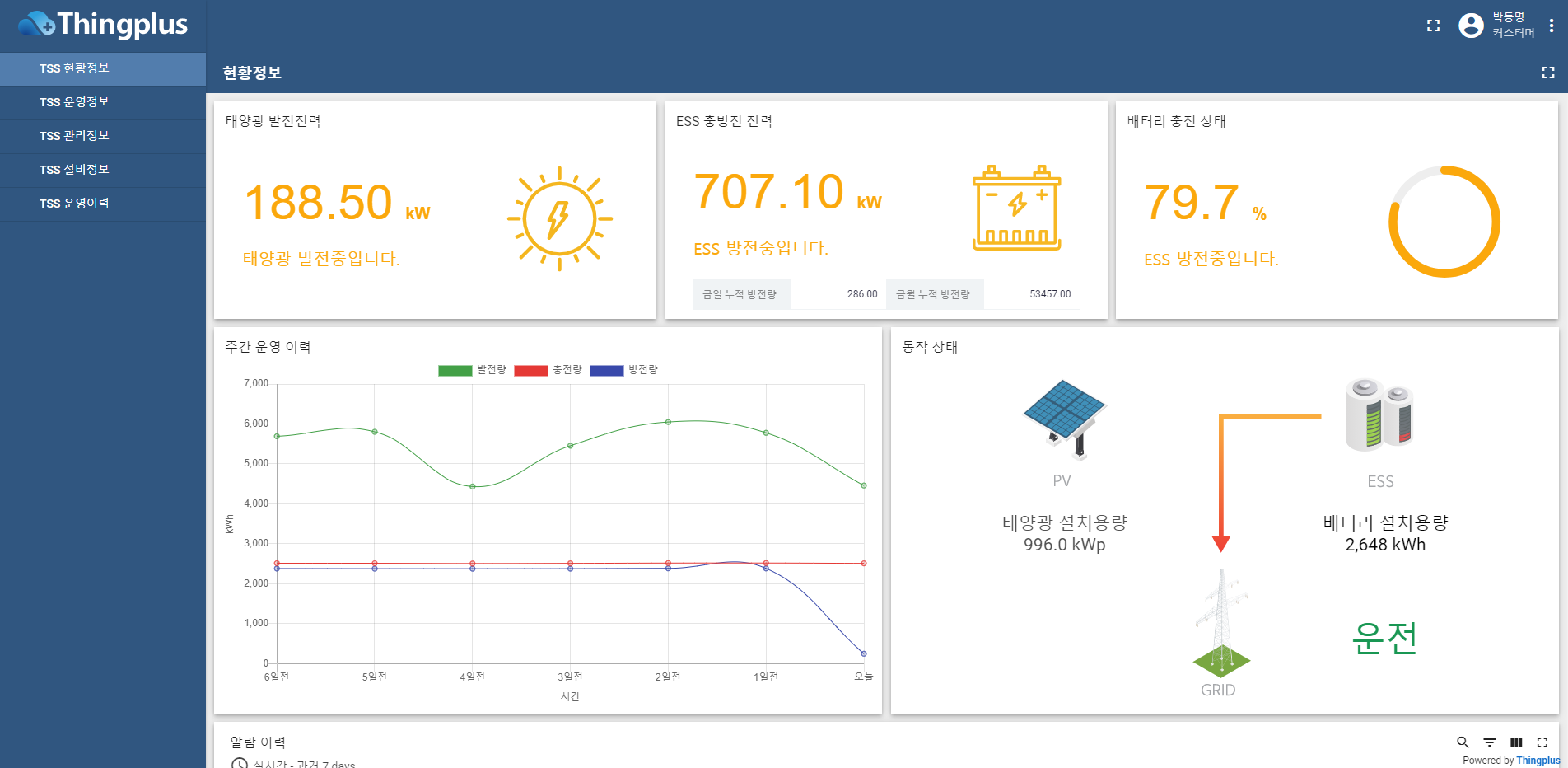
Daliworks has developed a service that shows solar power generation output in real time using its IoT platform Thingplus. Because solar power facilities are located far away, it is difficult to check generation output and whether equipment is operating normally on a regular basis. The Thingplus solar power monitoring service delivers this information to users in real time, laying the groundwork for the spread of solar power, an eco-friendly generation business. Through this service, users can check in real time whether their facilities are generating electricity smoothly and immediately see output levels along with any equipment failures or errors.
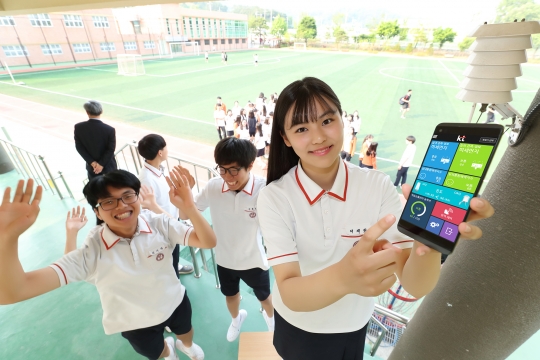
A school-dedicated ‘smart air quality management solution’ capable of measuring indoor and outdoor air quality is also being deployed. Air quality monitors are installed in 21 classrooms and on the school playground, providing air quality data 24/7, 365 days a year, covering fine dust, ultrafine dust, temperature, humidity, household gases (VOCs), carbon dioxide (CO2), and noise. Staff check the air quality conditions provided through the ‘smart air quality management solution,’ and when fine dust readings are poor, they follow procedures in line with the provincial education office’s ‘practical manual for responding to high concentrations of fine dust,’ such as suspending outdoor activities and classroom ventilation and running air purifiers.
A growing number of organizations are using IoT technology to solve social problems while finding new business opportunities. With interest in adopting IoT rising not only among information and communications technology (ICT) companies but also among local governments and public institutions, IoT technology is expected to spread rapidly, centered on public services that address a wide range of social issues.
Using IoT networks as a social safety net can effectively supplement today’s safety net, which lacks sufficient physical resources. For now, existing IoT services are simply being repurposed as a safety net, but going further and building an IoT-based social safety net would create a faster, more accurate system. It also offers the advantage of improving efficiency while reducing costs and manpower.
Now is the time to think harder about how IoT can help solve social problems.