What Is Motor Diagnostics? Concept and Why It Matters
Motors are essential mechanical devices in both modern industry and everyday life. They are used everywhere — in factories, cars, and home appliances — which makes their stable operation all the more important. This is why motor diagnostics is drawing attention. In this article, we look at the concept of motor diagnostics and why it matters.
1. The Concept of Motor Diagnostics
Motor diagnostics is the process of evaluating a motor’s condition and identifying potential problems in advance. It helps maintain motor performance and prevent failures.
Motor diagnostics is typically performed using the following methods.
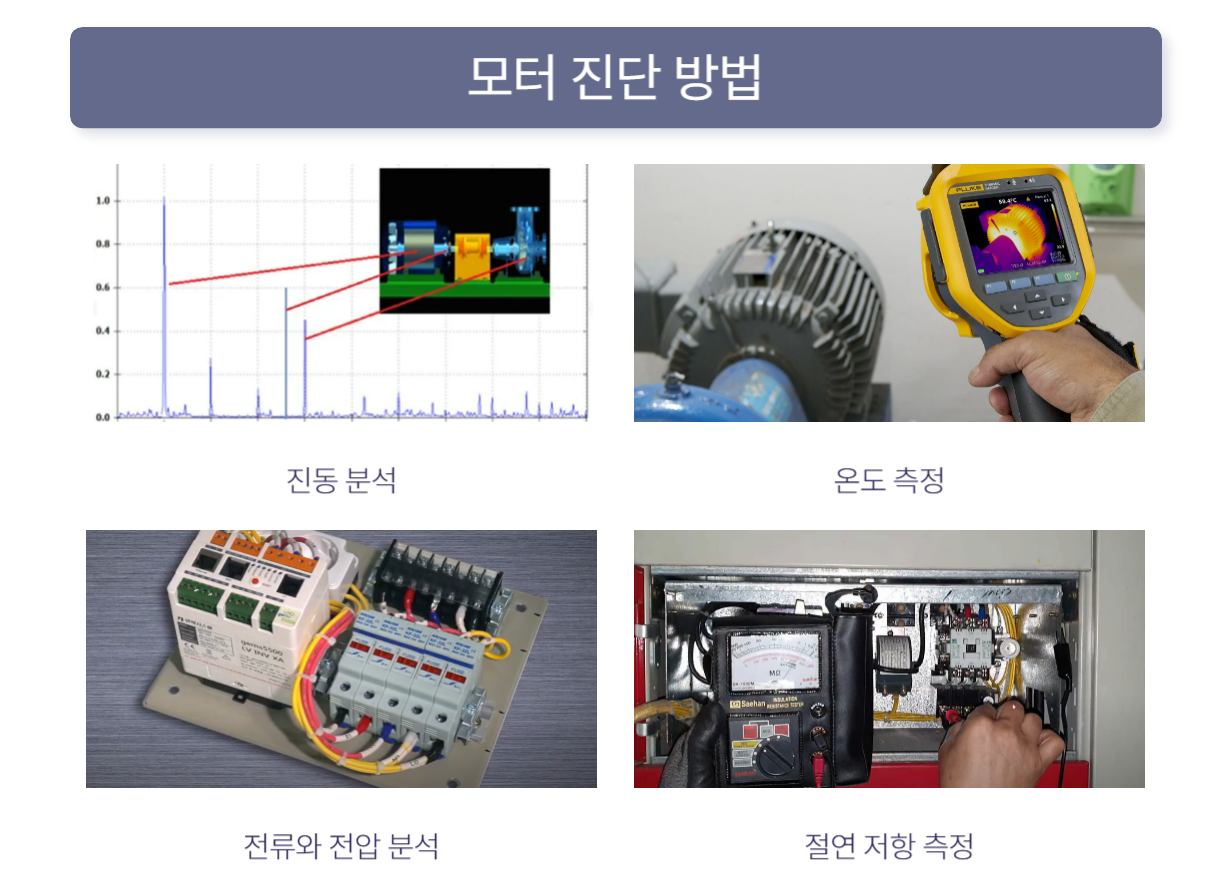
– Vibration analysis: Analyzes vibration data generated while the motor is running to detect abnormal signals
– Temperature measurement: Checks for overheating to prevent equipment damage
– Current and voltage analysis: Inspects for electrical load imbalance and power losses
– Insulation resistance measurement: Checks the motor’s insulation condition to identify potential electrical leakage
As these methods show, motor diagnostics is carried out comprehensively, using a variety of techniques and tools.
2. Why Motor Diagnostics Is Necessary
Many of the machines around us run on motors. You can find them everywhere — factory production lines, elevators, cars, and more. As these motors are used over long periods, they can wear out or break down, and motor diagnostics is needed to detect and prevent such problems in advance.

① Failure prevention and cost savings: Motor failures can be extremely costly, causing production line stoppages and equipment damage. Detecting problems early through regular diagnostics saves on repair and operating costs.
② Improved operational efficiency: Keeping motors in healthy condition improves energy efficiency and reduces power consumption — contributing to both cost savings and greener operations.
③ Enhanced safety: An unstable motor can cause accidents such as fires or explosions. Preventing safety risks through diagnostics is essential.
④ Extended equipment life: Regular motor diagnostics extends motor life and increases equipment uptime.
3. Key Application Areas for Motor Diagnostics
Motor diagnostics is used across a wide range of industries.
 – Manufacturing: Factory automation equipment and large machinery
– Automotive: Motors in electric vehicles and internal combustion vehicles
– Energy industry: Power plants and transmission and distribution facilities
Closing Thoughts
Motor diagnostics is a critical process that optimizes motor performance, extends equipment life, and prevents losses caused by failures. On industrial sites in particular, adopting diagnostic technology delivers efficient operations and cost savings at the same time.
If stable motor operation matters to your business, build a safe and efficient environment through regular diagnostics and maintenance.
✅ Recommended Reading
Key Motor Diagnostic Technologies: Vibration Analysis, Temperature Monitoring, and Current Analysis