IoT Services for Smooth Drainage of Roads and Streams
Roads — the backbone of our society — have been built in earnest since the 1980s. As social infrastructure, they have served as the foundation of logistics, transportation, and economic activity. But under continuous loading and gradual weathering and aging, these facilities have been deteriorating over the long term. Monitoring social infrastructure has therefore emerged as a necessity for public safety.
While road construction spending has been trending down recently amid growing health and welfare budgets, maintenance costs to keep the public safe continue to rise. With sufficient financial investment in road management hard to come by, it is time to consider adopting a scientific decision-making framework (asset management) for road investment.
Let’s look at IoT services for keeping roads safe and functioning.
Poor Drainage Leads to Wet-Road Accidents
Road surfaces are both a source of stormwater runoff pollution and a conduit for pollutants originating from the road itself. And on those roads sit storm drains. The storm drain — catching rainwater and water running off the road and channeling it into the sewer — is the most basic and important drainage facility, preventing flooding from heavy rain and warding off accidents. When road drainage is poor, the risk of wet-road accidents rises.
Built solely to drain rainwater smoothly, storm drains take the form of grated inlets left open all year round. As a result, cigarette butts, gum, and household trash get tossed carelessly into the open drains. Fallen leaves, soil, and other debris wash in as well, producing foul odors. Cleaning roads and storm drains is therefore one of the best ways to control and remove pollutants from road runoff and the city itself.
Research into street cleaning as a way to remove nonpoint pollutants from road runoff began in the early 1970s. Under optimal conditions it removes 30% of pollutants, and under typical conditions 10~30%. Heavy metals such as lead on roads can be reduced by more than 50% through street cleaning, and under special conditions even more.
The US EPA recommends methods for cleaning particulate matter from paved areas, such as periodic street sweeping and water-based removal of fine pollutants. Cleaning up such particulates is meant to reduce the sediments, debris, and other pollutants running off road and parking lot surfaces — contaminants that can potentially affect urban drains.
These days, a range of cleaning equipment can remove pollutants from roads, cutting the pollutant load that flows into waterways during rainfall. To improve the removal of fine particles, street cleaning must be kept up effectively so that most pollutants are removed, and research points to the need for pollutant removal along with storm drain monitoring systems on roads and optimally set cleaning cycles.
The Thingplus Drainage Monitoring Service
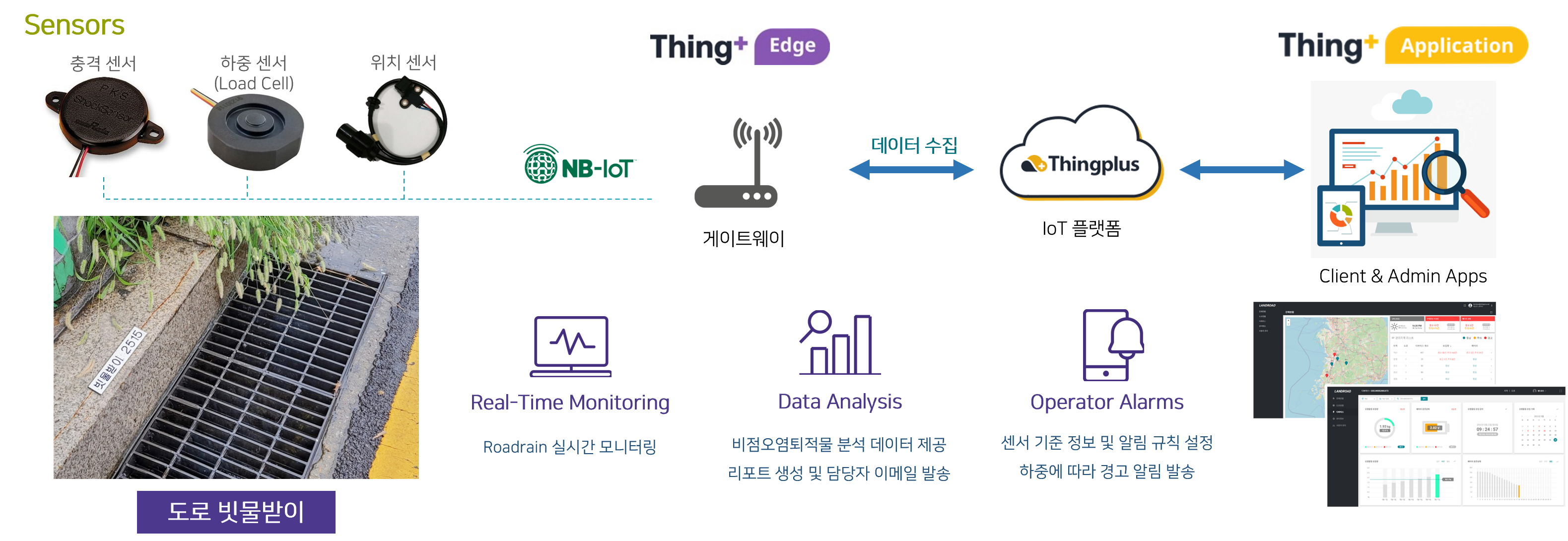
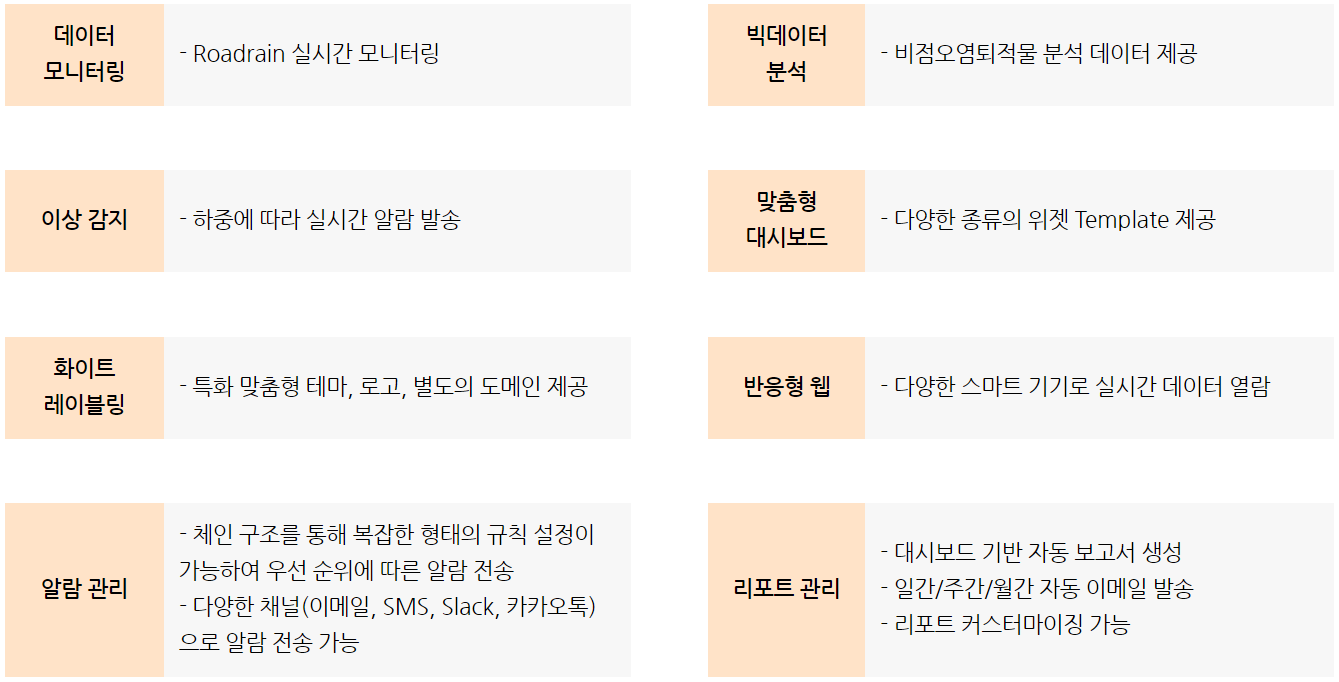
When roads or streams fail to drain properly, hydroplaning raises the risk of traffic accidents. To solve this, the drainage monitoring service installs sensors in storm drains to monitor and manage the load of nonpoint-pollution sediment in real time. Sensors at critical points send an immediate anomaly alert the moment a threshold is crossed, enabling an instant response. This keeps drainage conditions optimal and road surfaces draining smoothly, preventing traffic accidents before they happen. Monitoring and alarms also let staff visit sites at just the right time, cutting costs and boosting work efficiency at once.
Key Features
Thingplus supports the entire process of adopting an IoT service — from consulting and service/system design to communications/device recommendations and service delivery. Try Thingplus, covering every domain of digital transformation!