Zero Energy Waste! The Building Energy Monitoring Service
Growing urban populations and rising demand for buildings drive up the energy consumption of the built environment. Concern that urban populations will keep growing has been with us for a long time, and governments and companies around the world are already focused on ways to operate buildings for efficient energy consumption. Against this backdrop, interest is growing in the Building Energy Management System (BEMS), which applies IT to manage a building’s energy efficiency.
Why Building Energy Management Matters
As global warming intensifies, cutting greenhouse gas emissions grows more important by the day, and effort in the carbon-heavy energy sector is essential. At the 21st Conference of the Parties to the UN Framework Convention on Climate Change (COP21), the Korean government committed to reducing greenhouse gas emissions by 37% below BAU by 2030.
Korea’s total final energy consumption has risen about 56.3% over the past 20 years, and per-capita energy consumption continues to climb. The sectors with the highest energy consumption in Korea today are buildings, transportation, and industry. The building sector accounts for 20% of domestic energy consumption, making carbon reduction a major issue there — no different from the global trend. According to the 『2017 State of the Planet Report』, buildings and construction are an energy-intensive sector responsible for 36% of global energy consumption and 39% of greenhouse gas emissions. Breaking that down, 28% comes from building operations such as heating, cooling, and lighting, while 11% arises from raw materials and the construction process.

Efficient building energy management calls for controlling sources of waste through optimal operation of energy consumers — including the building’s most energy-hungry equipment — and for keeping equipment systems performing at their best. The enablers include adopting high-efficiency equipment, power generation devices (such as solar panels), power conversion systems (PCS), BAS (Building Automation System), and BEMS (Building Energy Management System).
Meanwhile, the Zero Energy Building certification program took effect on January 20, 2017. The program targets energy self-sufficiency for new buildings by 2025, and certification requires combining a building’s passive elements with active elements such as renewables. In addition, deploying a BEMS-level system to manage them is a mandatory certification requirement. New buildings can factor efficient energy management into their design; because they are constructed from an energy management perspective, establishing an energy management framework after completion is easier, with the added advantage that no system retrofitting is needed.
Considerations When Adopting a Smart Factory
A BEMS (Building Energy Management System) is a building management system that attaches sensors to lighting, heating and cooling equipment, ventilation, and electrical outlets, then collects and analyzes data in real time. The solution monitors energy consumption and carbon emissions and performs automatic control in ways that optimize electricity use. It manages the energy used by a building or factory in real time, without a hint of waste.
It meters and measures the indoor environment and energy usage, uses the collected data to analyze equipment operation and energy consumption to identify inefficiently run equipment, provides a comfortable environment through optimal equipment control, and maximizes energy savings. It manages energy data and administers the building comprehensively through that data, the applications on the BEMS, and interfaces with other energy-saving controls.
According to the Korea Institute of Energy Research, buildings in Korea with a BEMS can cut energy consumption by more than 10% on average, and in advanced countries such as Japan savings can reach up to 30%.
Purpose
A BEMS monitors energy usage to maintain a comfortable indoor environment and manage energy efficiently, providing optimized building energy management measures. Its purpose is to track energy consumption and analyze whether the right amount of energy is being consumed by each energy source, heat source, system, and major piece of equipment, so that energy is managed efficiently.
Why It Is Needed
With carbon reduction needed to curb global warming, buildings too are being asked to save energy. HVAC systems are difficult to keep in optimal operation for the following reasons.
-
Load fluctuations by season, time of day, and operating conditions
-
Excess equipment capacity from designs based on peak load
-
Natural energy availability that varies with outdoor conditions
-
Differences in load and operation by zone
-
Mixing losses between cooling and heating
-
Excessive temperature setpoints, often beginning with complaint responses
-
Dynamic processes across heat sources, water distribution, air distribution, and occupied spaces
With these latent weaknesses raising the risk of unnecessary energy consumption, preventing indiscriminate energy use and running HVAC systems at their best requires operation tailored to the building, its equipment, and its circumstances, along with the introduction and tuning of energy-saving devices and energy-saving control systems.
The Thingplus Building Energy Monitoring Service
Efficiently managing a building’s energy use starts with monitoring how that energy is consumed. The Thingplus building energy monitoring service collects data on a building’s energy consumption, usage patterns, and performance, and provides real-time monitoring and analysis. Users can monitor their energy usage and establish an optimized building energy management plan.
With the Thingplus building energy monitoring service, you can optimize a building’s energy use and improve its efficiency. The service’s energy data analysis tools reveal current consumption and identify areas of inefficiency, helping reduce energy waste and improve overall energy efficiency. The result is lower energy bills and operating costs — and, over time, an overall boost to the bottom line.
The Thingplus building energy monitoring service provides comprehensive monitoring to optimize building operations. It identifies inefficiencies by quantifying energy usage patterns, peak demand periods, and building energy performance. This information supports strategic decision-making, optimizes building operations, and backs energy-efficient measures.
Key Strengths
-
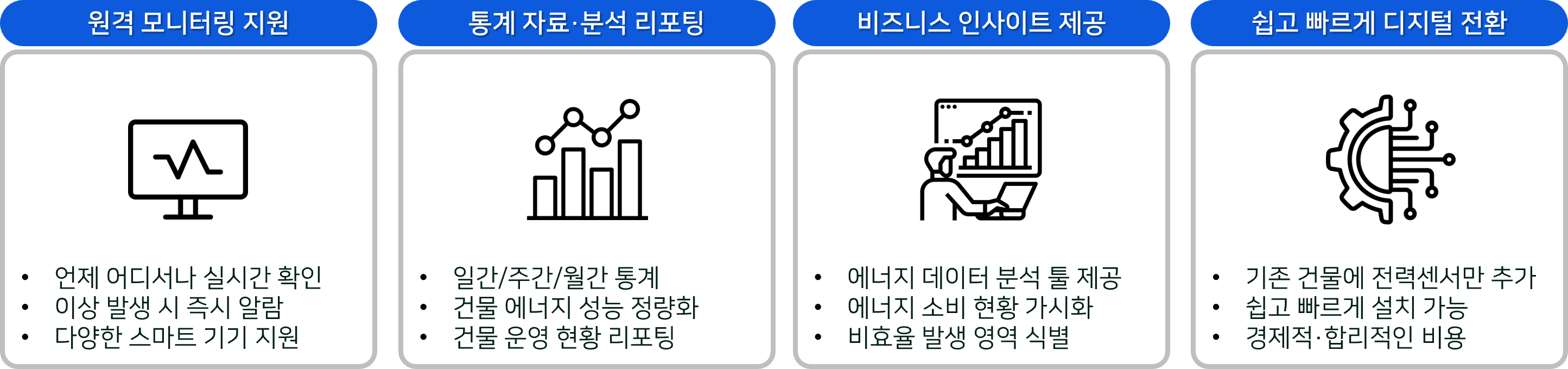
Real-time monitoring
Check system operations in real time and see the energy consumption of every building you manage at a glance.
-
Granular data
Provides granular data on each building’s energy consumption, usage patterns, and performance.
-
Power usage trends
Review energy usage patterns and trends to spot and correct sources of waste.
-
Energy management
Understand current power usage to plan energy cost savings and manage them systematically.
-
Alarms
When problems occur, alarms let you recognize and respond to them as quickly as possible.
Key Features
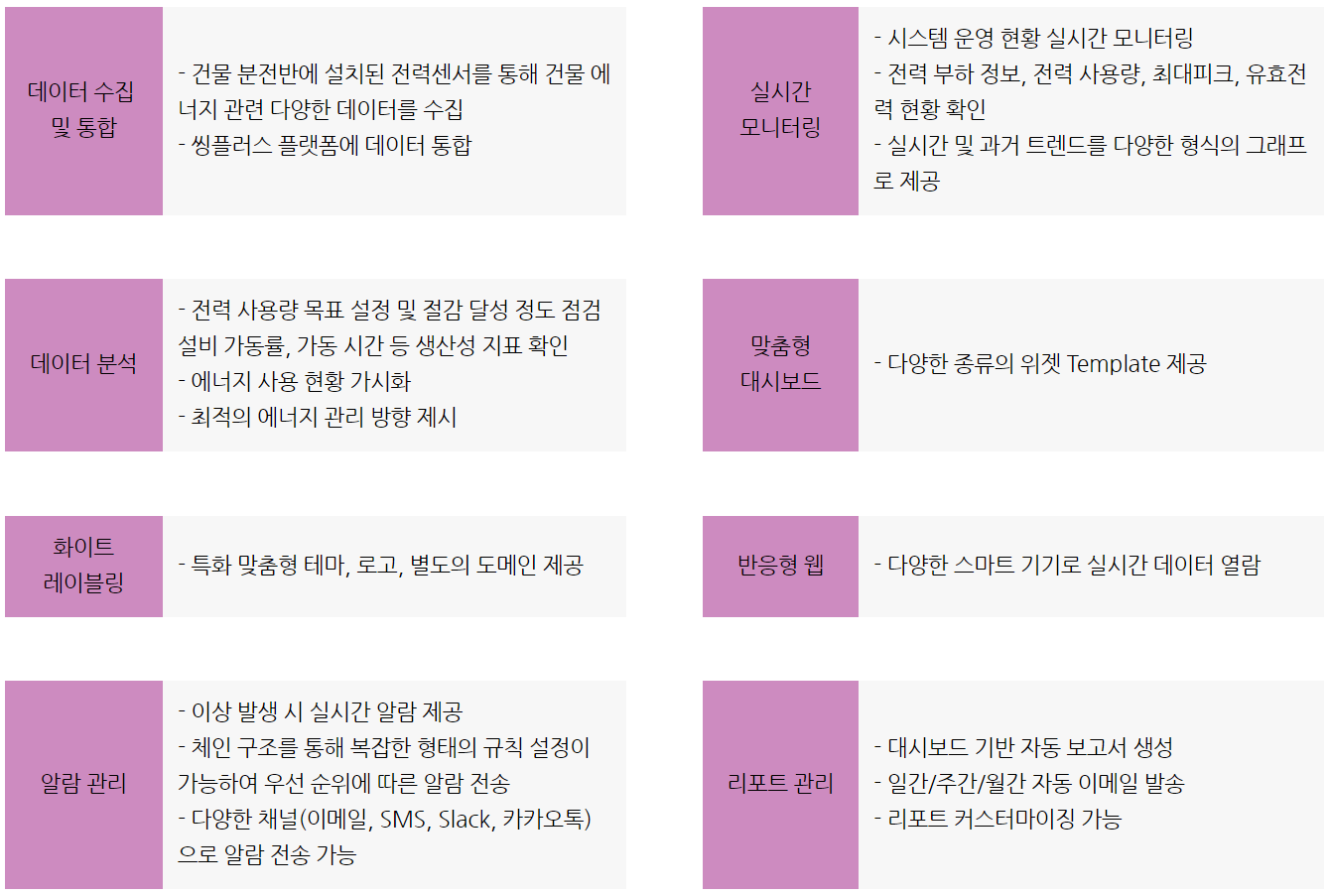
Thingplus supports the entire process of adopting an equipment operations monitoring service — from consulting and service/system design to communications/device recommendations and service delivery. If you would like to know more about how to get started, contact Daliworks!