Energy Efficiency UP, Power Quality KEEP: The EnergyQ Service
In modern industry, energy plays a critical role in factory operations and productivity. Yet with energy costs rising and environmental regulations tightening, energy management is becoming more important than ever. That is why many factories are adopting a FEMS (Factory Energy Management System) to manage their energy use efficiently.
What Is a FEMS?
A FEMS is a factory energy management system — a solution focused on monitoring and managing a factory’s power use. A FEMS aims to optimize energy use, reduce costs, and minimize environmental impact. It enables factories to raise energy efficiency and strengthen their competitiveness.
Why a FEMS Is Necessary
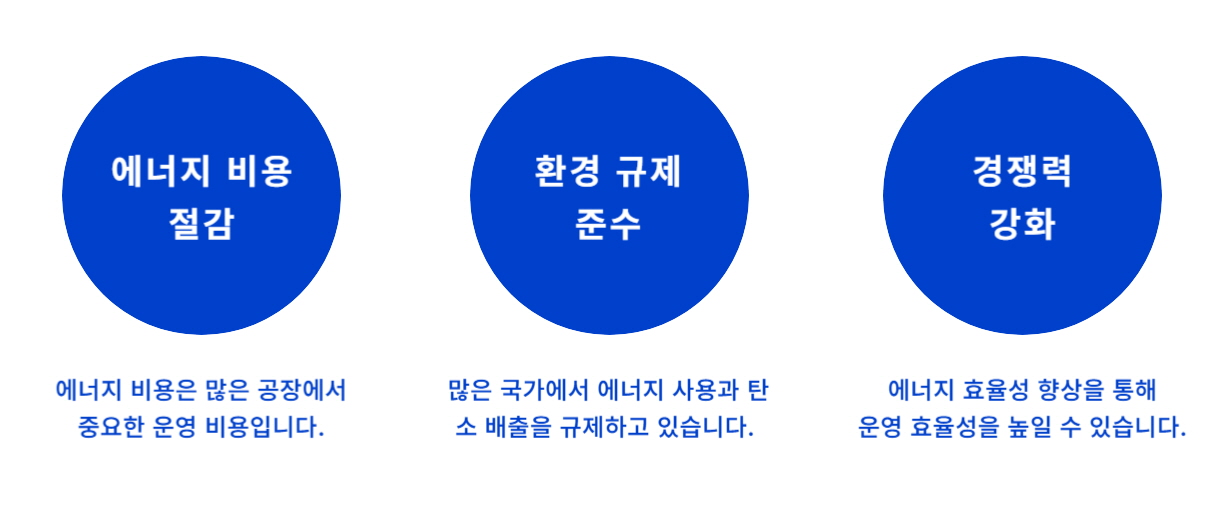
Adopting a FEMS (Factory Energy Management System) has become essential, driven by the need to cut energy costs, comply with environmental regulations, and strengthen competitiveness. Energy is one of the major operating costs at many factories, and a FEMS helps reduce costs by managing energy consumption efficiently. In addition, many countries regulate industrial energy use and carbon emissions, and a FEMS goes a long way toward complying with those regulations. Finally, by raising energy efficiency it increases the factory’s overall operational efficiency, which in turn strengthens competitiveness.
The Benefits of a FEMS
The benefits of adopting a FEMS show that it is far more than an energy management tool — it is a key solution for improving a factory’s overall efficiency and sustainability.
– Lower operating costs : Optimizing energy consumption lowers electricity bills and other energy-related expenses, reducing overall operating costs.
– Higher productivity : Power quality management optimizes the performance of machines and equipment, while energy usage pattern analysis improves production processes and raises productivity.
– Environmental protection : Raising energy efficiency and cutting carbon emissions keeps the factory compliant with environmental regulations and strengthens its environmental responsibility.
– Longer equipment life : Optimized energy use prevents equipment overload, extending equipment life and reducing maintenance costs.
– Data-driven decision support : Real-time data and analytical reports help management make data-driven decisions.
– Improved safety : Early detection of abnormal power usage prevents potential hazards and makes the factory safer.
– Regulatory compliance support : Helps the factory comply with energy-related regulations, preventing legal issues and keeping relations with regulators smooth.
– Greater energy independence : Monitoring and managing energy use in-house reduces dependence on external energy supply chains.
Integrated Energy Management: The EnergyQ Service
Energy Efficiency UP, Power Quality KEEP
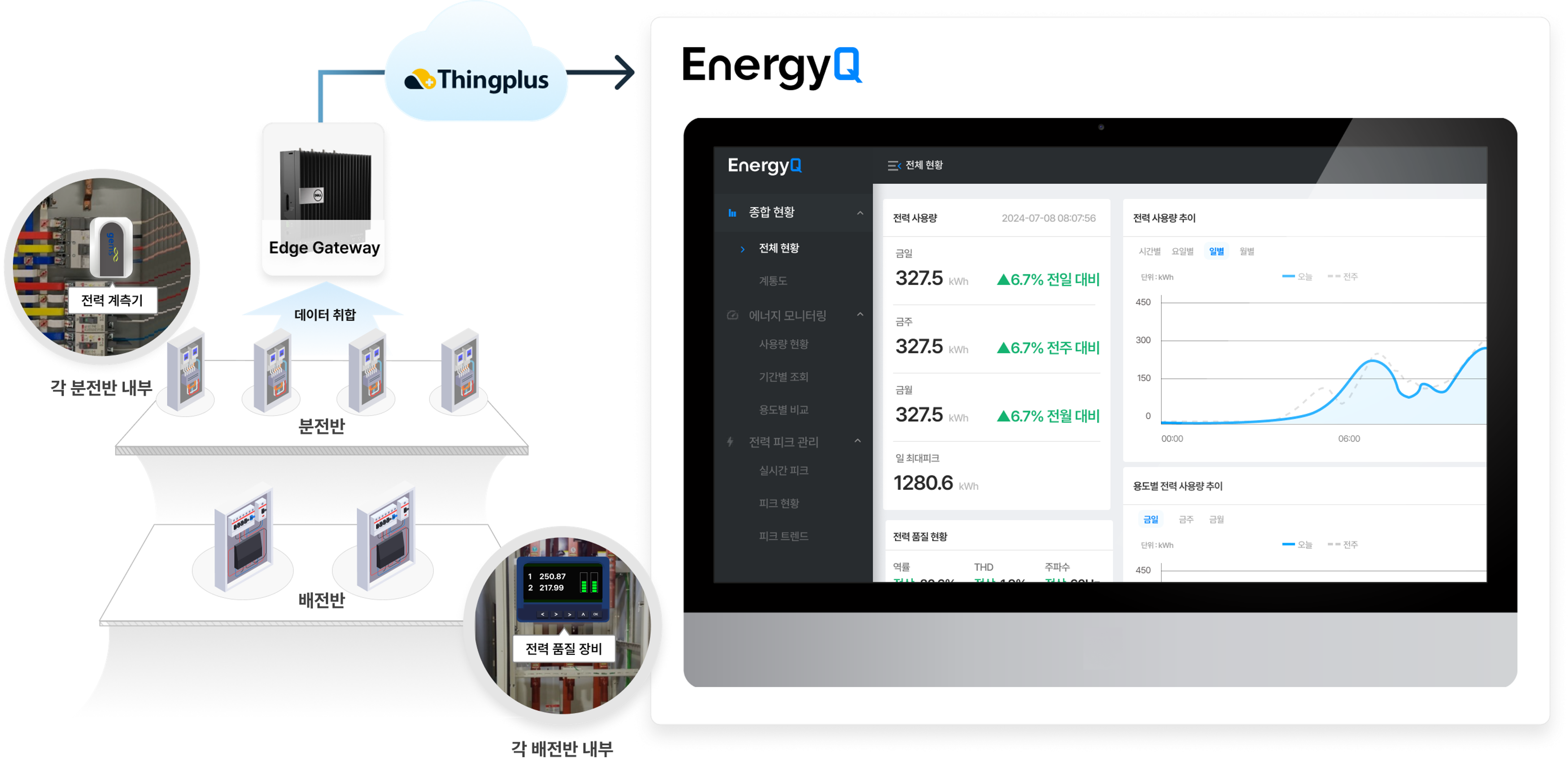
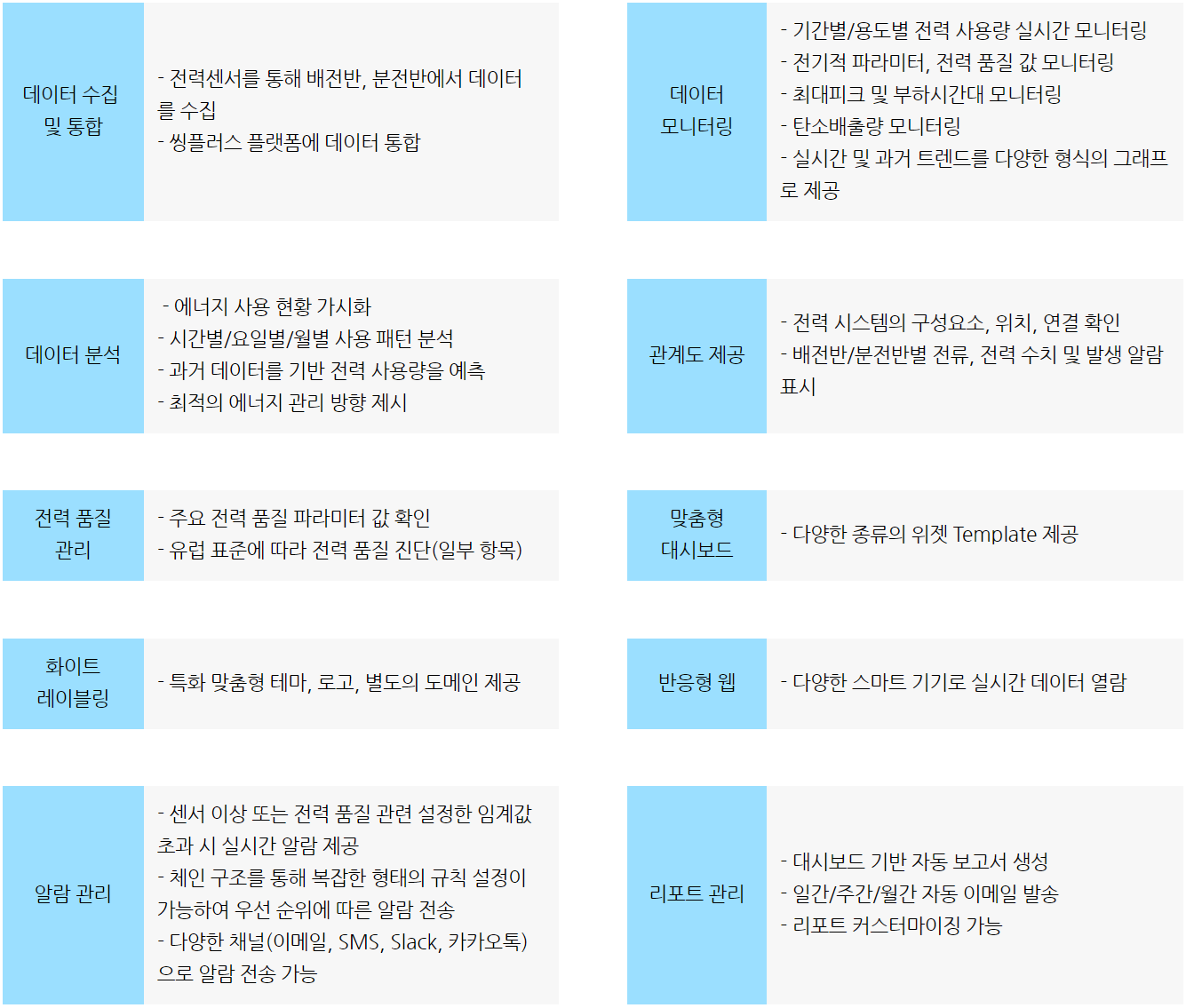
Efficient energy management is essential for factories to cut operating costs and protect the environment. EnergyQ is a service that charts the optimal course for energy management through comprehensive energy usage monitoring and power quality management. It is a next-generation FEMS solution whose key features include power usage monitoring, usage pattern analysis, consumption forecasting, peak management, and power quality management.
EnergyQ uses real-time monitoring to pinpoint exactly how the factory uses energy, and applies data analysis to examine usage patterns in detail. This reduces energy waste, surfaces efficient energy management measures, and improves overall energy efficiency.
Notably, while many existing FEMS offerings lack power quality management, EnergyQ handles both power usage monitoring and power quality management at the same time. This is a major advantage of EnergyQ: it maintains and improves the factory’s power quality, raising the stability of production processes. It also proposes tailored energy efficiency strategies that cut the factory’s operating costs and contribute to environmental protection.
Key Strengths
Integrated power monitoring
– Monitoring power consumption, load information, and maximum demand builds an understanding of energy consumption patterns and enables optimization. It helps cut unnecessary energy waste and lower energy costs.
Energy analysis / forecasting / savings
– Supports energy-saving initiatives. Power usage pattern analysis helps adjust consumption patterns, while daily/monthly consumption forecasting models provide practical support for hitting power usage targets.
Power quality and safety management
– Supports longer equipment life through data-driven maintenance. Power quality indicator monitoring, harmonic analysis, and voltage fluctuation detection protect equipment and maintain a stable power supply.
Carbon emissions management
– Calculates carbon emissions, visualizes them, and publishes them as reports. It supports Scope 3 under ESG (Environmental, Social, and Governance) standards, helping the factory comply with environmental regulations and operate sustainably.
Key Features
Thingplus supports the entire process of adopting an equipment operations monitoring service — from consulting and service/system design to communications/device recommendations and service delivery. If you are curious about the specifics of getting started, contact Thingplus!
✅ Related content worth reading