Daliworks offers a trio of manufacturing innovation solutions: Prime, an AI solution for managing manufacturing equipment; SignalVax, a 24-hour AI motor doctor; and EnergyQ, which raises energy efficiency. Among them, Prime brings innovative support to equipment operations monitoring and energy management for manufacturers, accelerating digital transformation at small and mid-sized companies. In this case study, we introduce the Prime deployment at Customer A, which operates large laser bending machines and needed to cut its energy use.
Prime, the AI Solution for Manufacturing Equipment Management
Prime is a smart factory solution for monitoring equipment operations and managing energy at manufacturing companies. Using power sensors, it collects and analyzes real-time data to support productivity gains and cost savings. It offers an intuitive dashboard and a range of reporting features, and is designed to contribute to ESG management as well. Delivered cloud-based at a reasonable cost to support digital transformation at small and mid-sized companies, it monitors equipment utilization, energy consumption, power quality, and more to help operations run efficiently.
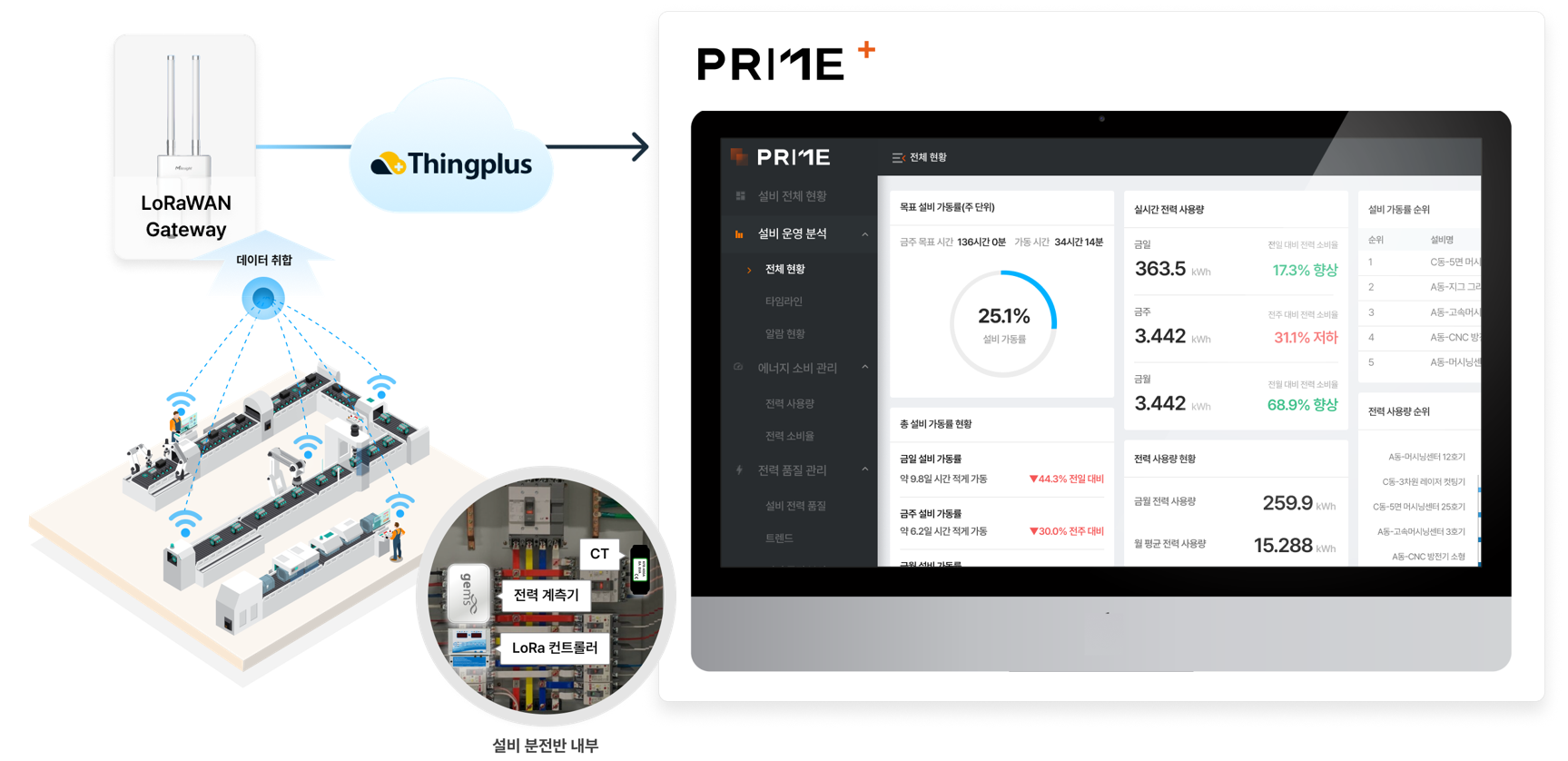
Architecture of Prime, the AI solution for manufacturing equipment management
Why Customer A Adopted Prime
Customer A, Korea’s largest operator of laser bending machines with a wide range of advanced processing equipment, adopted the Prime service to address the following challenges:
– Meeting ESG management goals: Cut power use and reduce pollutant emissions
– Greater equipment efficiency: A systematic production management solution was needed to raise productivity
– Environmental data monitoring: Real-time detection of pollution factors such as dust and gases
Introducing new equipment was essential, particularly to cut power use and reduce pollutant emissions. The company decided to acquire it through a government support program, opting for the ‘Smart Eco-Factory Program.’
About the Smart Eco-Factory Program
Targeting manufacturing plants — the largest share of pollution sources — the program comprehensively pursues greenhouse gas reduction, pollutant minimization, and improved energy and resource efficiency, supporting small and mid-sized companies in building eco-friendly production systems.
To that end, the company set the following goals and prepared the project.
– Power savings and monitoring: Optimize energy use and manage power quality by introducing low-power equipment
– Dust reduction and monitoring: Install dust collectors and detect airborne dust concentrations in real time
– Gas monitoring: Measure hazardous gas emissions and minimize environmental impact
How the Deployment Went
Company A decided to introduce eco-friendly facilities and operating systems through the Smart Eco-Factory Program. First, after being selected, it procured a low-power laser cutting machine along with eco-friendly equipment including dust collectors. This not only reduced power consumption but also marked the start of effective management of pollutants generated during production. Meters were also installed to precisely measure the new equipment’s power savings, enabling real-time data collection.
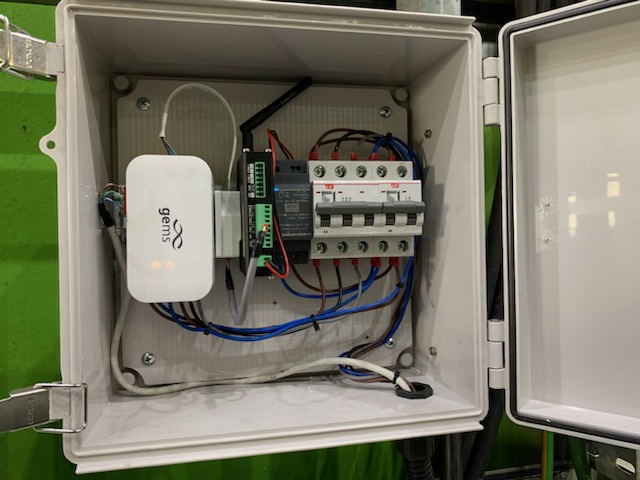
The installed power meter
The Smart Eco-Factory Program designates ICT as a mandatory element for monitoring the impact of newly introduced facilities. Company A built its ICT foundation on Daliworks’ Prime, and from the collected power data it was able to obtain the following.
– Operating status by equipment
– Daily/weekly/monthly power usage analysis and pattern analysis
– Active power peak monitoring
– Real-time power consumption
– Day-over-day change rate
– Hourly power usage statistics
– Power quality parameter monitoring
– Operating status timeline and daily, weekly, and monthly uptime/downtime analysis
– Anomaly detection and alarms
– Equipment operations analysis reports
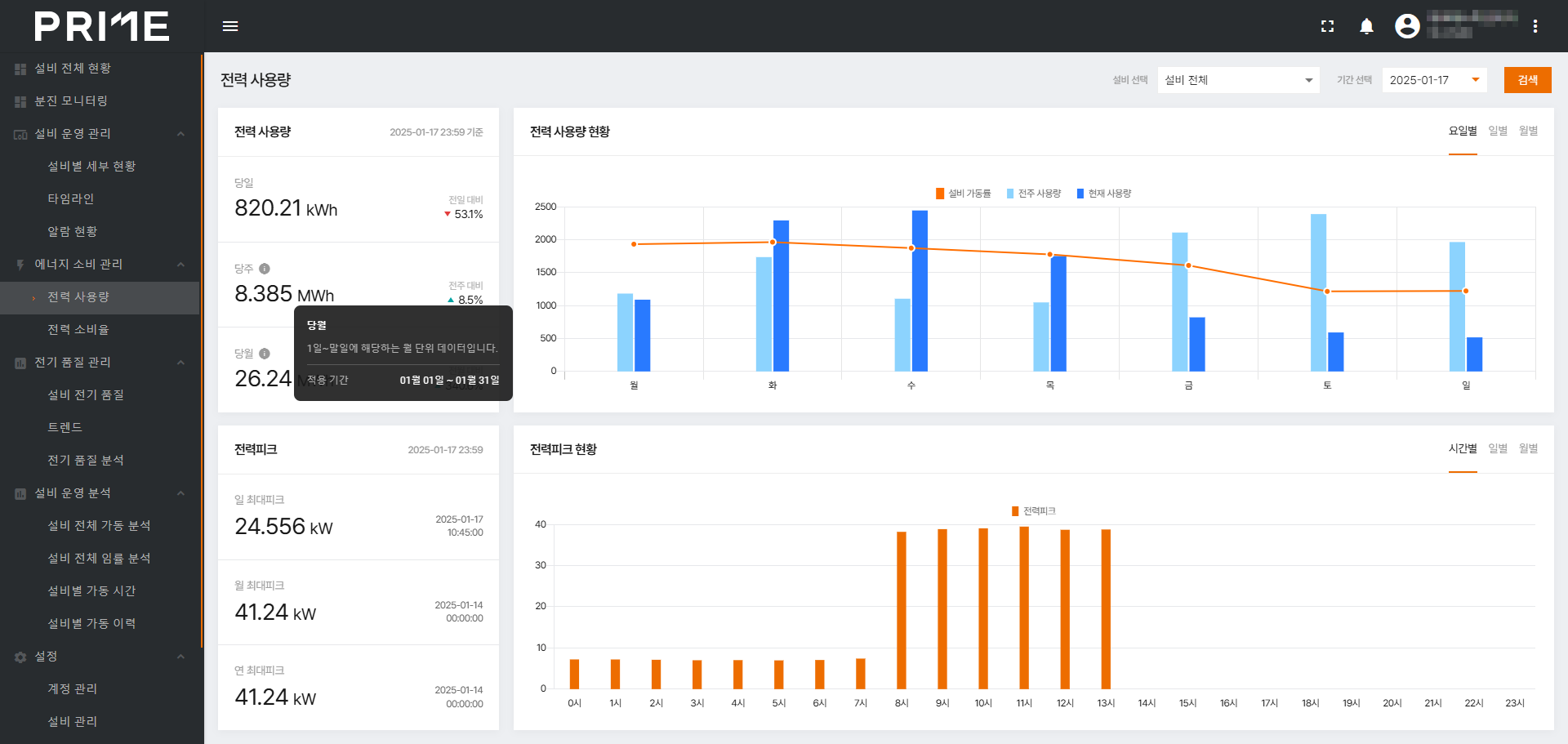
Power usage monitoring in Prime
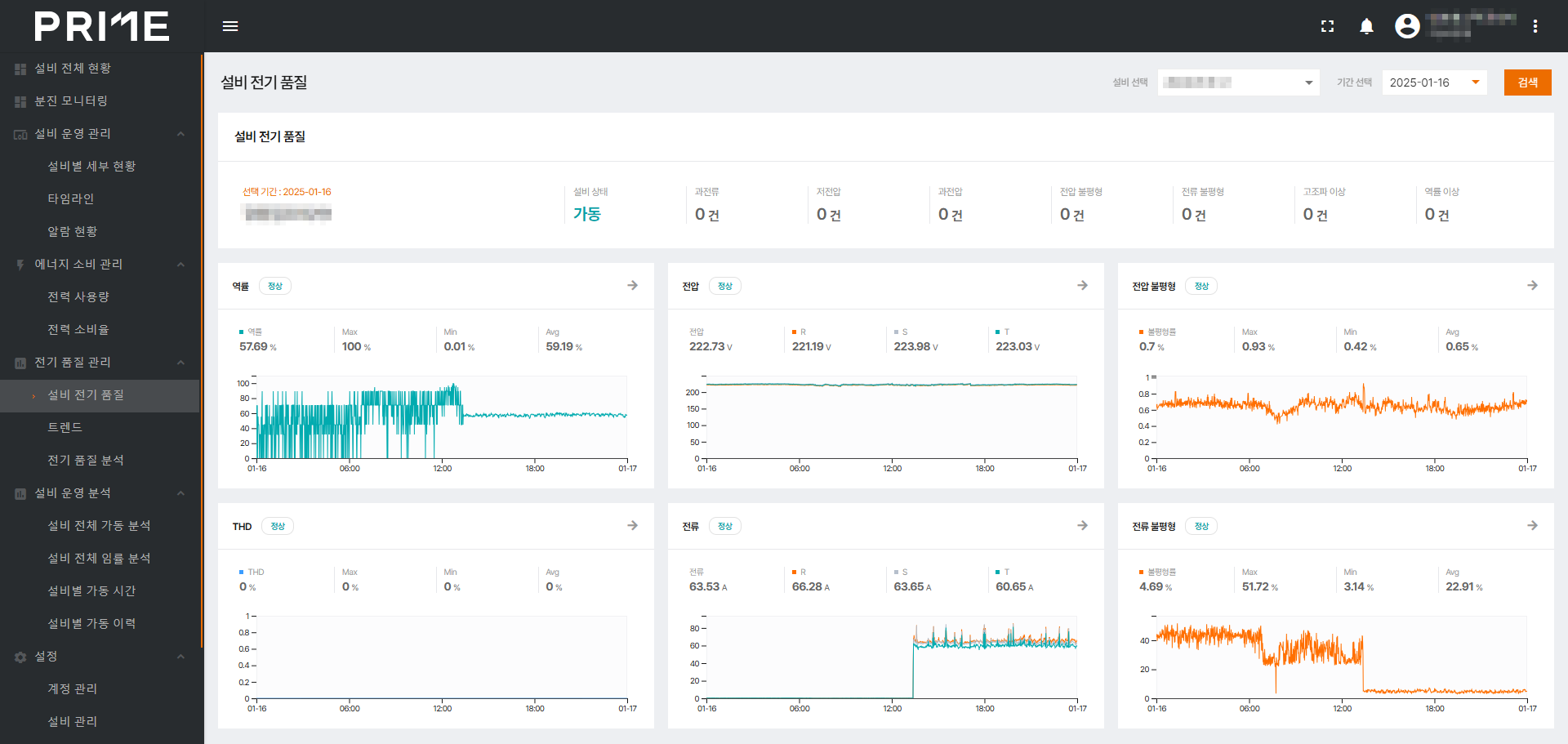
Equipment power quality monitoring in Prime
Finally, additional dust sensors were deployed, enabling precise monitoring of airborne pollutant concentrations and systematic analysis of environmental impact. Because all sensor data is managed and delivered through the cloud-based Prime, the customer could check it anytime, regardless of location.
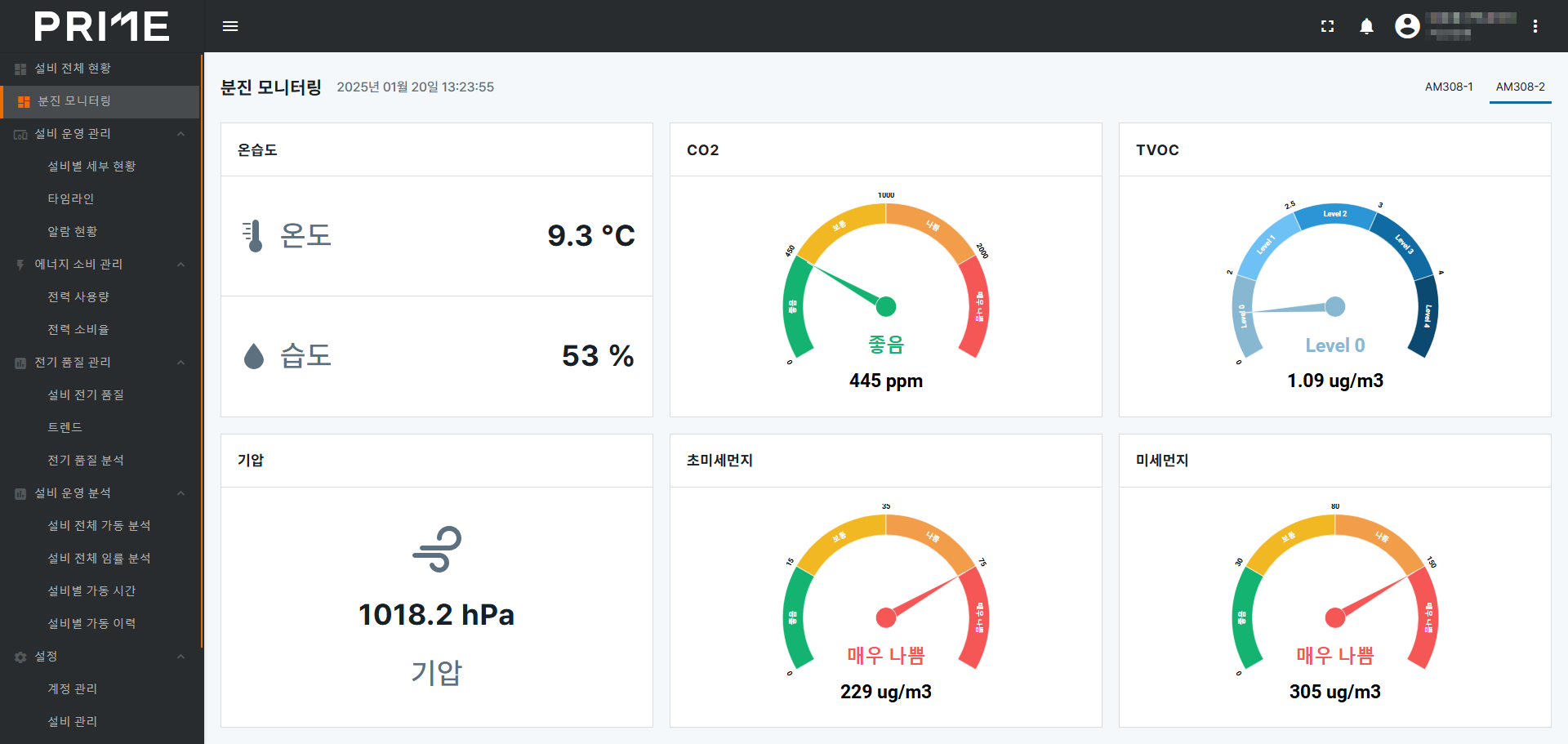
The dust monitoring dashboard
Results
After successfully completing the project, the customer gained the following benefits.
– Optimized investment: Reduced upfront cost burden by leveraging the government support program
– Energy usage management: Achieved efficient energy consumption through real-time monitoring
– ESG management in practice: Established itself as an industry-leading example of environmental management
We were especially proud to hear that the power data, as an immediate indicator of energy savings, would be a great help from the management team’s perspective as well. 🙂
Closing Thoughts
Daliworks’ Prime is more than an equipment management tool — it is a core solution that strengthens manufacturers’ competitiveness and enables sustainable growth. This case shows how the Prime solution can deliver efficient operations and ESG management at the same time. If you are considering a smart factory, explore the new possibilities with Daliworks’ Prime service.
✅ Related content worth reading
The Critical Pain Points of the Smart Factory — and How to Solve Them