The Value Companies Gain When Transitioning to an AIoT-Based Business
Two core technologies are driving the paradigm of the Fourth Industrial Revolution: the Internet of Things (IoT) and artificial intelligence (AI). Recently, the Artificial Intelligence of Things (AIoT), which combines the hyper-intelligence of AI with the connectivity of the IoT, has been on the rise. AIoT, the convergence of AI and IoT, is drawing significant attention as it moves in step with enterprise digital transformation.
Internet of Things (IoT) sensors collect vast amounts of data, and this big data in turn flows into artificial intelligence. Billions of sensors detect enormous data streams in real time across manufacturing, healthcare, aerospace, defense, transportation, telecom, and smart city applications, while AI analyzes patterns in that data to predict and carry out the actions users want. The advances AIoT is bringing to the smart factory field in particular are nothing short of groundbreaking.
What Is AIoT?
First, the Internet of Things (IoT) is a network of objects that connect to other devices through sensors, software, and the internet and can exchange data. Devices in the IoT range from smart locks to cameras, mobile phones, and medical devices. There are currently about 30 billion IoT connected devices, and that number is expected to grow to about 75 billion by 2025. These devices will play an important role in society, and an even greater one when combined with artificial intelligence.
Artificial intelligence (AI) traditionally builds algorithms that classify and analyze data and derive predictions from it. It also acts on data, learns from new data, and improves over time. The technologies most central to AI are machine learning, deep learning, and natural language processing. The applications of AI are countless: chatbots, facial detection and recognition, autocorrect, digital assistants, search recommendations, and more.
Beyond IoT: ‘AIoT’
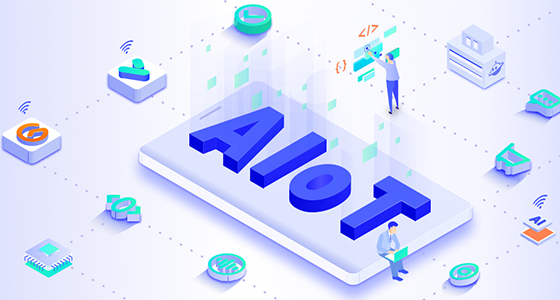
When AI and IoT are combined, artificial intelligence uses the data collected by IoT devices for learning, analysis, insight development, and decision-making without human intervention. The number of devices connected to and communicating over the IoT keeps growing, and with high-speed, high-bandwidth capabilities, conventional data collection and analysis alone are no longer enough. AI can use the massive volumes of data collected to detect, understand, and act on enormous data streams in real time. AIoT will thus increase the performance and speed of devices and give them the ability to make more intelligent judgments.
Ultimately, AIoT means the combination of artificial intelligence (AI) and IoT. AIoT aims to be a system that not only connects things to the internet to exchange data but also learns and grows through artificial intelligence. In other words, AIoT will make it possible for sensors to collect and analyze data from the external environment and to interact autonomously with other things and with people, all without human intervention.
AIoT in Use Across Diverse Industries
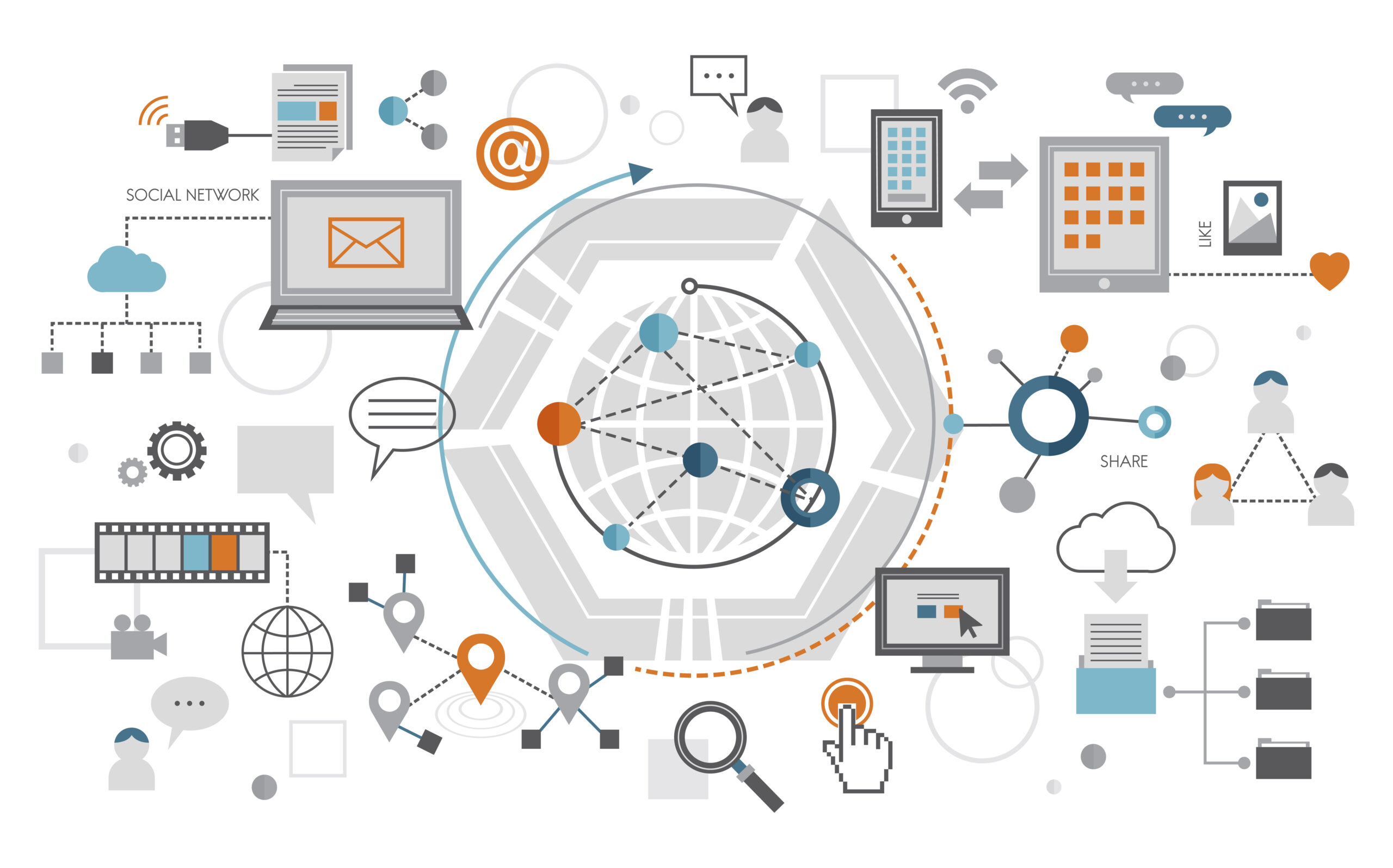
AIoT is what emerges when data analytics is performed within the IoT, enabling things to communicate intelligently. AIoT is being put to use across a wide range of industries.
Sensors and smart cameras also help with office security. Smart cameras can identify employees through facial recognition technology using real-time data and images. The retail industry is deploying AIoT capabilities as well. Security cameras are essential for preventing and deterring shoplifting. Much like in office buildings, cameras can recognize shoppers’ faces and remember repeat offenders.
AIoT also has broad applications in traffic control for large cities. Congestion can be reduced by monitoring and reporting traffic flow based on real-time data. This is done through sensors located in congested areas, with AI determining how best to handle traffic based on the data provided. Depending on conditions, traffic can be redirected, speed limits changed, and traffic signals adjusted. Intelligent traffic management software, powered by AI embedded in connected devices, has now advanced far enough to analyze traffic patterns, weather conditions, and more at the scale truly required to fight congestion.
Manufacturing is an industry that stands to benefit greatly from AIoT. For example, complex far-field voice interaction is transforming nearly every part of the manufacturing process. Instead of finding and pressing a stop button to shut down equipment in an emergency, machine operators can use their voice. In addition, analyzing the flood of data generated every second on the shop floor makes it possible to detect safety issues and manufacturing errors and to stay ahead of machine maintenance, maximizing operational efficiency and productivity.
In rail transportation, AIoT can be applied to a variety of applications where it delivers real value and performance: passenger information systems, railway intrusion detection, station surveillance, onboard video security, and railway hazard detection. Today, rail intelligence platforms equipped with AIoT solutions are installed on special rail inspection trains to process images captured from key wayside equipment in real time. Using sophisticated algorithms driven by parallel computing and deep learning, the system effectively identifies potential equipment defects at train speeds of 120km/h and raises alerts to notify maintenance centers.
The healthcare industry can also benefit greatly from AIoT. AIoT-enabled medical devices that monitor things like heart rate and breathing patterns can flag problems before a patient emergency occurs. Over time, data on these events can be shared directly with GPs or hospitals. In short, AIoT is expected to make a transformative contribution to helping medical professionals deliver the right care at the right time.
Why Pay Attention to AIoT?
When you integrate AI and IoT, you get AIoT, a transformative combination that can reshape industries, elevate customer experiences, and exponentially accelerate business outcomes. In other words, the combination of AI and IoT has the potential to dramatically accelerate the benefits of digital transformation across the consumer, enterprise, industrial, and government market segments. AI adds value to IoT through decision-making, and IoT adds value to AI through connectivity and data exchange.
Gartner predicts that by 2022, more than 80% of enterprise IoT projects will include an AI component.
How Global Companies Are Moving on AIoT
Sharp aims to build systems that not only connect things to the internet to exchange data but also learn and grow through artificial intelligence. Sharp’s AIoT technology was originally created for home appliances and mobile devices, but by deploying it for business use, companies can easily realize device IoT enablement, service integration, automated response, voice interaction, and more across diverse business domains. Sharp aims to realize an AIoT-powered smart life through three activities: ‘AIoT-enabling equipment,’ ‘expanding AIoT services,’ and ‘providing an AIoT platform.’
Xiaomi chairman Lei Jun stated last year that “over the next five to ten years, AIoT will be the core strategy for smartphones and for Xiaomi,” announcing plans to invest at least 9.38 billion yuan (about 1.6 trillion won) over five years, and unveiled the launch of a mammoth ‘AIoT Strategy Committee.’ The committee comprises ten divisions in all, including the IoT platform, AI, ecosystem, smart hardware, mobile, and TV divisions.
Huawei first announced its ‘AIoT strategy’ at the end of 2018, investing 41.05 billion yuan (about 7 trillion won) and focusing on a hyperconnected network that links individuals, homes, and offices, while expanding its global partnerships around its ‘HiAI’ AIoT ecosystem. Today, 300 million IoT devices and 200 million households are connected to Huawei, more than 100 products and 200 brands belong to the Huawei AIoT ecosystem, and it is expected to drive 100 billion connections by 2025.
TCL, one of China’s leading consumer electronics companies, unveiled its 4T strategy (T-HOME, T-LIFE, T-LODGE, T-PARK) with AIoT at its core, creating products and services for the home, daily life, hospitality, and leisure, and set a goal of surpassing 200 billion yuan (33.7 trillion won) in sales in these areas by 2023. CEO Wang Cheng emphasized that “AIoT will create a two-way environment between users and devices, delivering a wonderful lifestyle for humanity.”
In Korea, LG Uplus has taken the lead, merging its existing AI business unit with its IoT/AI organization to form a new AIoT division aimed at strengthening execution in the 5G, AI, and IoT markets, and it is maximizing synergy by unifying its home, AI, and IoT services and reinforcing product strategy. Samsung Electronics and LG Electronics are also accelerating technology development, but for now, AIoT-enabled appliances are being launched primarily as premium new products. The new experiences and future daily life they promise are, in practice, reaching only a few. Legacy environments still make up the majority of the market, but depending on how quickly the technology is popularized, we can expect to soon enjoy an effortlessly personalized life at home through AIoT.
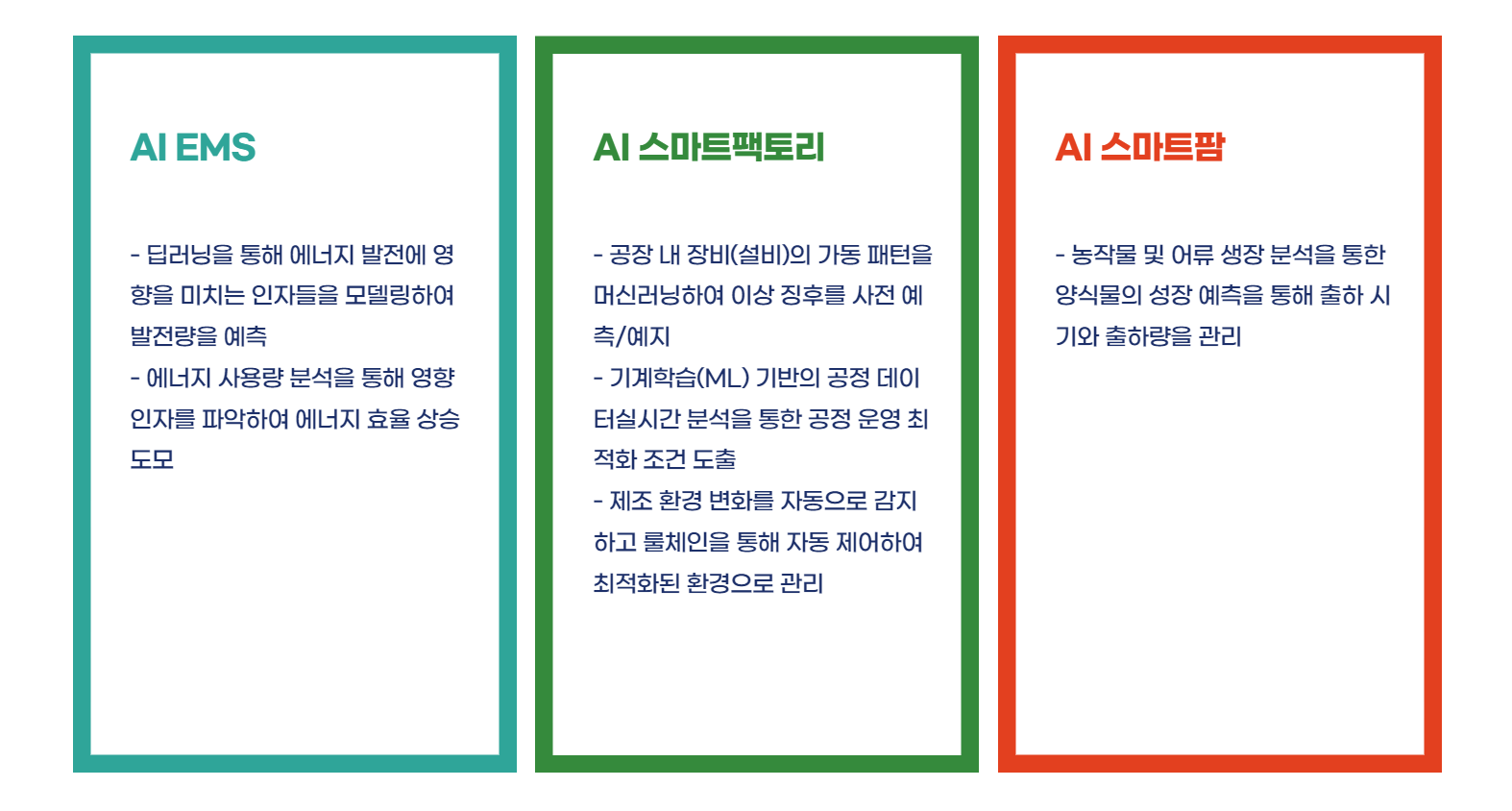
Daliworks, an integrated IoT solutions company, has launched Thingplus 2.0, an AIoT platform with enhanced AI-based, enterprise-tailored capabilities. Daliworks framed the launch of Thingplus 2.0 as its expansion into an ‘AIoT platform,’ signaling business innovation through AI-driven use of data. The new Thingplus comes with AI-based analytics and prediction models. Through machine learning and deep learning, it detects anomalies, derives optimal operating conditions, and identifies influencing factors to deliver accurate prediction models. These solutions grow even more effective over time: as businesses operate on Thingplus, AI training data and analytics cases accumulate, steadily improving AI prediction accuracy.
Its range of applications is broad, spanning smart factories, smart buildings, smart energy, smart farms, and more. For example, applying Thingplus AI technology to a smart factory can improve equipment efficiency, increase factory utilization and output, and optimize operations while reducing maintenance costs through proactive equipment diagnostics.
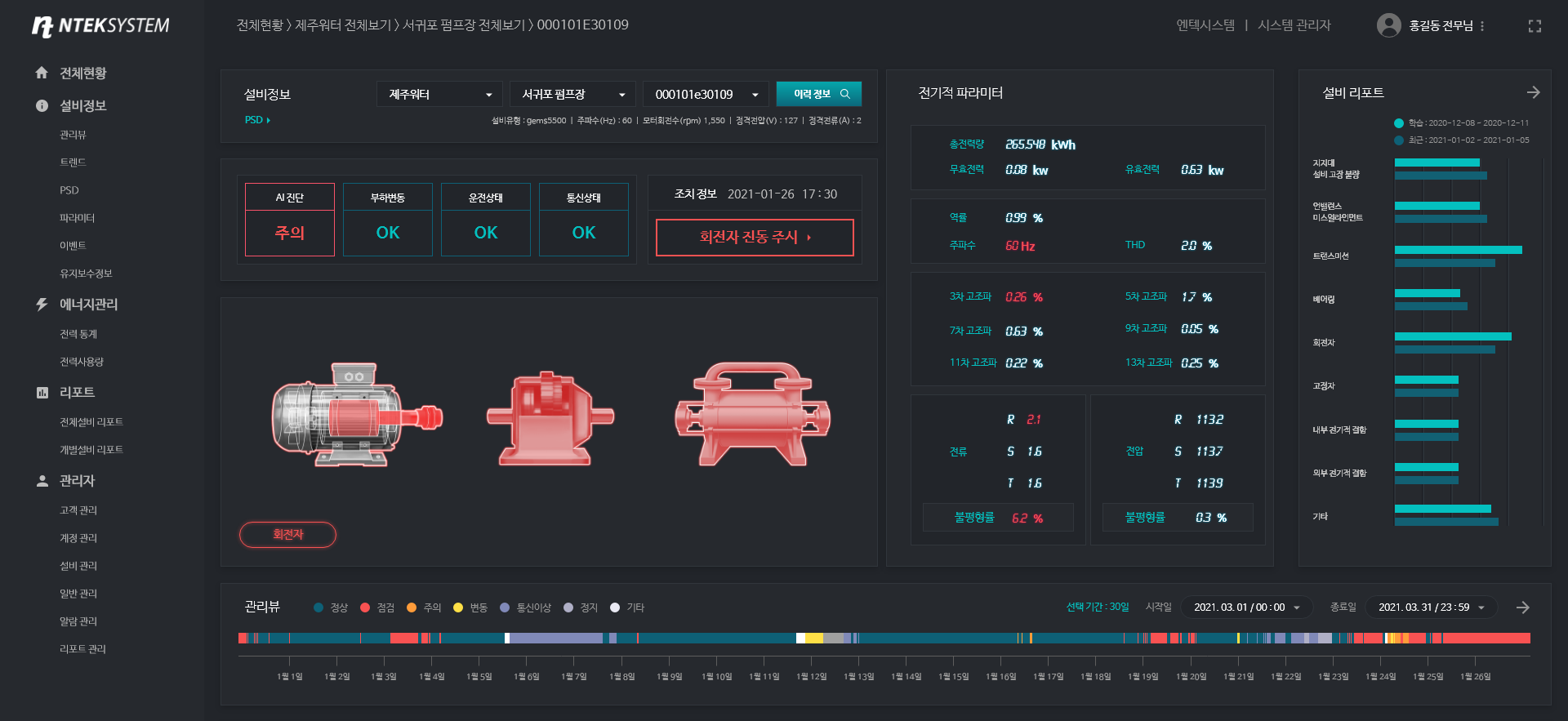
AI-Powered Predictive Maintenance for Equipment
AI analysis of the electrical signals and sound/vibration sensor data from motor-driven equipment in the manufacturing process identifies early signs of trouble, enabling proactive equipment diagnostics.
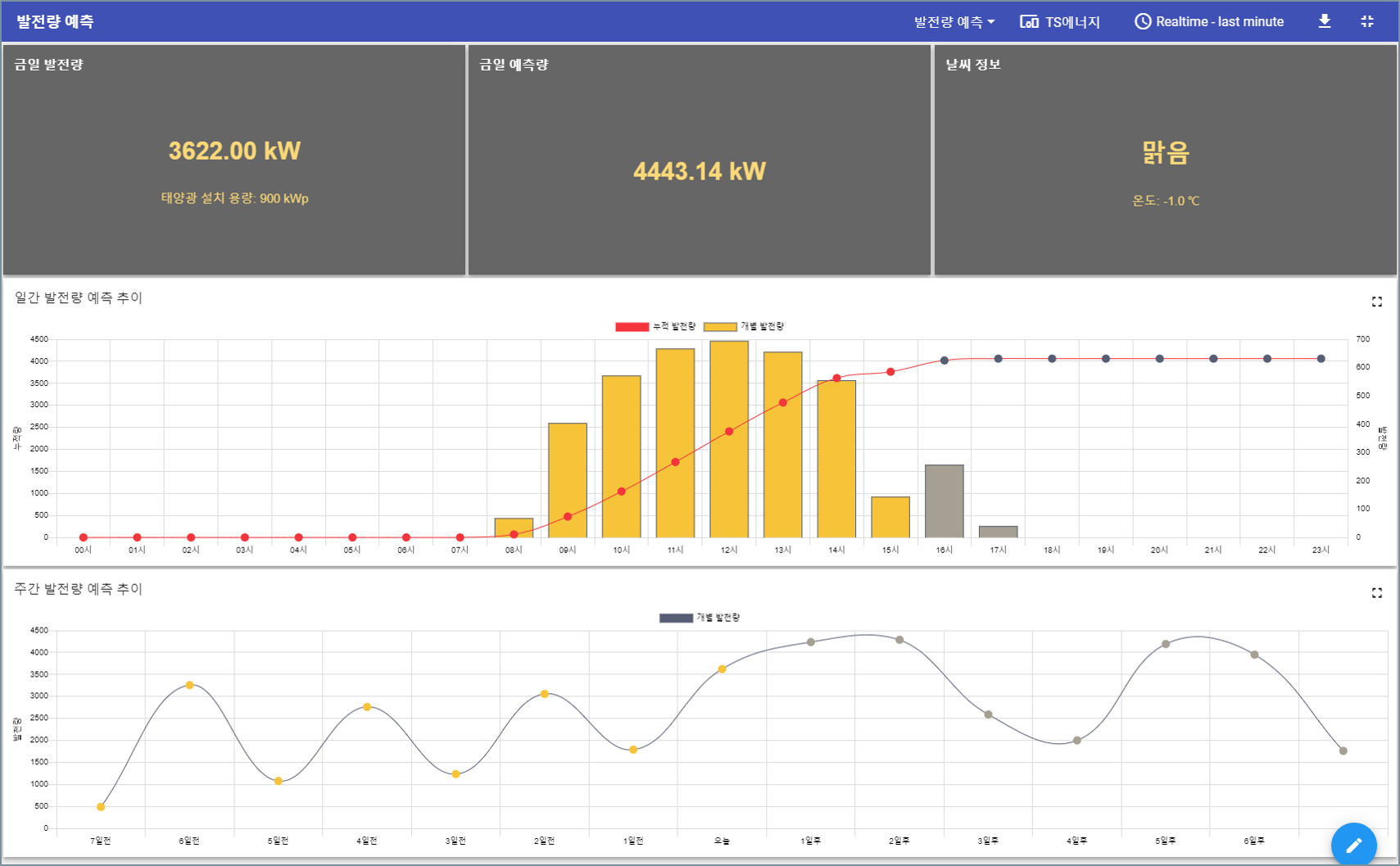
Solar Power Generation Forecasting with AI
To help secure profitability in the solar power business, we provide an efficient operations management system for generation facilities together with a power generation forecasting system.
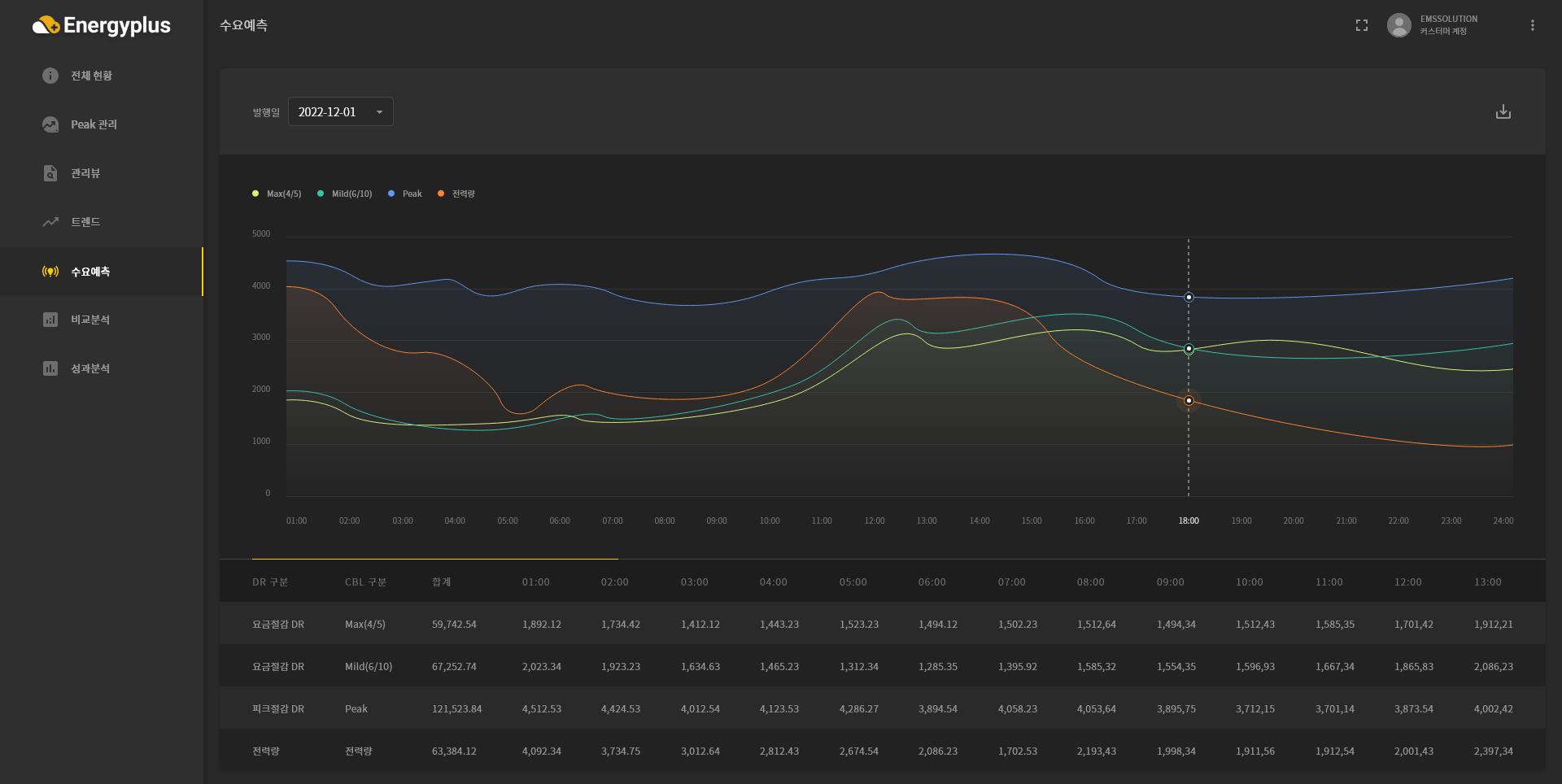
Power Usage Analysis and Forecasting with AI
By metering the power consumption of key equipment, we provide power usage analysis, forecasting, peak demand monitoring, and electrical safety monitoring services.
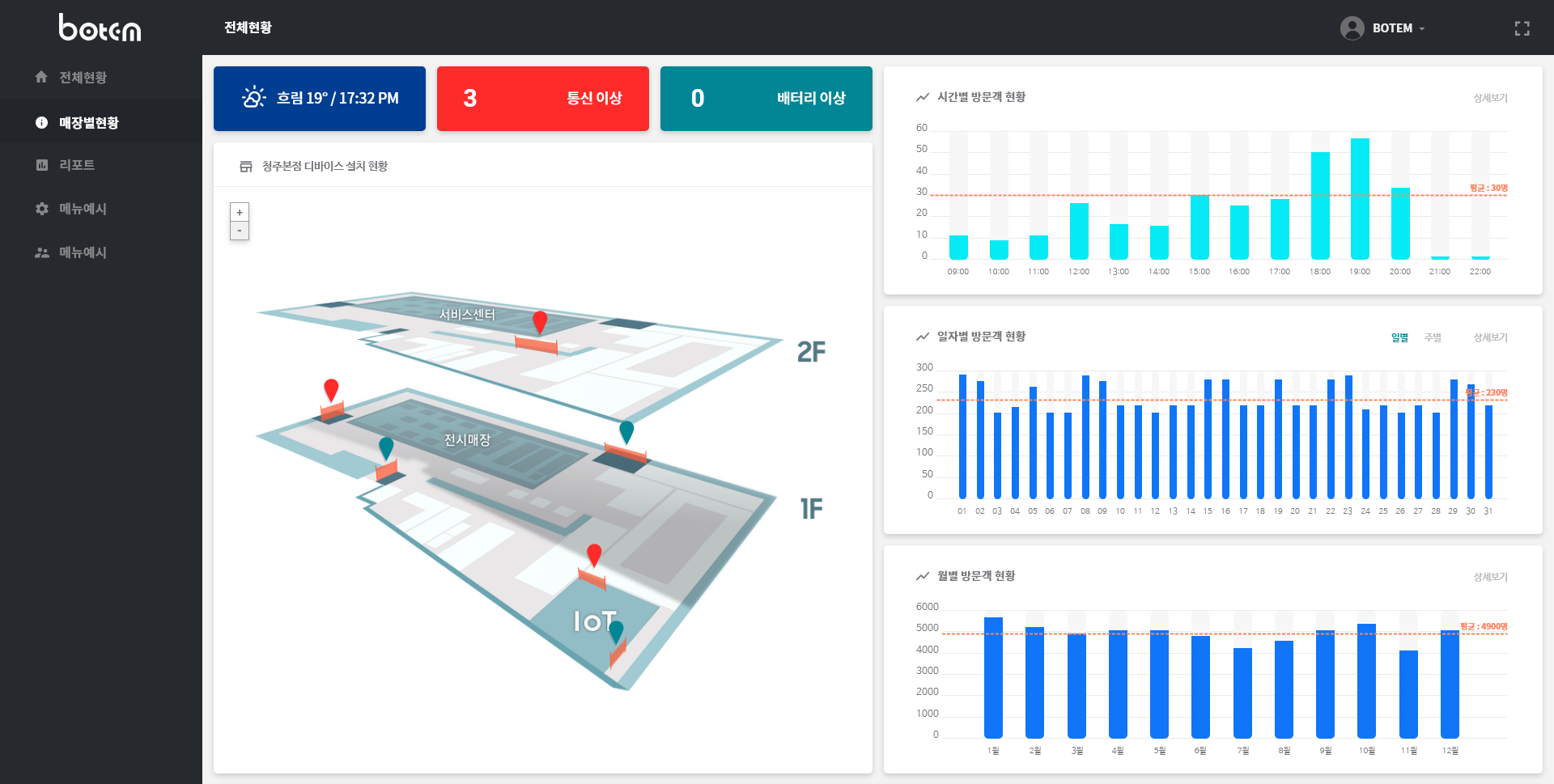
Visitor Analytics and Forecasting
We analyze visitors to stores, shopping malls, and exhibition halls in real time and support marketing strategy development through visitor forecasting.
AI Diagnostics-Based Smart Factory Service
Through AI analysis of manufacturing equipment and factory operating environment data, we optimize equipment operation and provide root-cause analysis of manufacturing defects.
Smart Farm Monitoring and Remote Control System
Growth analysis predicts crop development to manage shipment timing and volume.
Creating New Value Through AIoT
AIoT will be another inflection point for industry. To lead innovation and secure competitive advantage, it now takes more than simply connecting devices and collecting data. Without AI capabilities, the value of IoT devices and the data they produce would be limited. Meanwhile, AI applied to home appliances, the technology closest to our daily lives, has moved beyond personalization into the inference stage. The industry says this shift will amount to an entirely new experience.
AIoT offers limitless potential and capabilities that can be truly embedded, from enriching customer experiences to anticipating needs. It is a transformative combination that can boost device performance, reshape industries, elevate customer experiences, and exponentially accelerate business outcomes.
If you would like to learn more about AIoT solutions and how to adopt them, contact us!