Solving DT and ESG at Once: Real-World Case Studies
The pandemic sparked discussions about Digital Transformation (DT) and ESG management. After COVID-19, global awareness of environmental issues grew, and questions about sustainability accelerated ESG management. And as contactless technologies became unavoidable, DT also advanced at a rapid pace.
For companies, DT and ESG management have become trends they cannot ignore. However, practicing ESG for environmental, social, and governance values and adopting DT both require substantial investment. That is why DT and ESG need to converge. DT and ESG management work in a complementary way and can be addressed at the same time.
Digital technology can serve as an active tool for companies to realize ESG values. Let’s look at a range of cases where companies have put ESG management into practice through DT.
Environmental issues
Sansu Beverage: ‘bottle to bottle’ with chemically recycled PET

Sansu Beverage products / Source: IT BizNews
Through R&D investment, Sansu Beverage launched Korea’s first bottled water made with chemically recycled PET. It went further, building a system in which its own logistics operation collects the empty bottles of the water it has sold; the collected bottles are processed into recycled yarn in collaboration with BYN Blackyak and recycled into clothing products. The company also continues to collaborate with its subsidiary Eco Package Solution on the circular use of clear PET bottles, developing chemical recycling technology and producing recycled raw materials.
As contactless sales became mainstream, the company built a business model that collects bottles directly from subscription-delivery customers—an example of the digital circular economy—and it is highly significant as the starting point of Korea’s first ‘bottle to bottle’ recycling transformation. ‘Bottle to bottle’ means recycling the empty bottles of your own products, collected directly, back into bottles for your own products. Through this, the company says it plans to lead the way toward carbon neutrality by turning waste back into resources without virgin plastic.
Danggeun Market (Karrot): spreading values with the ‘Our Neighborhood Eco-Friendly Store Map’
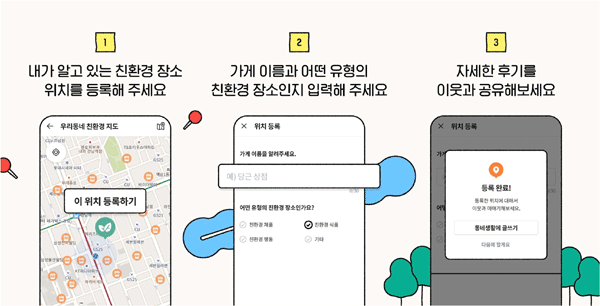
Danggeun Market’s ‘Our Neighborhood Eco-Friendly Store Map’ / Source: Seoul Finance
Danggeun Market introduced the ‘Our Neighborhood Eco-Friendly Store Map’, which shows stores that practice environmental protection. The map shows not only each store’s location and name but also its environmental efforts—use of eco-friendly packaging and reusable containers, sales of eco-friendly produce, and more. It takes the form of an open map that anyone can update and edit, and neighbors who share information about eco-friendly stores are rewarded with a ‘Neighborhood Environment Keeper’ activity badge.
Danggeun Market practices ESG management by adding features that spread eco-friendly values to its existing secondhand trading platform, surfacing environmental protection information and encouraging eco-friendly consumption. The service is all the more meaningful because it is the product of neighbors’ shared desire to build a healthy local community together.
Unilever: AI monitoring of palm oil production
Unilever has faced pressure from environmental groups such as Greenpeace to buy palm oil only from producers that do not destroy forests. In response, starting in August 2020, it developed an artificial intelligence (AI) system based on data collected using satellites and GPS technology, and introduced a program that monitors real-time logistics volumes across its palm oil supply chain in Indonesia. AI-driven analysis of geographic data is used to help prevent deforestation.
As this shows, manufacturers increasingly need to consider ESG when sourcing raw materials. Even if the production process itself is flawless, sourcing raw materials that are not eco-friendly or that carry social problems is seen as undesirable. Handling these issues well can enhance a company’s image and raise its corporate value.
Samsung SDS: DT for cutting greenhouse gas emissions
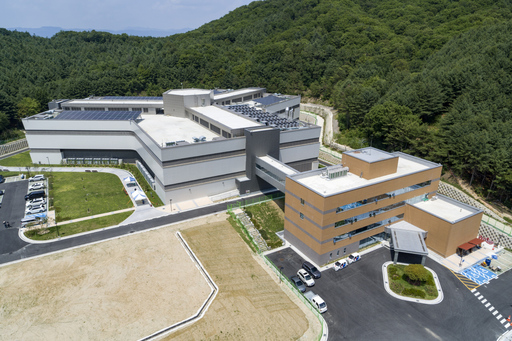
Samsung SDS Chuncheon Data Center / Source: Samsung SDS
To respond actively to climate change, Samsung SDS has set a goal of cutting greenhouse gas emissions by 30% by 2030, and it is systematically reducing emissions by building new energy-efficient data centers, expanding the use of renewable energy, and using energy monitoring systems.
A variety of activities are under way, from saving data center energy to cutting greenhouse gases. Energy-saving solutions that make direct and indirect use of outside air, such as free cooling, have made server room energy use more efficient, and a range of renewable energy sources—solar power generation, geothermal heating and cooling systems, and more—help meet the data centers’ energy needs.
Social issues
Starbucks: the ‘bean to cup’ tracking project

Starbucks logo / Source: Pax Economy TV
Starbucks is launching a pilot program that traces coffee beans in Costa Rica, Colombia, and Rwanda to secure transparency in tracking under the name ‘bean to cup’. It adopted DT to address human rights and labor rights violations on coffee farms, a pressing social issue. Through the ‘bean to cup’ project, Starbucks says it expects to have a positive impact on smallholder farmers in its supply chain.
Through the ‘bean to cup’ project, Starbucks adopted blockchain technology and opened an app service for monitoring the production and distribution history of its coffee, letting users see production at coffee farms around the world and the distribution journey through manufacturing plants and logistics centers. The goal is to encourage an ethical approach to raw materials among consumers and to provide financial benefits to farm owners. It also aims to contribute to higher output and better quality by providing price and distribution transparency.
BBVA: a banking system that works even on feature phones
Back in 2016, only about 33% of Peru’s population used the banking system—barriers to access were high and fee structures were expensive. To overcome this, BBVA worked with the Association of Banks of Peru (ASBANC) and PDP (Peruvian Digital Payments) to introduce BIM (Billetera Movil Digital), a banking service that supports deposits, withdrawals, and more on feature phones rather than smartphones. Through this service, 11 million users have come to use financial services, and 12.2 million transactions have been carried out. Its adoption looks set to keep growing.
Cases like this, where DT raised financial inclusion, deserve serious study because Korea, too, faces accelerating financial exclusion of the elderly as average life expectancy rises. As the BBVA case shows, the fundamental solution is to create digital platforms that are affordable, intuitive, and usable even on low-spec devices; experts believe that achieving this could substantially improve access to financial services for the financially underserved.
Governance issues
Heineken: raising internal audit quality with RPA and OCR
Heineken logo / Source: Heineken
Heineken previously relied on manual sampling of expense spending for internal audits, covering only about 5~10% of the population. By adopting RPA (Robotic Process Automation), which uses bots to streamline repetitive tasks, and OCR (Optical Character Recognition), which can read materials beyond text and numeric data, it raised the sampling size to 20~90% of the entire population. Digital technology lifted the quality of internal audit.
Digital internal auditing is not yet widespread for cost and technical reasons, but as digital audit technology becomes universal over time, internal audit is expected to shift gradually toward real-time digital auditing that removes human intervention. And as real-time auditing matures in the future, the disclosure cycle for financial statements—currently quarterly—is also expected to shorten, giving stakeholders more timely information.
DT and ESG: mutually reinforcing
DT standardizes and modularizes a company’s resources and processes, cutting costs and enabling business model improvements—supporting ESG innovation. DT adds speed to the realization of ESG management while also acting as a solution to the side effects that ESG activities can create, and ESG management strategy is becoming digital strategy itself.
You can start DT and ESG with IoT technology. If you are curious about the related solutions and the specifics of how to adopt them, contact Thingplus!
✅ References
KCGS Report No. 143, ‘ESG Management Using Digital Transformation’
Incross Market Insight, ‘Digital ESG Management’
Karrot Opens ‘Our Neighborhood Eco-Friendly Map’… “Eco-Friendly Store Info at a Glance”