How Smart Can IoT Make the Manufacturing Floor?
Two core technologies are driving the paradigm of the Fourth Industrial Revolution: artificial intelligence (AI) and the Internet of Things (IoT). Recently, the Artificial Intelligence of Things (AIoT)—which combines the hyper-intelligence of AI with the connectivity of IoT—has been on the rise. As the fusion of AI and IoT, AIoT is drawing keen interest as it moves in step with enterprise digital transformation.
IoT sensors collect vast amounts of data, and this big data flows into artificial intelligence. Billions of sensors detect massive data streams in real time across manufacturing, healthcare, aerospace, defense, transportation, telecom, and smart cities, while AI analyzes the patterns to predict and perform the actions users want.
Meanwhile, the Industrial Internet of Things (IIoT)—referring to connected devices used in manufacturing, energy, and other industrial applications—is raising efficiency by bringing more automation and self-monitoring to industrial machinery.
In this post, we look at how AIoT and IIoT technologies are transforming everyday life as well as the manufacturing floor.
AIoT Is Already at Work Everywhere
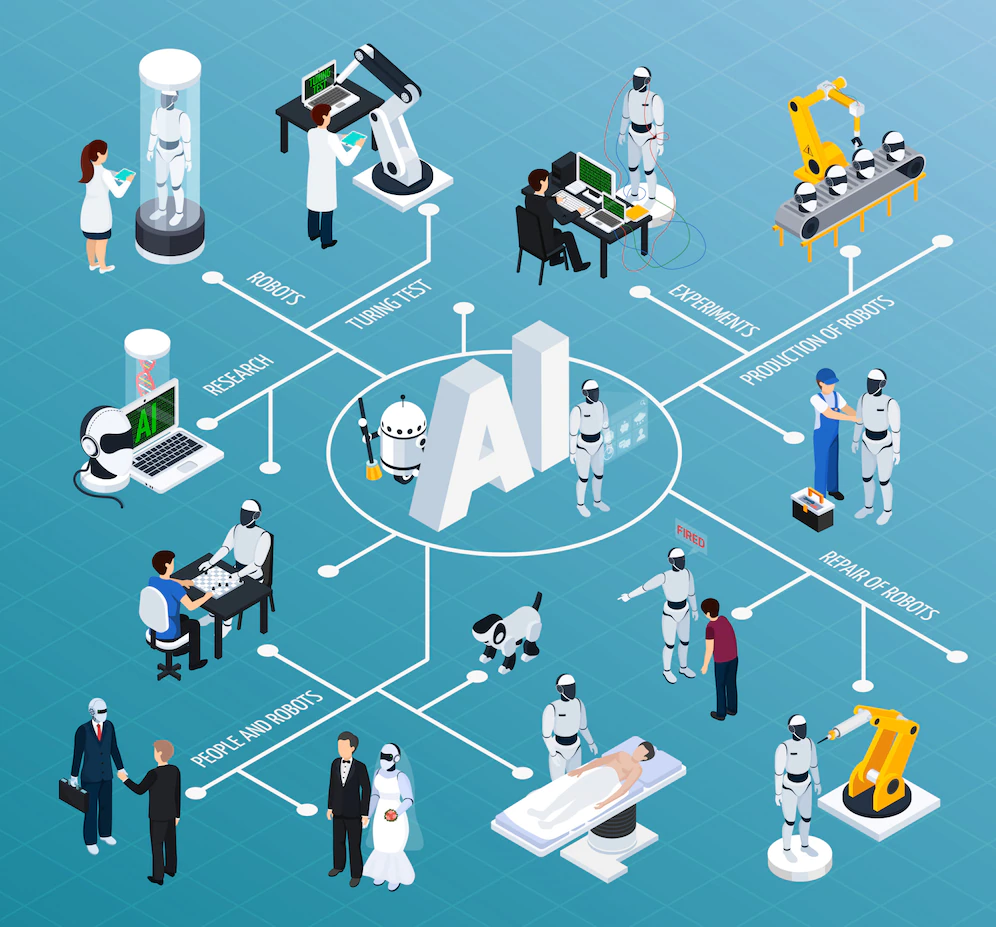
The range of AIoT applications is very broad. It can be applied anywhere information needs to be optimized through data analysis. It is being adopted across industries—manufacturing, automotive, telecommunications, aerospace—and is reshaping the landscape of each.
With the Fourth Industrial Revolution, manufacturers find themselves riding a wave of digital transformation toward smart factories. When computers trained with AI use the vast network data generated by IoT-equipped machines to solve problems and make decisions, factories can move beyond simple industrial automation to true intelligent manufacturing.
The autonomous vehicle is AIoT in its most concentrated form. A self-driving car with AIoT technology collects data through sensors and then analyzes that data rapidly. It makes decisions based on external conditions—road status, obstacles—and on the driver’s state and behavior, starting or stopping the drive accordingly.
AIoT examples are also multiplying in daily life, not just in industry. Google’s smart home is the most famous example, letting you control home appliances with a single app. AIoT technology is also in real-world use responding to social issues—everyday hazard alerts, epidemics, hazardous substance warnings, and more.
More recently, medical robots developed in the healthcare field perform tasks such as facility disinfection, recyclables sorting, and transporting supplies within hospitals. With AIoT, they can evolve to help across society through remote diagnosis and care and by identifying and attending to critical patients.
The Era of Industrial IoT
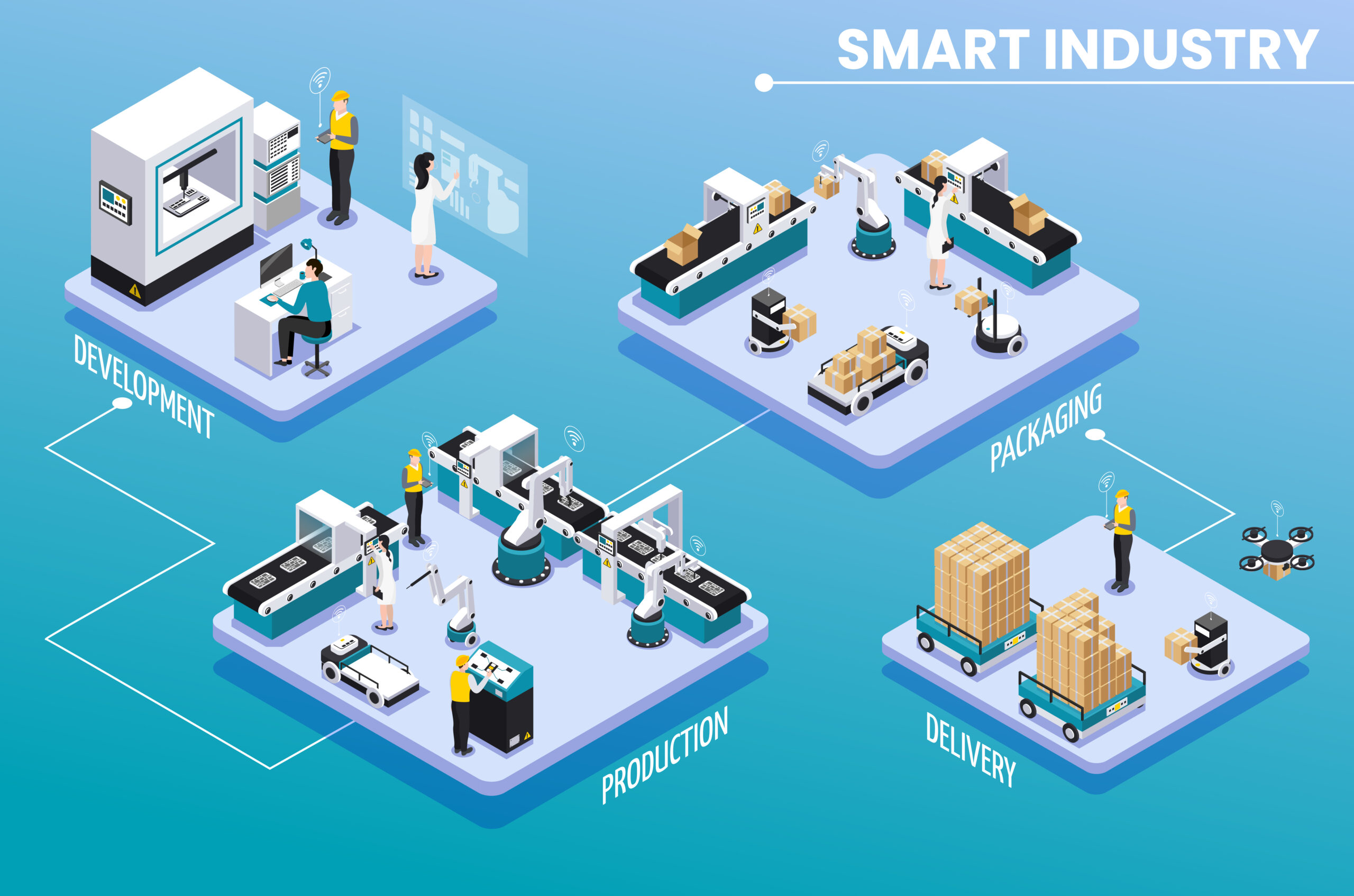
IIoT means the extension and use of IoT in industrial sectors and applications. It encompasses industrial applications including robotics, medical devices, and software-defined production processes. With its focus on machine-to-machine (M2M) communication, big data, and machine learning, IIoT enables companies to improve operational efficiency and reliability.
IIoT goes beyond the internetwork of ordinary consumer devices and the physical devices associated with IoT. Monitoring and controlling the physical infrastructure of industrial operations—agriculture, healthcare, manufacturing, transportation, and utilities—becomes far easier through the use of smart sensors and actuators.
In the context of the Fourth Industrial Revolution, often framed around 5G, what matters is how IIoT sets cyber-physical systems and production processes up for transformation with the help of big data. Real-time data, including sensor readings and other information, helps industrial devices and infrastructure derive insight and concrete actions in decision-making. In the broader context, IIoT is critical to harnessing connected ecosystems—how cities evolve into smart cities and factories become smart factories.
Consistently acquiring and transmitting data between smart devices and machines creates many growth opportunities for industries and enterprises. For example, this data lets companies detect errors or inefficiencies in the supply chain and resolve them immediately, pursuing efficiency in both operations and finance.
Proper IIoT integration can also optimize asset utilization, predict points of failure, and even trigger maintenance processes autonomously. By adopting connected smart devices, companies can collect and analyze larger volumes of data at greater speed.
This not only improves scalability and performance but also bridges the gap between the production floor and the back office. IIoT integration gives industrial organizations a more accurate view of how their operations are running and helps them make informed business decisions.
What to Watch Out for When Adopting IIoT!
Adopting IIoT, however, inevitably brings security concerns. IIoT can revolutionize how industry operates, but it carries the challenge of maintaining security amid ever-greater connectivity.
If hackers gain access to connected systems, the business is exposed not only to a serious breach but potentially to operational shutdown. To some extent, companies adopting IIoT must plan and operate like technology companies in order to keep both their physical and digital components secure.
User data must be handled in accordance with applicable privacy regulations such as the European Union’s General Data Protection Regulation (GDPR). The collected data plays an important role in generating insight into devices and infrastructure, but it is essential to separate personal information from general log data.
Information such as personally identifiable information (PII) must be stored in encrypted databases, and companies should be aware that storing unencrypted information in the cloud alongside other related activity can expose them to risk.
An unsecured IIoT system can lead to operational disruption and financial loss, with potentially significant consequences. The more connected things become, the greater the security risk.
To manage this, companies adopting IIoT should be able to know how manufacturers and service providers transmit and store their data. And when problems occur, manufacturers and service providers should be able to proactively inform companies of what needs to be addressed.
Finally, security implementations should include server-based protections to mitigate the risk of hackers exploiting servers and stored data. And above all, it is important to cultivate security experts specializing in IIoT.
The Impact of IIoT and AIoT on Manufacturing
As a single product category, electric motors consume more electricity than anything else in the world. They account for roughly two-thirds of industrial power consumption and about 50% of global power consumption. In other words, one of every two power plants or other power sources exists solely to drive motors.
The problem is that the average industrial motor is only about 88% efficient (for commercial motors it can be far lower). With the right sensors and control systems, this efficiency can be improved dramatically.
Downtime caused by unexpected equipment failure is one of the biggest risks industrial companies face. One way to mitigate it is to adopt predictive maintenance: monitoring equipment through sensors and using IIoT and AIoT capabilities to detect deviations from normal operation and predict potential failure modes and time frames.
The reason to use IIoT and AIoT capabilities is that they can find patterns, identify trends in historical data, and estimate potential failures more effectively than humans can.
Humans struggle to detect patterns and spot anomalies in vast volumes of numerical data, but when the data is presented graphically, patterns and anomalies become much easier to see. Continued operation also accumulates AI training data and analysis cases, raising AI prediction accuracy and making the approach even more effective.
The AIoT Market Ahead
According to Research and Markets, the AIoT market is projected to grow to more than $65 billion by 2025. Korea’s Ministry of Science and ICT has said it will lay a core foundation for leading the digital transformation through programs that discover killer services applying new AIoT technologies. It added that this year it will concentrate a total of KRW 8.55 billion on 12 projects in fields such as smart homes, disaster safety, and agriculture, forestry, livestock, and fisheries to identify AIoT projects the public can truly feel.
AIoT and IIoT are technologies with even more to look forward to. Thingplus supports the entire process of adopting IoT technology in manufacturing. If you would like to know more about how to get started, contact Thingplus!