The Economic Impact and ROI of the Smart Factory
The smart factory is a manufacturing operation built on the core technologies of the Fourth Industrial Revolution, using the Internet of Things (IoT), big data, artificial intelligence (AI), and robotics to automate and optimize production. Unlike conventional manufacturing, the smart factory aims to maximize productivity, improve energy efficiency, and reduce costs through real-time data analysis and autonomous decision-making. This technological innovation ultimately has a direct impact on a company’s financial performance and delivers a very positive effect in terms of ROI (return on investment).
The Economic Impact of the Smart Factory
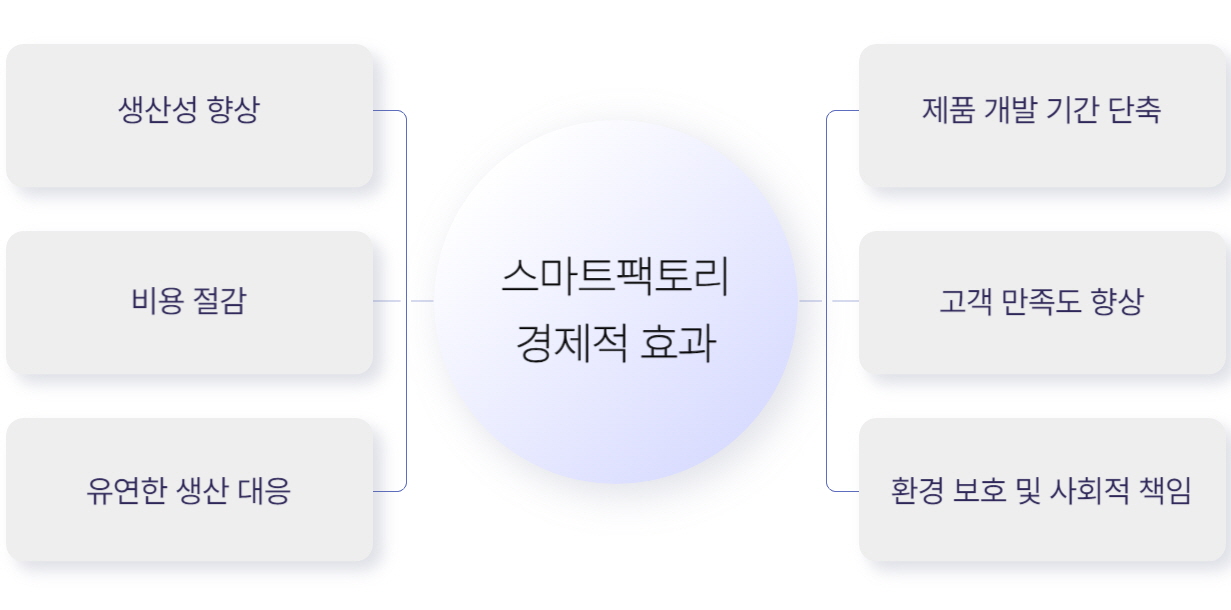
1. Higher productivity
The smart factory optimizes production processes through automated systems. For example, collecting and analyzing real-time data at every stage of the manufacturing process makes it possible to identify and address bottlenecks in advance. This minimizes process interruptions, speeds up work, and improves product quality. The result is higher output per unit of time — and the revenue growth that follows.
2. Cost savings
The smart factory uses AI and big data analytics to optimize energy consumption, reduce unnecessary inventory, and cut maintenance costs. Minimizing human intervention also delivers labor cost savings. These savings translate directly into higher profits.
3. Flexible production response
The ability to respond quickly to market changes is a key competitive strength in modern manufacturing. The smart factory enables flexible responses such as customized production and output adjustments, helping meet diverse customer demands and strengthening market competitiveness.
4. Shorter product development cycles
Digital twins can create virtual models identical to real products, and simulation can catch design errors early, shortening product development timelines. AI-based automated design systems also reduce design time and allow rapid review of multiple scenarios, increasing development efficiency.
5. Higher customer satisfaction
Producing to each customer’s individual requirements and reducing defect rates through real-time quality monitoring builds quality credibility and raises customer satisfaction. Product data enables fast after-sales service, while customer data analysis supports personalized services that strengthen customer relationships and build brand loyalty.
Beyond that, the smart factory can create new business models such as data-driven services and customized product development, contribute to environmental protection through improved energy efficiency and reduced waste, and fulfill social responsibility by creating safer, more pleasant working environments.
ROI Analysis: The Profitability of Smart Factory Adoption
The biggest question in smart factory adoption is profitability relative to the initial investment. Building a smart factory carries significant upfront costs, but from a long-term perspective, a high return on investment can be expected.

1. Initial investment costs
Building a smart factory requires substantial initial capital, covering hardware, software, and infrastructure upgrades. Operating costs such as system maintenance and energy also affect the payback period. These costs, however, can be recovered quickly through productivity gains, cost savings, and quality improvements.
2. Long-term profitability
When analyzing smart factory ROI, take a long-term view rather than focusing on short-term returns. The key advantage of the smart factory is that continuous productivity gains and cost savings generate ever greater economic benefits over time. In particular, continuous data-driven process improvement and optimization are critical to long-term competitiveness. Lower defect rates and reduced after-sales service costs from better quality also shorten the payback period.
3. Case analysis
ROI analysis of companies that have actually adopted smart factories shows that recovering the initial investment takes 2–3 years on average, after which net profit growth tends to accelerate. Savings in energy costs and inventory management costs shorten the payback period. This is because the smart factory represents innovation across a company’s entire operations — not just the adoption of a technology.
The Economic Benefits and Future Outlook of the Smart Factory
The smart factory goes beyond a technical innovation that raises productivity — it is a powerful tool for maximizing a company’s economic performance. The initial investment may be high, but over the long term the smart factory is a highly favorable choice in ROI terms. And for sustainable growth and lasting competitiveness, the smart factory will become an essential element of future manufacturing.
For companies weighing smart factory adoption, a strategic approach that considers the long-term economic benefits — rather than the burden of upfront costs — is what matters. The smart factory is not just a technological upgrade; it is a major opportunity to transform the way an entire company operates.
✅ Recommended Reading
Smart Factory Implementation Guide: Step-by-Step Instructions and Success Strategies