Key Digital Twin Technologies and Smart Factory Use Cases
A digital twin is a technology that monitors and analyzes the performance, condition, and behavior of a physical asset in real time through its virtual model. This innovative technology is drawing particular attention in the smart factory, where it plays a key role in helping manufacturers improve operational efficiency, cut costs, and raise product quality. In this article, we introduce the key technologies behind digital twins and real-world smart factory use cases from actual companies, and look at how digital twins can be applied to the smart factory.
Key Digital Twin Technologies
The technologies required to implement a digital twin are as follows.
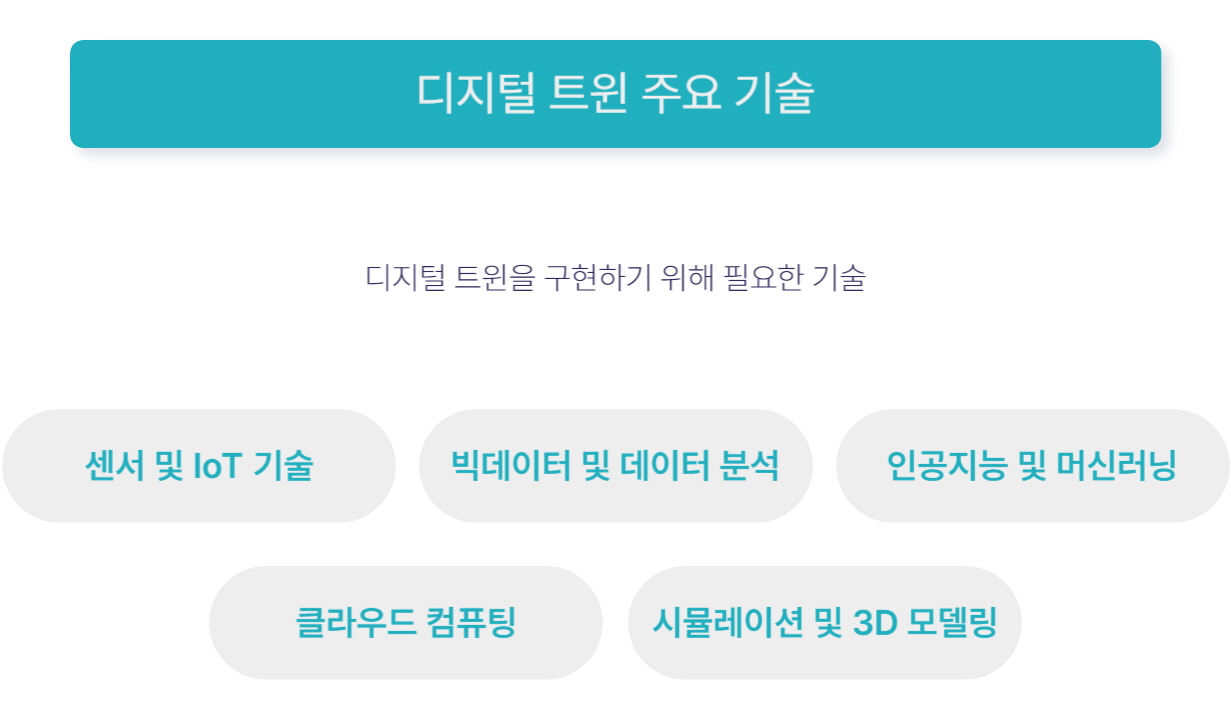 – Sensors and IoT (Internet of Things) : Collect data from physical assets, enabling real-time monitoring.
– Big data and data analytics : Process and analyze massive volumes of data to support decision-making.
– Artificial intelligence (AI) and machine learning (ML) : Play a key role in data-driven predictive modeling and optimization.
– Cloud computing : Provides the computing resources needed for complex digital twin modeling, data storage, and processing.
– Simulation and 3D modeling : Allows analysis of a wide range of scenarios through virtual models that closely mirror the real environment.
How Do You Apply a Digital Twin to a Smart Factory?
Successfully applying a digital twin to a smart factory requires several important steps.
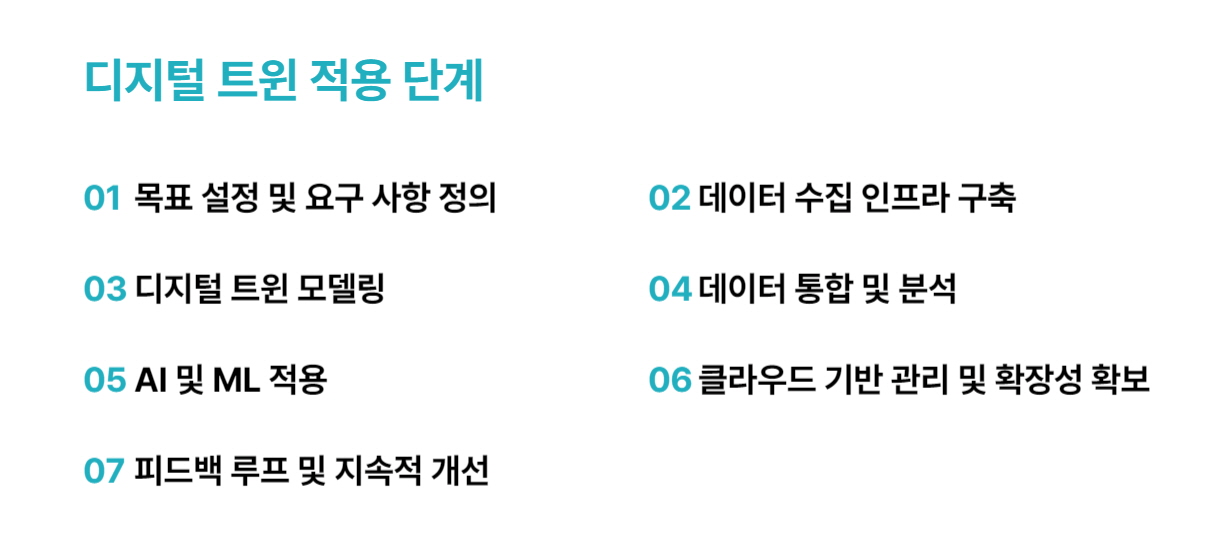
1. Set goals and define requirements
Before applying a digital twin, clearly define the goals you want to achieve and the problems you want to solve. For example, the goal might be improving production process efficiency or enabling predictive maintenance for equipment.
2. Build the data collection infrastructure
To operate a digital twin in a smart factory, you need infrastructure that collects data from physical assets through sensors and IoT devices. This data becomes the core foundation of the digital twin model.
3. Model the digital twin
Build the virtual model based on the collected data. The model must accurately reflect the behavior of the real asset and support testing of various scenarios through simulation.
4. Integrate and analyze data
A digital twin must continuously integrate and analyze real-time data. This enables monitoring of current conditions and early detection of potential problems.
5. Apply AI and ML
Artificial intelligence and machine learning algorithms can enhance the predictive power of a digital twin. For example, they can predict when equipment will fail or suggest optimal production schedules.
6. Manage in the cloud and secure scalability
Given the complexity of digital twins, it is important to use cloud computing to secure scalability and accessibility. This makes it possible to extend digital twins to more assets and processes.
7. Feedback loops and continuous improvement
Even after deployment, keep analyzing data to refine the model and use feedback loops to increase operational efficiency. This is a core element of the smart factory’s continuous evolution.
Digital Twin Use Cases in the Smart Factory
Here are real-world examples of digital twins in action in smart factories.
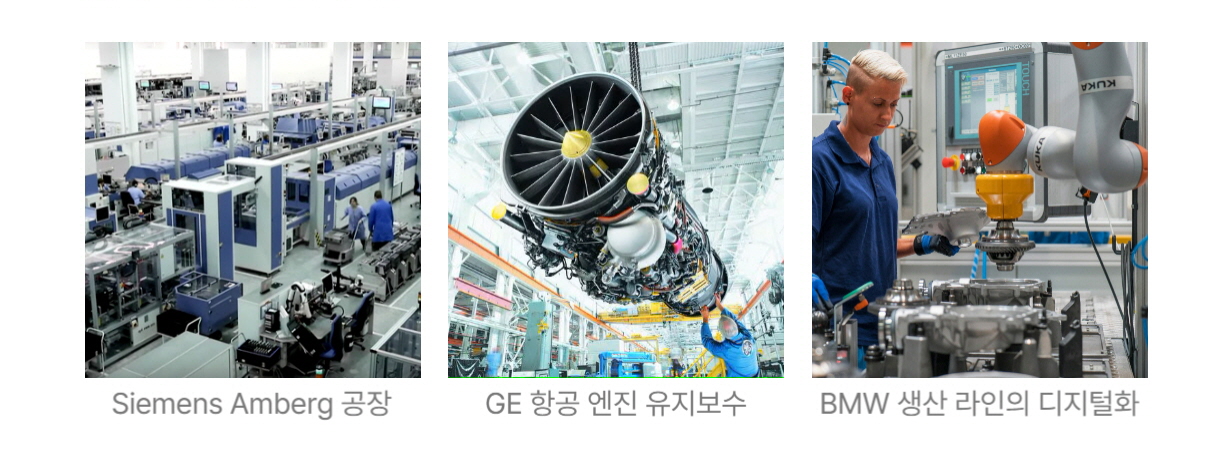
Siemens – Amberg Plant
Siemens has adopted digital twin technology at its plant in Amberg, Germany, to optimize production processes. The Amberg plant produces more than 1,000 different products, and digital twins collect data in real time at every stage of the production line, analyzing it to maximize process efficiency. The plant has achieved 99.998% production accuracy — a result of its successful use of digital twins.
General Electric (GE) – Aircraft Engine Maintenance
GE uses digital twin technology for aircraft engine maintenance. Through digital twins, GE collects usage data from each engine and analyzes it to monitor engine performance. This allows GE to accurately predict engine life and maintenance timing, reducing unexpected failures and cutting maintenance costs. In fact, the technology has helped GE reduce aircraft engine operating costs by about 10%.
BMW – Digitalizing the Production Line
BMW is using digital twin technology to digitalize its automotive production lines. Digital twins analyze the data generated in each process in real time and allow various production scenarios to be tested through simulation. This has helped BMW increase production line flexibility and shorten time-to-launch for new models. Thanks to digital twins, BMW cut production time for certain models by 30%.
Closing Thoughts
Digital twins play a vital role in the smart factory, and global companies such as Siemens, GE, and BMW are achieving breakthrough results with them. These cases show how digital twins can optimize manufacturing processes, reduce maintenance costs, and accelerate new product development. Applying a digital twin to a smart factory also requires a step-by-step approach — from goal setting to data collection, modeling, AI, and cloud management — to achieve successful results.
✅ Recommended Reading
The Future of Digital Twins and Smart Factories: Transforming Industry