Key Technologies of Smart Manufacturing: The Convergence of IoT, AI, and Automation
Smart manufacturing is radically transforming traditional production methods and presenting a new paradigm for the manufacturing industry. At the center of this change are IoT (Internet of Things), AI (artificial intelligence), and automation. As these three core technologies converge, they are dramatically improving not only productivity and efficiency but also process flexibility and quality control. In this article, we analyze the key technologies at the heart of smart manufacturing.
1. IoT (Internet of Things) – Real-Time Data Collection and Connectivity
In smart manufacturing, IoT plays a critical role in connecting machines and equipment to collect and manage data in real time. IoT technology digitalizes every element of the production floor using sensors, networks, and cloud platforms, making it possible to collect and analyze all kinds of factory data.
Key Capabilities
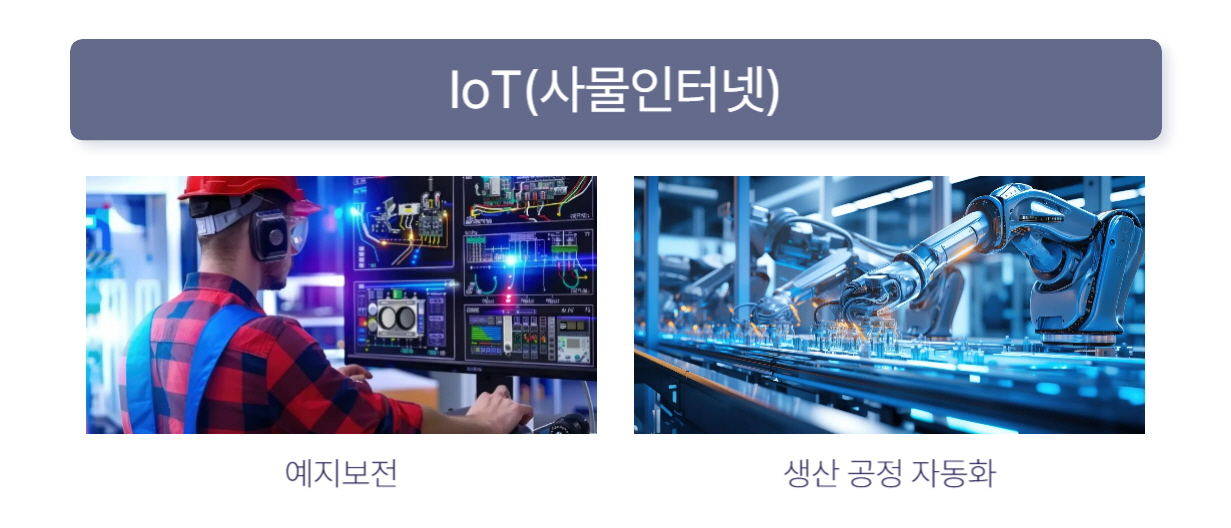
– Predictive maintenance: IoT-connected sensors monitor the condition of equipment in real time and detect potential problems in advance, enabling efficient repairs and maintenance. This minimizes downtime caused by equipment failures.
– Production process automation: IoT collects data from each process and links it with automation systems to optimize production. For example, an inventory management system can track stock in real time and automatically trigger replenishment.
2. AI (Artificial Intelligence) – Advanced Analytics and Prediction
In smart manufacturing, AI analyzes the vast data generated by IoT and automation systems, helping companies make better decisions. AI plays a key role in maximizing process efficiency and improving product quality.
Key Capabilities
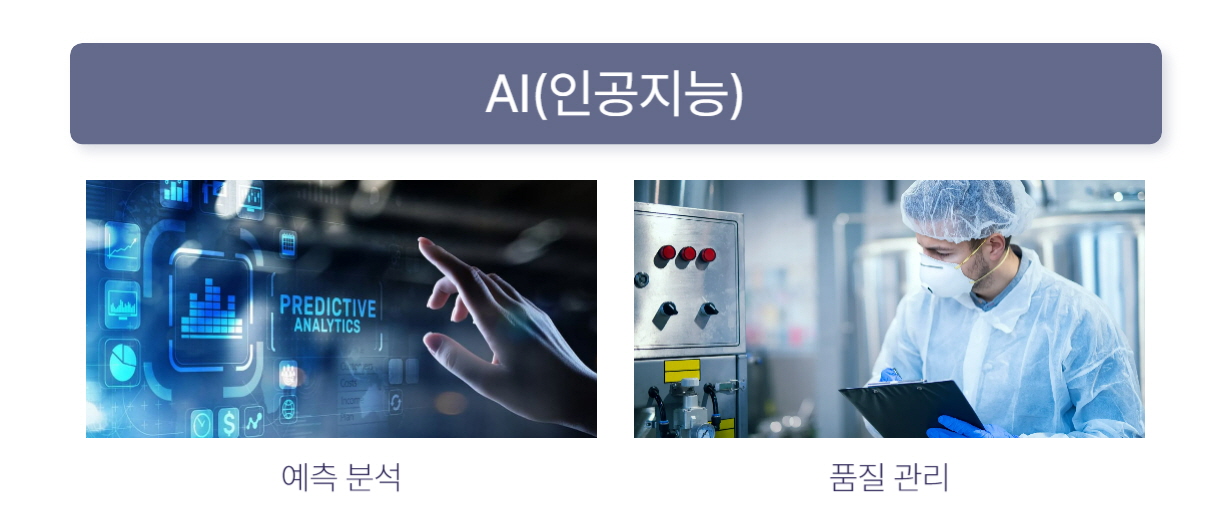
– Predictive analytics: AI analyzes historical data to predict problems on the production line and suggest proactive countermeasures. This prevents production stoppages and contributes to overall productivity gains.
– Quality control: AI-based computer vision and machine learning models automatically detect product defects and enable immediate action. This lowers defect rates and improves customer satisfaction.
3. Automation – Maximizing Production Efficiency
In smart manufacturing, automation takes over repetitive, time-consuming tasks, minimizing human intervention and optimizing production processes. Automation combined with IoT and AI is used especially widely in manufacturing.
Key Capabilities
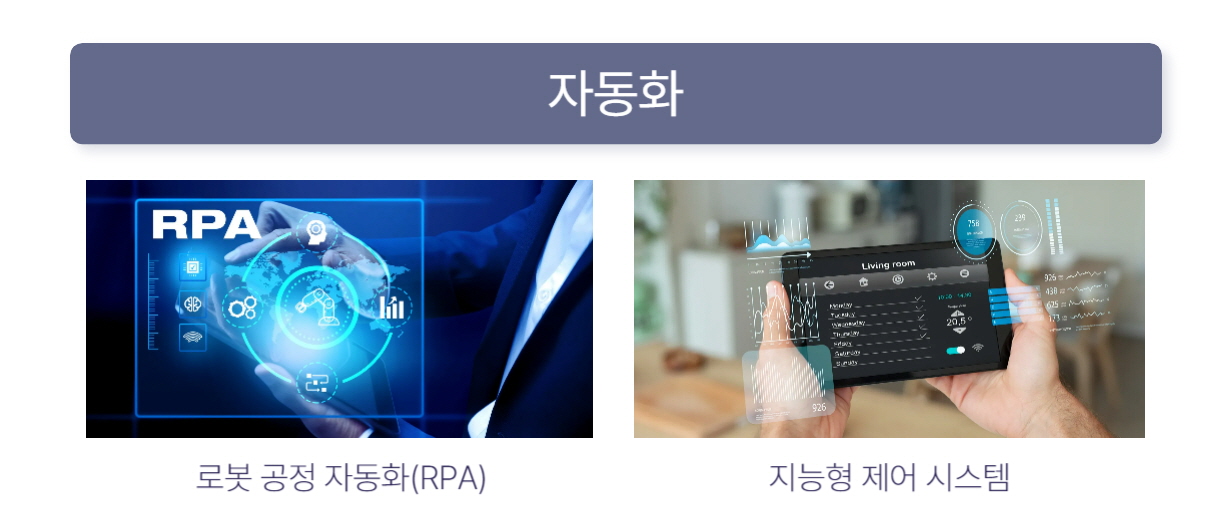
– Robotic process automation (RPA): RPA plays a major role not only in simple manufacturing tasks but also in logistics, inventory management, and packaging. Automating production lines with robots cuts labor costs while greatly improving speed and accuracy.
– Intelligent control systems: Integrating AI and IoT into automated production lines creates intelligent control systems that monitor machine conditions in real time and optimize production speed and quality.
4. The Future of Smart Manufacturing – Technology Convergence and Evolution
Smart manufacturing has moved beyond the limits of conventional production processes through the convergence of IoT, AI, and automation. Now, advanced technologies such as digital twins and edge computing are being added, creating even smarter, more autonomous manufacturing environments. Data security and cybersecurity technologies have also become essential, playing an important role in keeping smart manufacturing systems safe.
Key Capabilities
– Production planning optimization: AI automates demand forecasting, production planning, and inventory management, while real-time data collected through IoT sensors is used to continuously refine production plans.
Closing Thoughts
Smart manufacturing is changing the paradigm of the manufacturing industry through the convergence of IoT, AI, and automation. These technologies deliver a wide range of benefits — higher productivity, better quality, lower costs — and will become the core competitive edge of future manufacturing. As smart manufacturing technology continues to advance, it is expected to drive the sustainable growth of the industry.