Successful Smart Factory Case Studies: The Impact of Smart Manufacturing Adoption
Smart manufacturing has established itself as a core driver of manufacturing innovation, and companies that have adopted it are achieving major gains in productivity, quality, and efficiency. In this article, we look at smart factory success stories to examine the real-world impact of adopting smart manufacturing. This article will offer valuable insights for companies planning their own smart manufacturing journey.
The Background of Smart Manufacturing Adoption
Smart manufacturing combines the latest technologies — artificial intelligence (AI), the Internet of Things (IoT), big data, and cloud computing — to automate and optimize the entire production process. It maximizes the efficiency of factory operations while delivering cost savings and better product quality. So what results have companies actually achieved by adopting smart manufacturing?
Success Story 1: POSCO – An AI-Powered Smart Steelworks
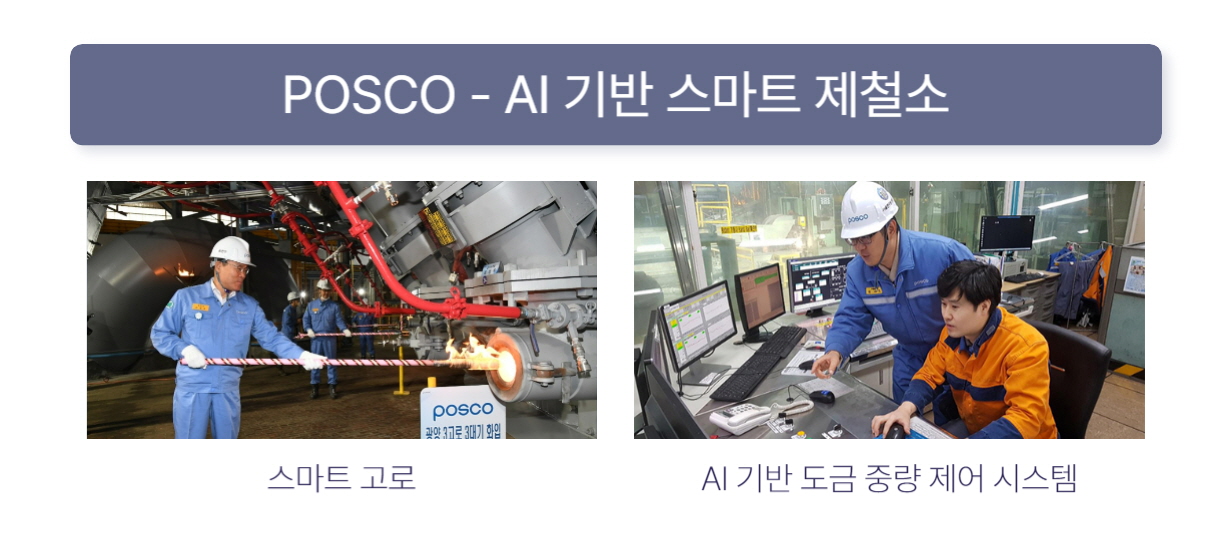
POSCO is one of the Korean companies selected as a ‘Lighthouse Factory’ by the World Economic Forum (WEF) in 2019. POSCO built smart manufacturing processes using AI and big data, significantly boosting productivity. Its flagship AI-based solutions include the smart blast furnace and an AI-based plating weight control system. With these, POSCO maximized production efficiency while achieving outstanding results in quality control. Through this technology adoption, POSCO reduced defect rates and achieved a 160% increase in productivity through process automation.
✔️ Source: McKinsey & Company
Success Story 2: Hyundai Motor – Building a Meta-Factory in Singapore
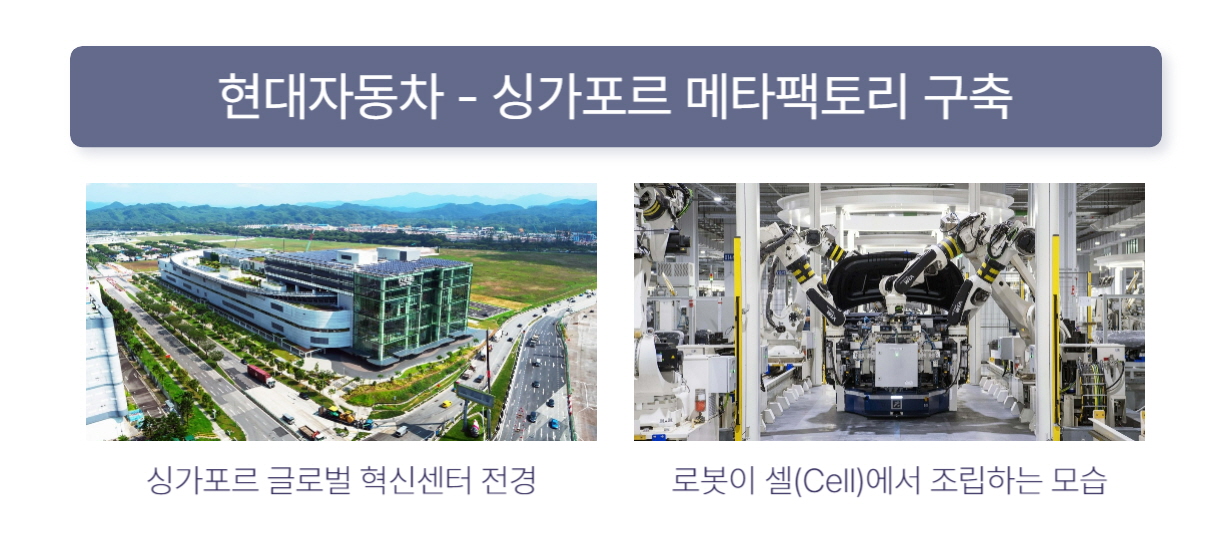
Hyundai Motor took smart manufacturing a step further by building a Meta-Factory in Singapore. This smart factory uses digital twin technology to create a virtual replica of the physical plant and then optimizes processes through simulation. With this system, Hyundai has achieved customized production and built the capacity to respond quickly to diverse customer demands. The company is also using digital twins to deliver results such as energy savings and faster production speeds.
✔️ Source: AEI | ASIA ELECTRONICS INDUSTRY
Success Story 3: LG Uplus – A 5G-Based Smart Factory
LG Uplus is a leading example of a company that has adopted smart factory solutions built on 5G technology. Using the Internet of Things (IoT) and artificial intelligence (AI), LG Uplus automated its production processes, enabling real-time data collection and analysis across production. Through these technologies, LG Uplus has reduced defect rates, increased the accuracy of its production processes, and greatly improved production efficiency. In particular, 5G networks can process massive volumes of data at speed, playing a key role in process optimization.
The Impact of Adopting Smart Manufacturing
Companies adopting smart manufacturing are seeing the following important results.

– Higher productivity: Automated processes and AI-based analytics maximize production efficiency.
– Lower costs: Reducing process errors and saving energy cuts operating costs.
– Flexible production: Customer-tailored production and rapid response to market changes become possible.
These cases show that smart manufacturing is more than a technological innovation — it strengthens competitiveness and enables sustainable growth.
Closing Thoughts
Smart manufacturing is no longer a story about the future — it is today’s reality. Many companies are already strengthening their competitiveness by adopting it. As covered in Key Technologies of Smart Manufacturing, effectively leveraging IoT, AI, and automation lets companies build smart factories and achieve productivity gains, quality improvements, cost savings, and more. Smart manufacturing is not just a technology rollout — it is an essential foundation for sustainable growth.
✅ Recommended Reading
Key Technologies of Smart Manufacturing: The Convergence of IoT, AI, and Automation