IT Technology Trends to Watch in 2023
Today’s IT leaders must be not only strategic but also forward-looking. Of course, knowing the future with certainty is nearly impossible. As with the COVID-19 pandemic in 2019 and the Great Recession a decade earlier, unexpected events can shake plans to their foundations. Even so, leaders still need to look ahead—and in particular, plan for the future using data and insights.
Even in times of high economic uncertainty, IT budgets are stable in most cases. Gartner predicts that IT spending in 2023 will grow 5.1% compared with this year. Experts note that although US GDP has already been in recession territory, most companies have not changed their forecasts over the past three quarters, and that even continued GDP softening over the next three years would not significantly affect IT spending.
IDC projects that with global economic growth continuing to slow due to market volatility, a strong dollar, inflation, and economic conditions in China and other major economies, technology budgets may come under partial pressure. If economic factors remain relatively stable, IT spending is forecast to grow 5% to 6% next year. Even in a sustained global recession, IT spending would likely continue to grow at around 3%.
IT spending is expected to rise again in 2023. So where exactly will IT budgets be invested? Let’s look ahead at the major IT technology trends for 2023.
AI

Artificial intelligence (AI) is no longer confined to the AlphaGo versus Lee Sedol match. Thanks to vast data accumulation and advances in computing power, it is progressing faster than expected. Compared with Moore’s Law—which holds that the number of transistors on a chip doubles every one to two years—some forecasts suggest AI is advancing 50 times faster. Indeed, where AI once drew public attention in chess and Go, it has now entered creative fields long considered uniquely human.
Yet despite this rapid pace of AI progress, a look at AI adoption among Korean companies shows that the share actually using it in services falls short of even 15%—and even then, AI is mostly used for fragmentary customer support. Critics point out that the maturity and substance of domestic AI lag behind the pace of technological innovation. That is why next year’s AI developments deserve close attention.
Experts point to algorithms and computation speed as the AI breakthroughs coming in 2023. Algorithms, powered by hyperscale AI, are approaching human-level intelligence, while exascale computing is dramatically improving the processing speed that underpins AI. This is giving rise to a new phase—multimodal AI—and AI, which evolved mainly around language models, is expected to embrace human emotion and flexible thinking, expanding its usefulness across society and the economy.
In addition, trustworthiness—the biggest obstacle to AI adoption—will be an area to watch next year. Technical and institutional discussions on implementing trustworthy AI are gaining momentum, and no-code and low-code tools are making AI more accessible.
Security

Digital disasters are an issue Korea cannot afford to overlook right now. Digital disasters have happened before, but in the past they were limited to network outages in some regions or disruptions to some services. In today’s hyperconnected digital society, however, the recent Kakao outage confirmed that the paralysis of a giant platform company can have an enormous impact on society as a whole. Beyond the service outage of a single company, it has become an issue of digital sovereignty and economic security.
Digital transformation, which has raced ahead on performance, must now also catch the second rabbit: safety. Securing reliability and stability should now be regarded as an investment, not a cost. Beyond the safety of digital services, it is also time to consider how digital technology can protect everyday safety. The recent Itaewon tragedy, for example, underscores that digital technology must evolve to eliminate blind spots in public safety.
Investment Is Headed Toward Security
According to this year’s ‘State of the CIO’ survey, 45% of IT leader respondents identified cybersecurity and risk management as a top investment area. The reason they plan to spend more and more on security is the reality that they can no longer focus only on what falls within detection range, as increasingly sophisticated automated attacks become more common. Endpoint protection, single sign-on systems, and more employee training are all areas where spending is rising.
Most IT leaders are realizing that their organization’s attack surface is ‘too large.’ Across gig workers, cloud applications, outsourcing, and industry-specific platforms, the way enterprises handle these vast dynamics is changing. Most agree that traditional approaches to security cannot keep them ahead.
Many companies also invested heavily in security after the coronavirus outbreak, but remote work has created the need for new strategies. As a result, the depth and scope of security are now expanding. According to the State of the CIO survey, nearly three in five CIOs (57%) who reported budget increases this year cited the need for improved security as a key reason for the higher spending.
Sustainability

As sustainability has become one of the hottest topics across industries, IT is paying close attention as well. Sustainable technology literally means that companies and their customers endure on a foundation of sustainable IT. Gartner counts four key dimensions in sustainable technology—environmental, social, ESG, and economic—and expects 87% of business leaders to increase their organization’s investment in sustainability over the next two years.
Gartner says I&O (Infrastructure and Operations) has the opportunity to become a core part of sustainability efforts in the enterprise. It therefore advises that I&O embrace sustainable technology to support organization-wide ESG goals. From improving the sustainability of data centers and the cloud to embracing the IT circular economy for devices, I&O can advance sustainable technology by improving the efficiency and performance of infrastructure assets.
Analytics

About 35% of CIOs named analytics as their top spending priority, while 27% cited customer experience technology. Another investment area is tools provided to sales agents. IDC expects big data and analytics to be one of the four core platforms—alongside cloud, mobile, and social—driving growth in traditional IT spending over the next five years.
Cloud
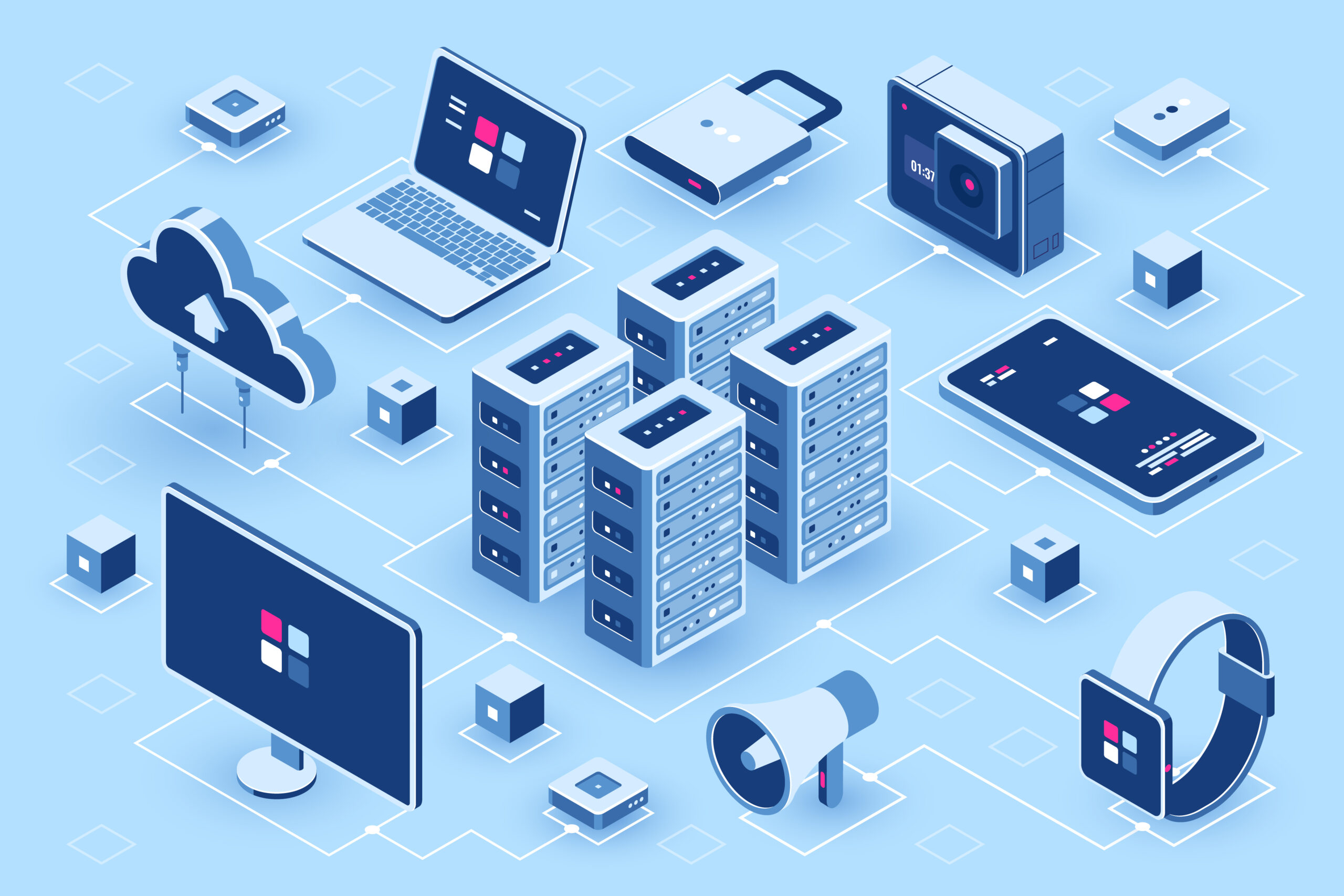
22% of CIO survey respondents named cloud migration as their top spending priority. According to IDC, that is despite cloud-related service costs rising 5% to 7% year over year this year.
Rising cloud costs are not the only reason. Part of the expected increase comes from new users. Some industries, including finance, are migrating to the cloud very slowly because of the sensitivity of their data. And some custom software simply needs more time to move to the cloud.
Cloud spending growth remains in double digits, with plenty of headroom ahead. Meanwhile, on-premises gear accounts for a shrinking share of total IT spending, but it is not disappearing entirely.
Many companies are also considering multicloud strategies as a hedge against outages. Going forward, however, multicloud strategies will be used not simply for risk mitigation but for moving workloads from one cloud to another. At that point, the ability to monitor multiple cloud environments in a unified way, from a unified environment, becomes critical. Accordingly, more than half of cloud-using enterprises are predicted to switch cloud vendors freely based on their multicloud capabilities.
Vertical SaaS
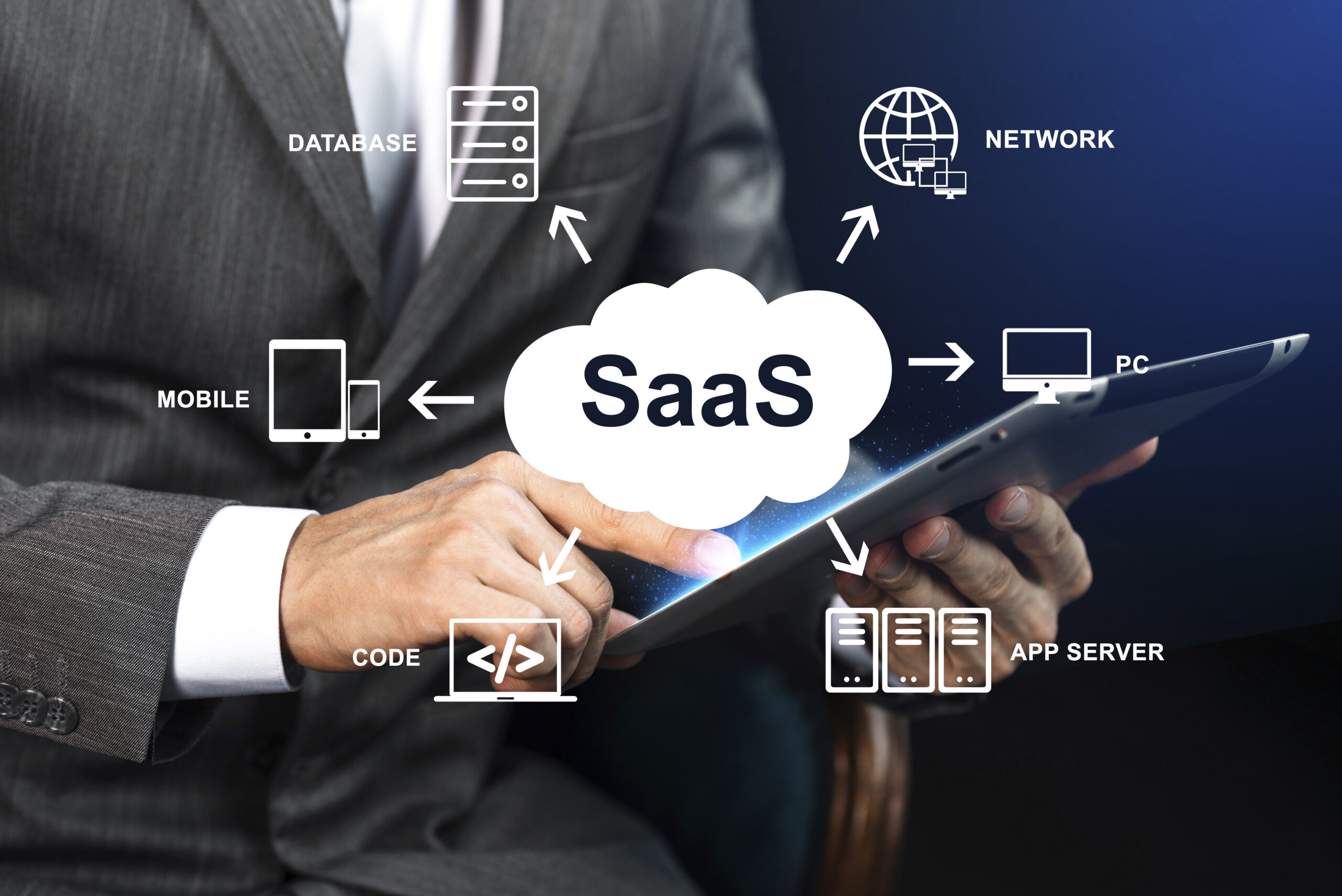
Vertical SaaS delivers services tailored to the requirements of a specific industry or field. A Vertical SaaS offering for healthcare, for example, combines the features and capabilities of the public cloud with the compliance the healthcare industry requires, along with the right computing resources, data models, and tools. In short, it is a pre-integrated cloud solution built for the demands of a specific vertical market.
Vertical SaaS is a combination of existing cloud services and industry-specific capabilities. Organizations looking to shorten time to value, leverage composability to build differentiated digital products and services, and benefit from cross-industry innovation are turning to these solutions. Gartner predicts that by 2027, more than 50% of enterprises will use Vertical SaaS to accelerate their business initiatives.