Energy Saving Laws and Regulations: The Standards You Need to Meet
Energy saving has become a major social issue worldwide, and legal regulations aimed at making energy use more efficient and cutting unnecessary consumption are steadily tightening. These laws and regulations apply to companies and individuals alike, and public institutions in particular are held to strict compliance. This article introduces the key laws and regulations related to energy saving and explains the essentials that companies and public institutions need to know to comply with them.
1. Why Energy Saving Laws Matter
Saving energy makes a major contribution to mitigating climate change by reducing greenhouse gas emissions, and to cutting resource waste. Governments around the world have therefore established laws and regulations to reduce energy use and improve efficiency, and violations can result in fines or other penalties. For companies and public institutions, compliance goes beyond mere obligation — it is a prerequisite for sustainable growth.
2. Key Provisions of Energy Saving Regulations
Energy saving regulations generally fall into three main categories.
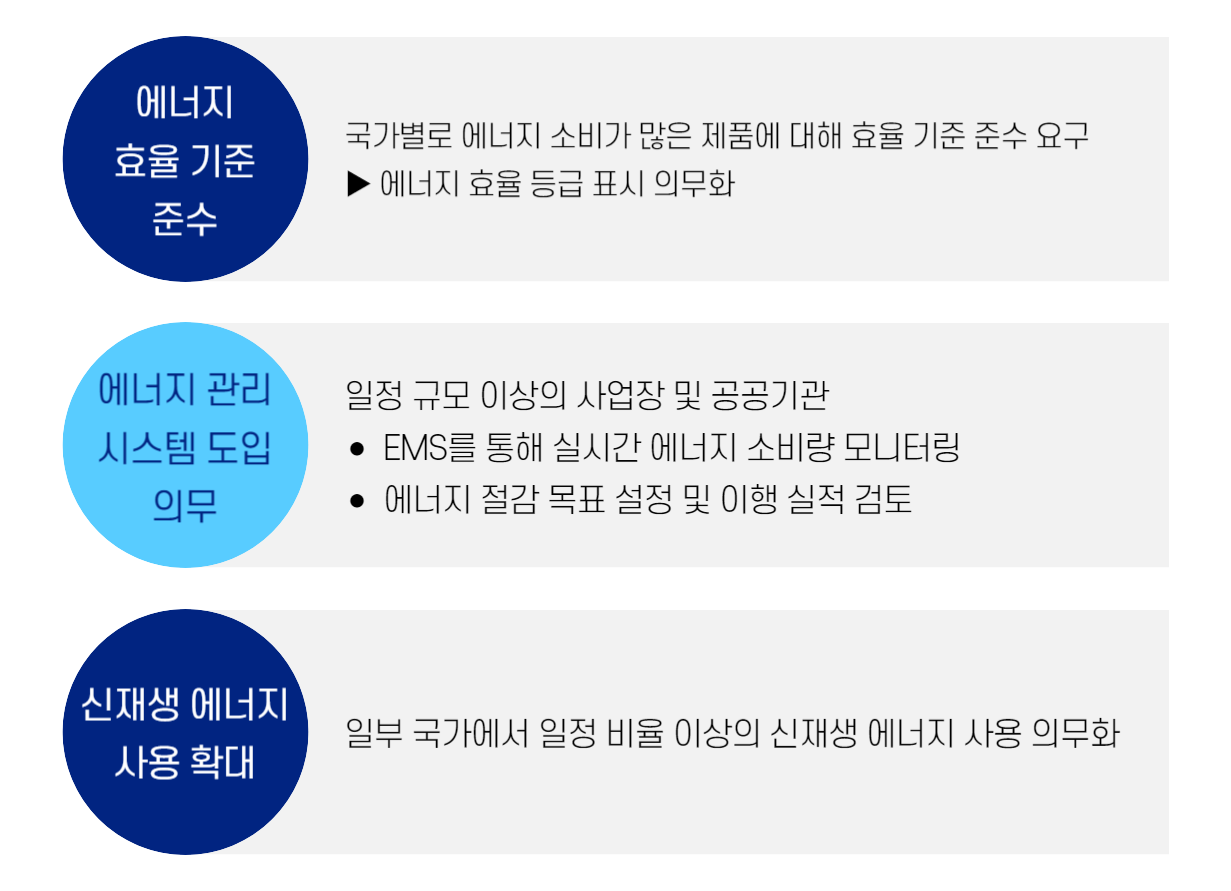 1) Compliance with Energy Efficiency Standards
– Each country requires manufacturers of energy-intensive electronics and appliances to meet a set level of energy efficiency. Mandatory energy efficiency labeling on each product is also imposed to this end.
– In South Korea, for example, the “Energy Use Rationalization Act” assigns energy efficiency ratings to high-consumption devices, and products that fail to meet the standards can be restricted from sale.
2) Mandatory Energy Management Systems
– Workplaces above a certain size and public institutions must adopt an energy management system (EMS) to monitor energy consumption in real time and manage it efficiently. This plays an important role in setting corporate energy saving targets and reviewing progress against them.
– Through an EMS, each organization can voluntarily set energy saving targets and conduct regular energy consumption reporting and audits.
3) Expanding Renewable Energy Use
– Some countries legally require a minimum share of renewable energy, and compliance with these rules is emphasized especially for public institutions.
– The European Union (EU), for example, has set a target of meeting 32% of energy consumption with renewables by 2030, with fines or other sanctions for falling short.
3. Energy Saving Obligations for Public Institutions
When it comes to saving energy, public institutions are expected to lead by example. South Korea and many other countries set stricter energy saving targets for public institutions and mandate internal management and reporting systems to match.
For example, public institutions are required to use LED lighting above a certain ratio and to adopt devices and facilities with eco-friendly certification. This also has a positive ripple effect on the private sector, contributing to energy saving targets. For details, see Energy Saving in Public Institutions.
4. Tips for Regulatory Compliance

– Check energy efficiency ratings and certifications: For energy-intensive devices and equipment, verify the legally required energy efficiency ratings and certifications and purchase products that meet them.
– Conduct regular energy consumption audits: Companies and public institutions should use their energy management systems to carry out regular audits and inspections of energy consumption to confirm they are meeting legal standards.
– Train employees and raise awareness: Training that helps every employee understand the importance of saving energy and how to practice it reduces consumption and smooths regulatory compliance.
Closing Thoughts
Energy saving laws and regulations play a vital role in reducing greenhouse gas emissions and conserving resources, and companies and public institutions in particular must comply with these legal requirements rigorously. Non-compliance can bring fines and penalties — but organizations that comply well and adopt efficient energy saving measures can look forward to sustainable management and meaningful cost savings.
✅ Recommended Reading
Energy Efficiency UP, Power Quality KEEP: The EnergyQ Service