Beyond Data-Driven Operations, Toward AI-Driven Decision-Making
This strategy series builds on 「Top 5 Smart Factory Trends for the Second Half of 2025」.
In this installment, we cover the next stage of factory operations: ‘generative AI-based operating strategy.’
Generative AI Has Arrived in Manufacturing in Earnest
Led by ChatGPT, LLM (large language model) technology is spreading rapidly beyond text-based industries into data operations and decision-making on the manufacturing floor. In the second half of 2025, we will see AI that goes beyond simple anomaly detection and alarms to summarize production status, draft work orders, and explain equipment conditions in earnest.
From data-driven operations → to natural-language AI interface operations — the factory floor is entering a new stage of evolution.
5 Roles Generative AI Can Play in Manufacturing

1. Automated Equipment Status Summaries
– Previously, people had to interpret sensor and instrument data,
– Now AI can automatically analyze and summarize: “This unit’s vibration currently exceeds the threshold, and bearing wear is suspected”
2. Auto-Generated Explanations of Anomalies
– Explains the “why” when an alarm goes off
– Example: “The vibration reading on the Line B motor is up 30% from last week and its temperature has risen, so a failure is possible”
3. Auto-Generated Work Orders and Reports
– Automatically writes up inspection results and process status summaries in natural language
– Example: “July 3, 9:00 AM: minor vibration detected on the Line A conveyor due to belt wear. Inspection required.”
4. Summarizing Unstructured Data
– Summarizes and classifies text-based anomaly reports, maintenance histories, and quality inspection notes
– Grasp the overall issue context even without a dedicated staffer
5. An Operations Q&A Agent
– Generates data-backed answers to natural-language questions
– “Which equipment is drawing the most power right now?”
– “Which equipment failed most often last month?”
A Real-World Example – Thingplus + Generative AI
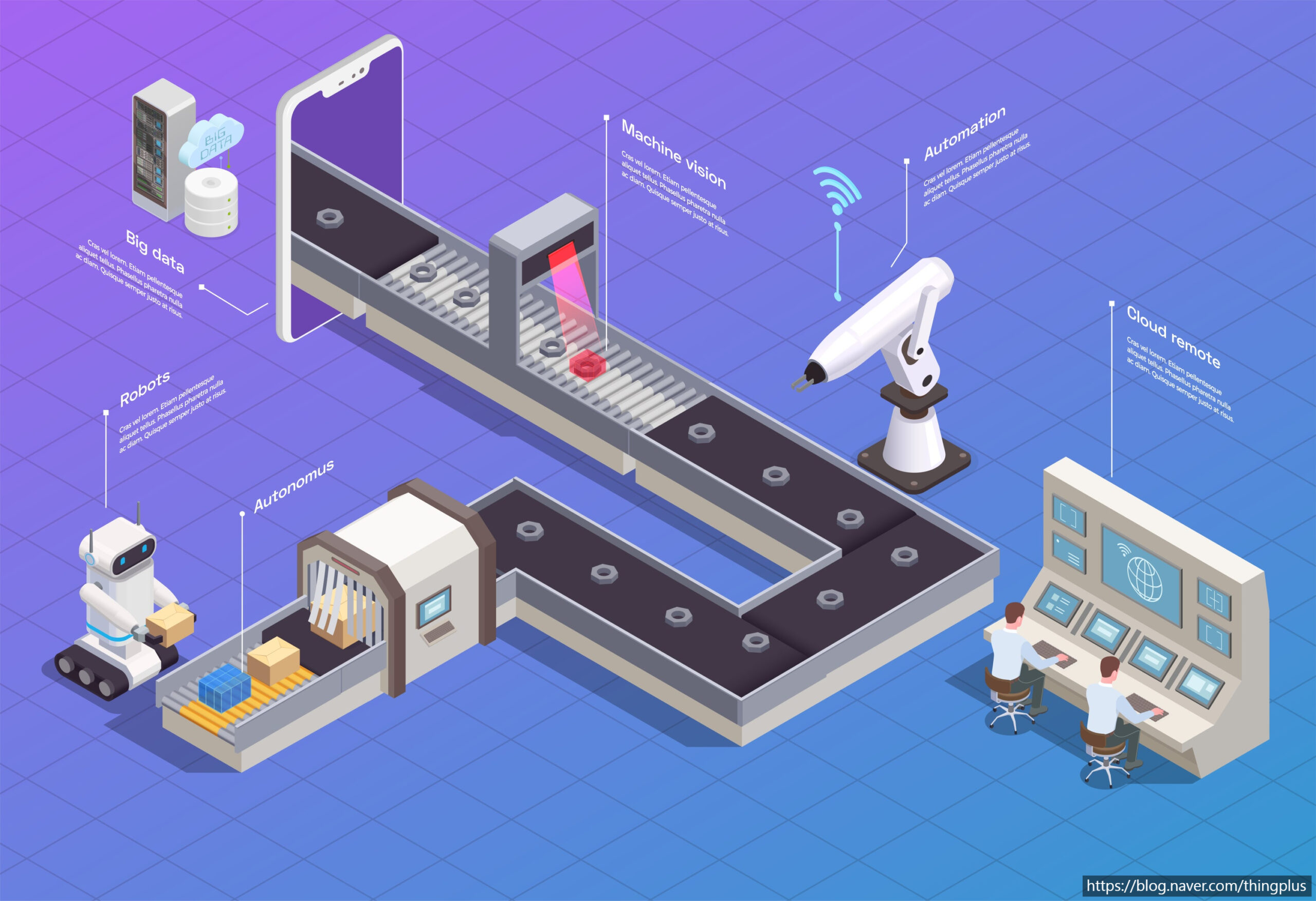
Thingplus is an AIoT platform that collects and visualizes data from a wide range of sensors and equipment. Adding generative AI capabilities on top enables innovations like the following.
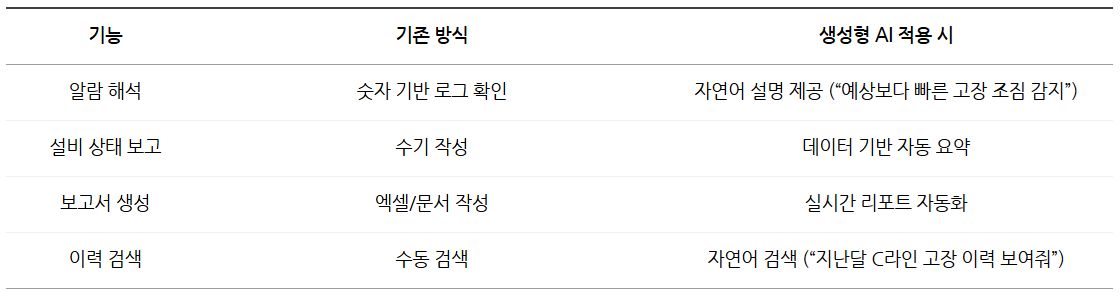
What Are the Prerequisites for Adopting Generative AI?
① Clean Equipment Data
– Data from sensors, PLCs, MES, and other sources must be well connected
② Historical Data with Context
– Descriptive text is needed for maintenance records, defect causes, quality issues, and more
③ Learning the Site Context
– The LLM must learn process characteristics and each organization’s terminology to produce high-quality answers
That is why pairing generative AI with a platform with a solid data foundation, like Thingplus, is the most effective approach.
Ready to Start Generative AI-Based Factory Operations?
✅ Is equipment and process data being collected in real time?
✅ Have on-site event and history data been accumulated?
✅ Do templates exist for alarms, reports, and anomaly logs?
✅ Can AI responses be customized to your company’s situation?
✅ Can the LLM be deployed in line with internal security and data policies?
“Data Does Not Speak — You Have to Make AI Speak for It”

Generative AI is not a passing technology trend.
It is a new way of operating that translates complex data into interpretable language and automates the day-to-day work of running a factory.
In the second half of 2025, the heart of smart factory strategy comes down to how you make your data speak.
✅ Recommended Reading