This is Part 6 of the series ‘Cooling Cost Savings Strategies You Can Start Today.’
Part 1: 🌡️ Does the Bill Balloon the More You Run the AC? How to Save with HVAC AI
Part 2: 💨 Smart Cooling Even for Franchise Stores: The Savings Potential of IR Control
Part 3: 🧍♂️ Factory Cooling That Switches Itself On and Off: The Evolution of Occupancy Detection
Part 4: 🎛️ Remote or Wired? A Comparison of AC Control Methods
Part 5: 💰 Cut Cooling Costs with Government Support! Energy Efficiency Strategies for Small Businesses and Factories
Expanding from Cooling Management to Equipment Safety
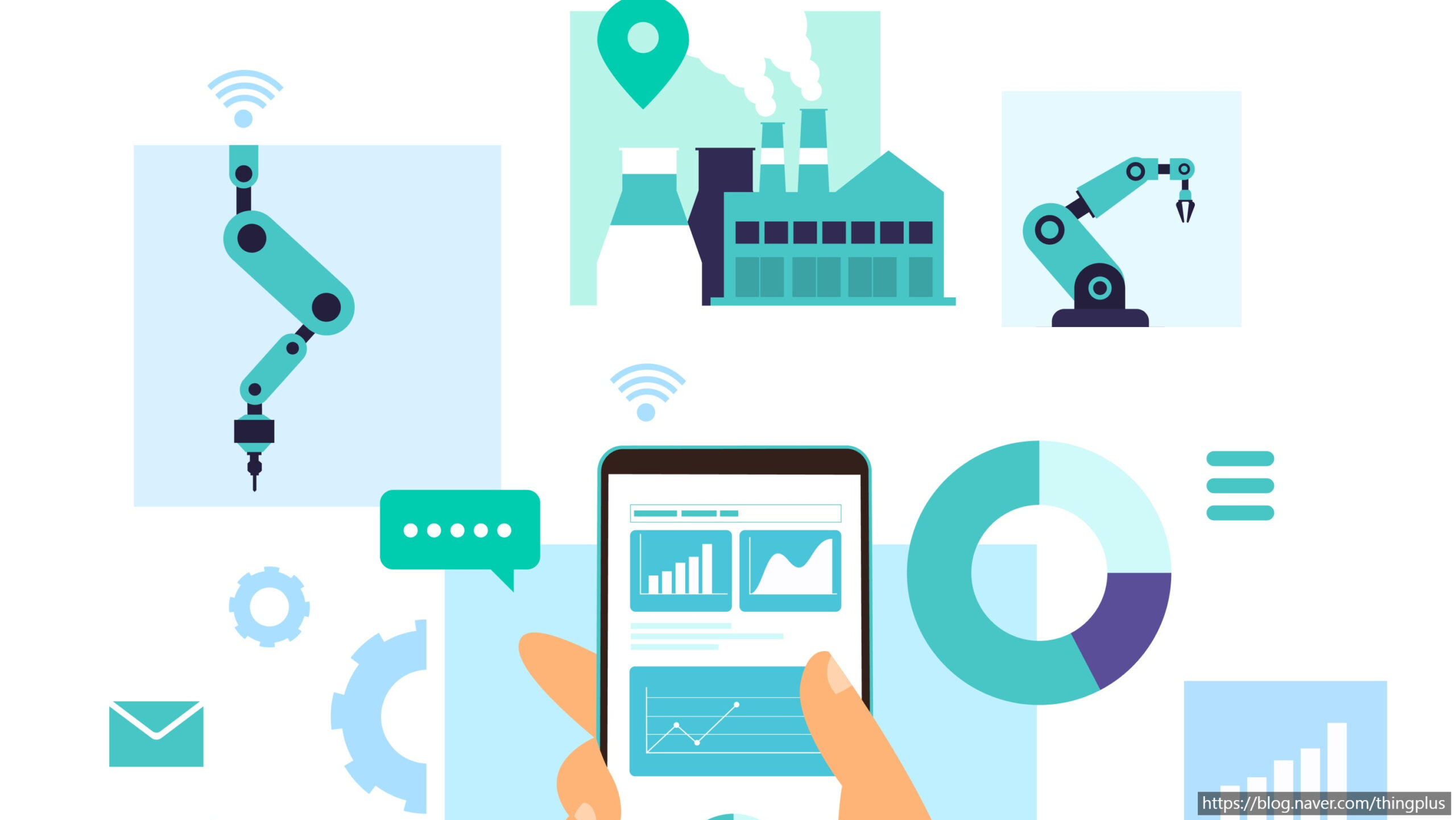
Older cooling management systems focused solely on holding temperature and saving power. But the latest AI-based HVAC management services go a step further, offering power anomaly detection and HVAC fault prediction (Predictive Maintenance) as well.
This goes beyond simple energy savings — it is a technical evolution that minimizes operational risk and raises equipment reliability.
What Power Anomaly Detection and Fault Prediction Are For
– Early warning: spot potential problems in advance to prevent sudden breakdowns and downtime
– Inefficiency detection: identify abnormal power draw caused by aging equipment, dirty filters, and more
– Smarter maintenance: prioritize inspections and replacements → save cost and time
Key Anomalies It Can Detect
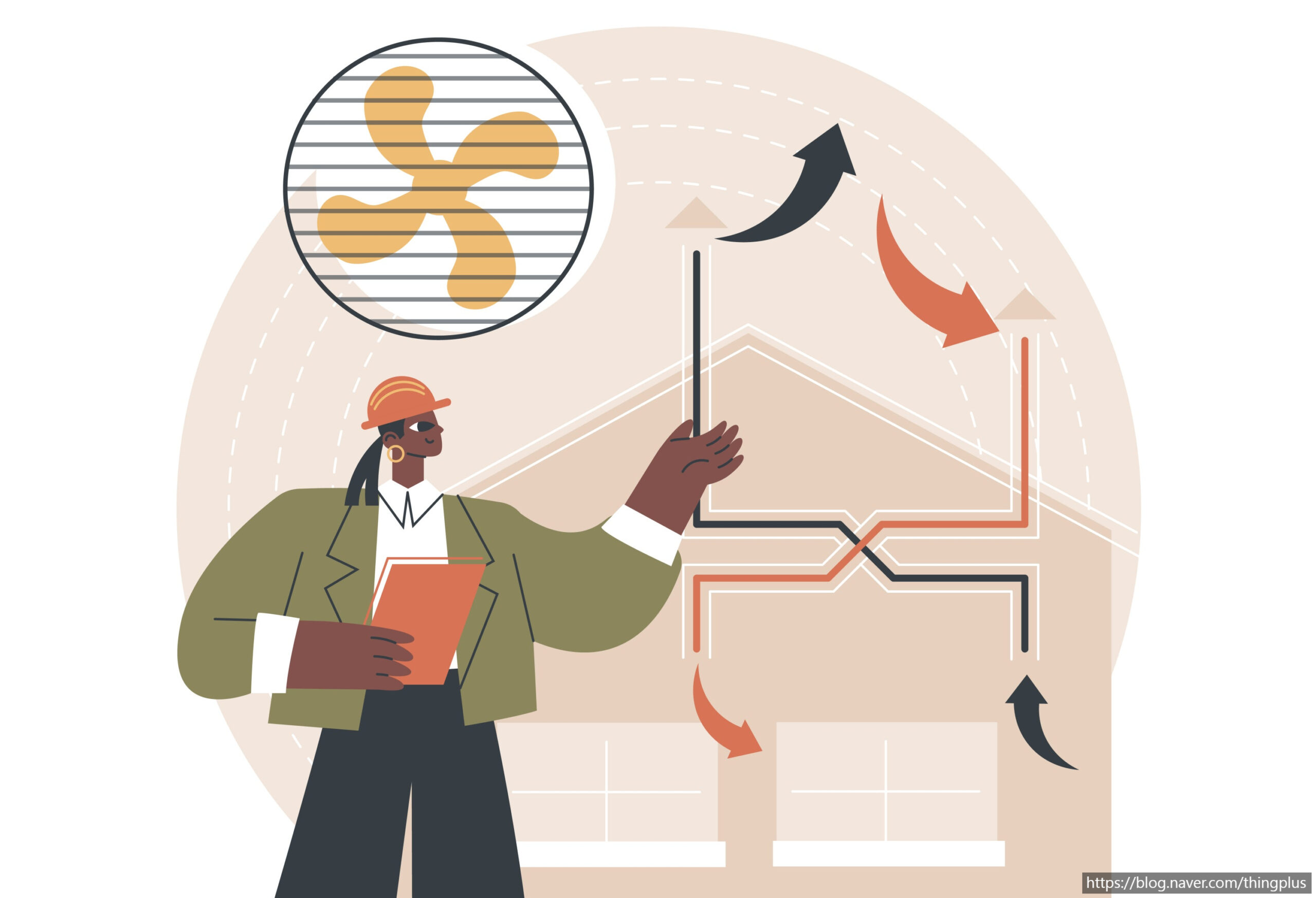
1) Power consumption pattern analysis
– How: learns power usage data over time to build normal consumption patterns by temperature, occupancy, and settings
– Detects: flags an anomaly when consumption spikes under identical conditions
– Infers: suggests possible causes such as dirty filters, aging parts, or refrigerant leaks
– Technical challenge: requires learning many variables and securing enough data
2) Electrical parameter analysis
– How: collects power measurement data in real time — Power Factor, THD (Total Harmonic Distortion), Unbalance Ratio, and more
– Detects: values out of normal range or abrupt trend shifts
– Infers: efficiency loss or possible mechanical failure in AC motors and compressors
– Technical challenge: requires precision metering equipment and fault-prediction AI model development
3) Filter contamination detection
– How: analyzes runtime + power consumption + supply/return air temperature differential
– Detects: when ever more power is needed for the same output, or the temperature differential shifts abnormally
– Infers: performance loss from a dirty filter → sends cleaning/replacement alerts
– Technical challenge: accuracy improves when internal sensor data is integrated
Alerts and Visualization

– Instant alerts: urgent issues reach managers via push notification, email, or messenger
– Dashboard visualization: on the web service, problem zones show in red on the map/list → location and status at a glance
– Plain-language alarms: in the app, messages like “📍[Zone name] It’s time to clean this unit’s filter.” pair cause + action intuitively
– Detailed reports: data graphs and reports from the moment of the anomaly → managers can plan inspections themselves
Beyond Energy Savings to Equipment Reliability
AI HVAC management now goes beyond simple cooling control, delivering three kinds of value at once through power anomaly detection and equipment fault prediction.
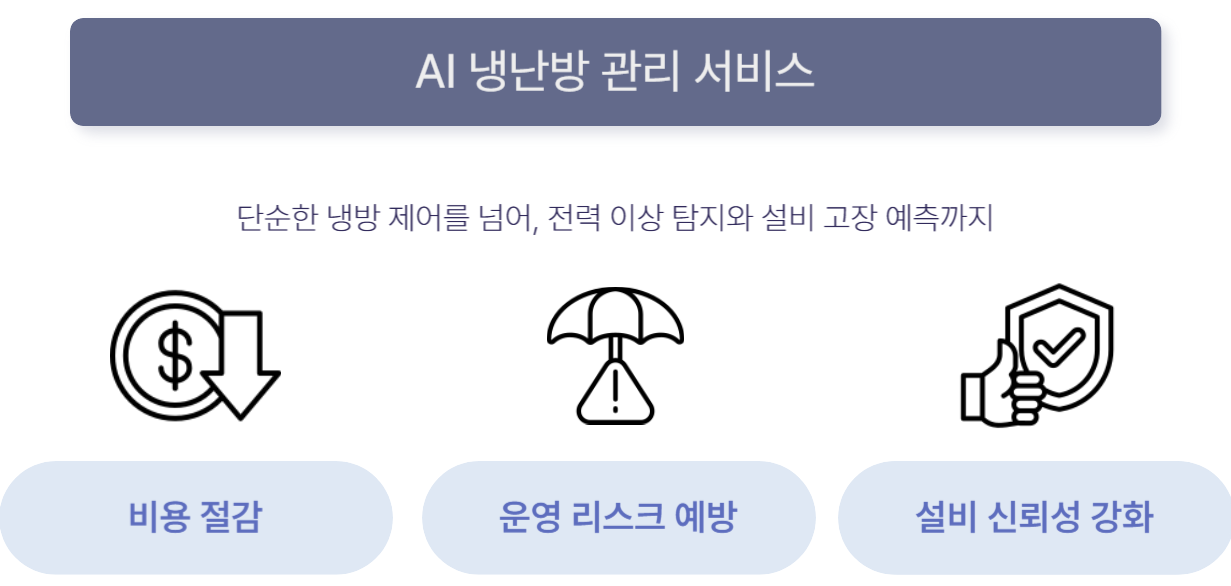
– Cost savings
– Operational risk prevention
– Stronger equipment reliability