“The servers are hot, so why is the server room this cold?”
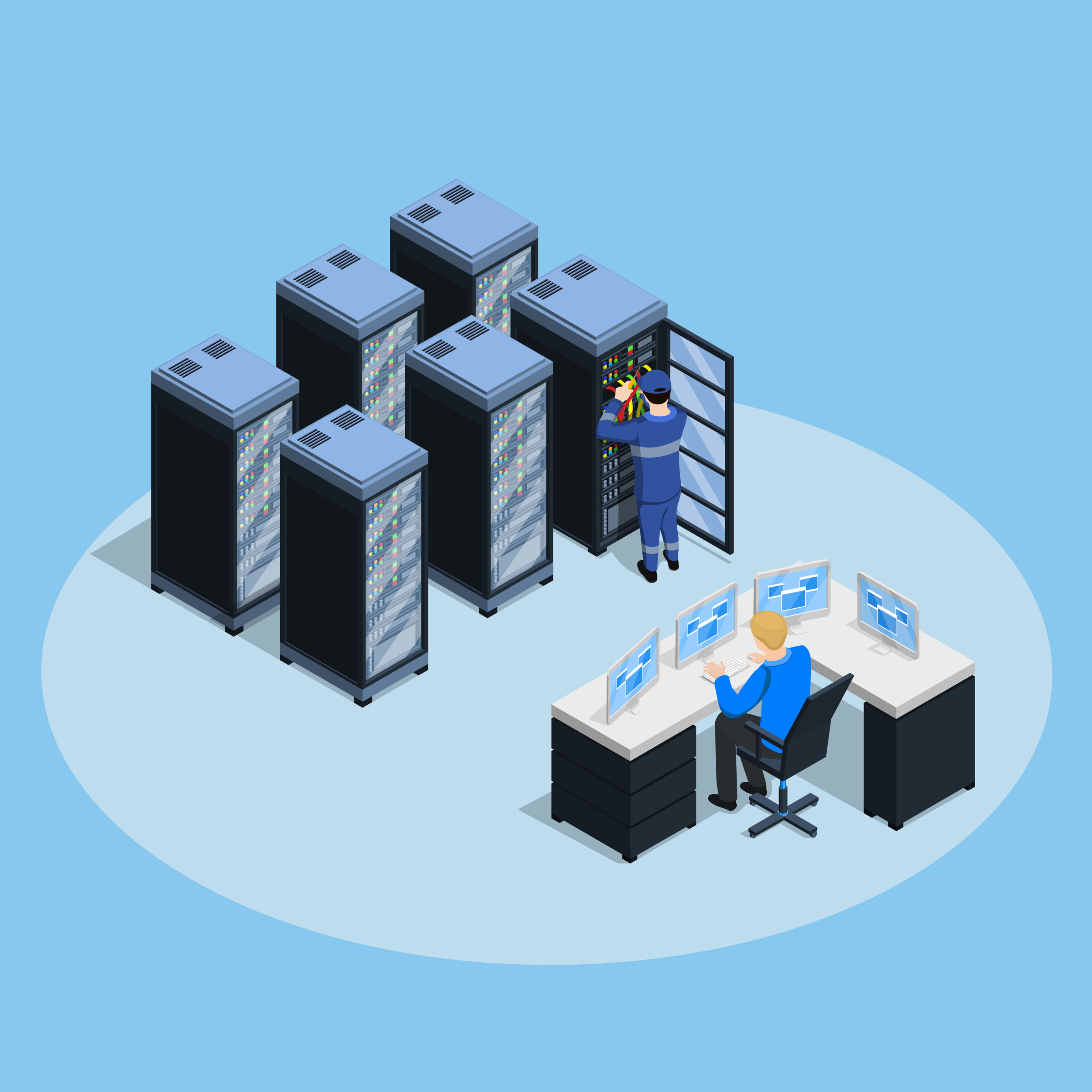
If you manage a data center or an in-house server room, you have probably run into situations like these.
“The temperature is low enough, but the AC units keep running at full output.”
“Overcooling keeps happening even during hours when server traffic is low.”
Because a server room operates around the clock,
HVAC accounts for a very high share of its power consumption in summer and winter alike (35~50% of total power).
The problem is that more cooling than necessary (overcooling) occurs constantly,
leading to enormous energy waste.
Why does overcooling happen so often in server rooms?
Unlike ordinary office spaces, server rooms are prone to overcooling because of the following characteristics.
① Cooling patterns centered on a ‘fixed setpoint temperature’
Server rooms typically run on
-
“Keep it at 23℃ at all times”
-
“Always run reheat and cooling in parallel”
fixed control schemes like these.
As a result, HVAC output stays the same even when server load is low.
② Server load fluctuations are not reflected
Server room temperature moves with changes in server load (traffic, Batch jobs, overnight jobs, and so on),
but traditional control methods are unaware of this.
③ Temperature sensing location issues
If temperature is measured only at the cold air supply (Cold Aisle),
readings can come in lower than the actual temperature around the server equipment, causing overcooling.
④ AC units operated individually
A server room has multiple AC units installed,
but the units often operate independently, unaware of each other’s status.
As a result, overcooled and overloaded units end up mixed together, increasing energy losses.
So what changes when AI steps in?
AI-based HVAC control enables adjustments far more precise than simple ON/OFF.
The key is to understand the specific characteristics of the server room and run heating and cooling ‘only as much as needed’.
✔ With AI HVAC control applied, operations work like this.
① Real-time collection of temperature, humidity, and AC unit status data
-
Cold/Hot Aisle temperatures
-
Server load (as indirect indicators)
-
AC unit output
-
Humidity changes
and more are monitored together.
② Keeping the target temperature range tight
Example: maintain between 22~24℃ → no sharp cooling at 22.5℃.
③ Automatically correcting HVAC output as server load changes
-
Load decreases: output eased gently to prevent overcooling
-
Load increases: preemptive cooling suppresses temperature spikes
④ ‘Balanced control’ across multiple AC units
To prevent any single unit from being overloaded,
AC unit rotation and load-distribution control are applied.
People Also Ask
Q. Why does overcooling occur so often in server rooms?
A. Because fixed setpoints, insufficient load awareness, and sensing location issues cause the system to run more cooling than is actually needed.
Q. Can AI optimize server room HVAC?
A. Yes, it can.
By analyzing temperature, operating data, and load changes together,
it can reduce overcooling with a “cool only as much as needed” approach.
Q. Does the cooling equipment need to be replaced?
A. Generally, no.
It can be applied by simply adding control modules and sensors to existing equipment.
Expected Benefits ― “Power Savings + Equipment Protection, Two Birds with One Stone”
Here is what you can expect from adopting AI-based HVAC control.

1. Eliminating overcooling periods → 10~20% power savings
Because server rooms always try to maintain a constant temperature,
the savings are consistent and highly predictable.
2. Suppressing peak power
By reducing unnecessary momentary operation,
peak power charges can be cut significantly.
3. Longer cooling equipment life
With less excessive low-temperature operation,
AC unit overload is prevented.
4. Greater equipment safety
By preventing Hot spots (points of rapid temperature rise) and
minimizing Cold spots (overcooled zones),
server stability is improved.
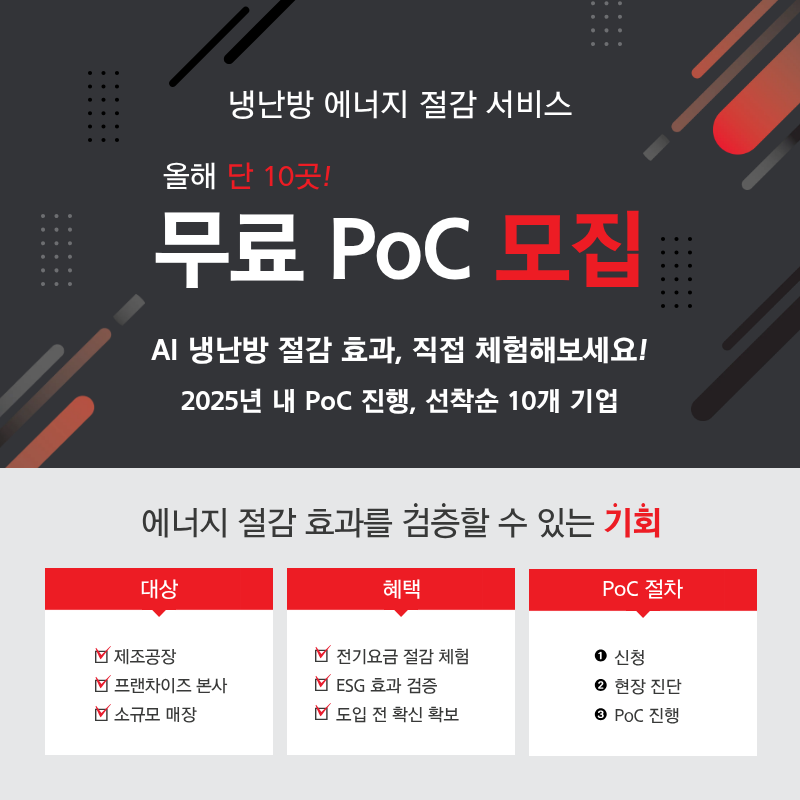
✅ 2025 Special Event
We are selecting 10 companies to receive a free PoC (proof of concept) service.
Run a quick self-assessment to see if it fits your site, then apply and your application will be reviewed with priority.