EMS: The First Step Toward Carbon Neutrality and ESG Management
Climate change is one of the greatest challenges of our time, and energy use is its main driver. Fossil fuels burned to produce energy emit greenhouse gases that damage the climate. The most effective response to climate change is therefore to reduce energy use, and the world is putting forward a range of measures to do so. The Paris Agreement, in effect from this year, can be seen as a worldwide “cut greenhouse gases” movement. Under the agreement, Korea has set a target of reducing carbon emissions by 24.4% from 2017 levels by 2030.
Alongside this trend, advances in Fourth Industrial Revolution technologies — IoT, big data, artificial intelligence (AI), and computing — are strengthening the push for energy efficiency. The government has already established two major pillars, the ‘Digital New Deal’ and the ‘Green New Deal’, and continues to provide support at every level. Amid the global megatrends of ‘decarbonization’ and ‘digitalization’, companies now find energy management capability and greenhouse gas reduction folded into their management risks.
Phrases like ‘sustainability’ and ‘carbon neutrality’, once little more than slogans, have become reality with the rise of ESG and digital transformation. The Energy Management System has, in effect, become indispensable.
The Energy Management System (EMS)
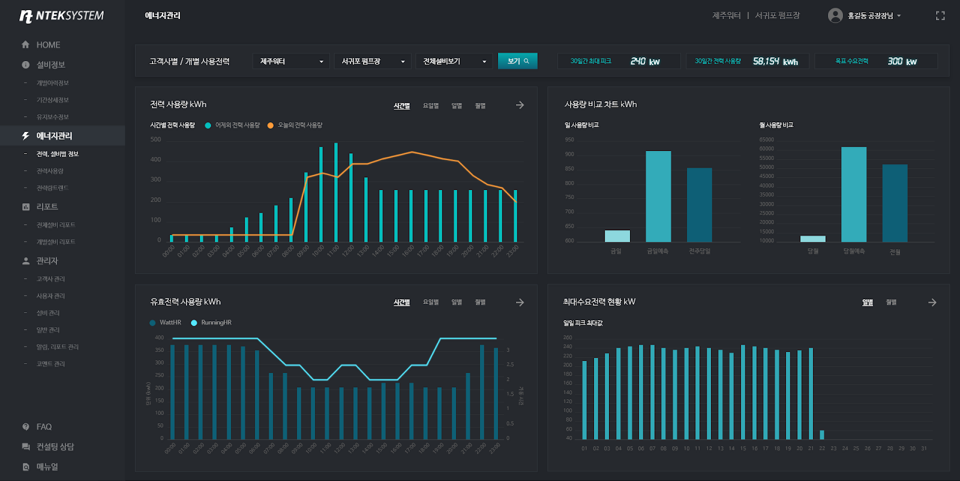
An EMS (Energy Management System) is a system that visualizes energy — electricity, heat, gas, and more — and optimizes the operation of equipment. Using the Internet of Things (IoT) and information and communication technology (ICT), it provides an optimal picture of how energy is being used and manages it, which is why it is regarded as an essential solution for using energy rationally.
Interest in saving energy and improving efficiency is high, especially in energy-intensive industries, as social issues such as greenhouse gas regulation and the subsequent launch of the emissions trading scheme come to the fore. Integrated energy management solutions are appearing one after another in step.
The State of EMS in Korea
In Korea, adoption has been slow — not only because industrial electricity is cheap, but also because small and mid-sized companies worry about upfront costs, low awareness, and uncertainty about the benefits after adoption. In an energy management system market survey by FA Journal SMART FACTORY, about 83.6% of Korean small and mid-sized companies said they would not build a management system.
So why is adoption so low? The reasons can be summed up as follows.
1. Low industrial electricity costs
2. High upfront investment costs
3. Little perceived need, as systems stop at simple monitoring
4. A shortage of in-house experts and dedicated staff, making follow-up difficult once problems are found
Barriers to Cost Savings
Even energy-saving measures that would cut costs and make real economic sense often go unrealized. The culprit is what are known as ‘energy-saving barriers’. As shown below, the obstacles range from awareness problems to organizational ones.
– Financing: the upfront investment for energy saving cannot be raised
– Risk: focused only on what is right in front of them, companies pursue only measures that pay back quickly
– Lack of information: too little information on how to actually achieve energy savings
– Misaligned motivations: owners and hands-on staff disagree, so nothing moves forward
– Bounded rationality: with no time or headspace, the optimal choice is out of reach
– Hidden costs: easily overlooked costs (transaction costs, opportunity costs, etc.) go unrecognized
– Resistance to change: pushback against changing established ways of working
– Interest and awareness: a lack of interest in energy reduction keeps savings from progressing
– Organizational structure: the need is recognized, but structural limits stall progress
Experts say that if low-cost platforms become more widely available and the government prepares business incentives for adopters, it would help overcome the low adoption rate. Receiving energy management support is another alternative — consulting that covers advice on equipment upgrades, visualization of power usage, control of connected devices, and comparisons against past performance.
Why Adopting an EMS Is Essential
The energy industry, electricity included, is changing within the broad framework of decarbonization, decentralization, and digitalization. Decarbonization is shifting the renewable energy mix in ways that will drive energy costs up, and energy-intensive industries in particular are caught in this wave of change in how energy is used. Manufacturing, which consumed 37% of the world’s total energy as of 2017, faces a host of energy management challenges — because energy use is tied directly to corporate profit. Only by preventing waste of this critical resource and using it efficiently can it translate into earnings. And when energy costs are trending upward, efficient management matters all the more.
Government Promotion of EMS
The government has strategically pursued smart factories to sharpen manufacturing competitiveness, wider deployment of FEMS, and expanded ESS tariff discounts for factories and commercial facilities. The more AI and big data are applied and the more advanced smart factories become, the greater the efficiency — and with it, the energy savings. That said, although Korea now has more than 20,000 smart factories, the rate of advanced adoption still hovers around 25%, so concrete industry-level effects such as energy savings have yet to materialize.
Two Ways an EMS Saves Energy
An EMS is a technology for improving energy use. It comes in different types by application area, including the home energy management system (HEMS), building energy management system (BEMS), and facility energy management system (FEMS).
The first way is by supporting structural improvements for energy efficiency. An EMS analyzes the current state of facilities and helps improve the facility or its equipment along better lines.
The second way is achieving energy efficiency through smarter operation. An EMS helps run devices and equipment in ways that use energy effectively. Take building management: an EMS provides the building manager with usage data for heating, cooling, lighting, and more, and the manager can reduce power consumption based on those usage trends. Notably, Oxford University professor Sarah Darby argued that simply providing energy usage information can cut consumption by 5% to 10% — an effect she named “user feedback”.
Beyond that, an EMS can also control facilities and equipment on its own. To take building management once more: an EMS can automatically control heating, cooling, and lighting — with minimal impact on user comfort, of course.
Where Is This Headed?
Sustainable Smart Factories Depend on Energy Management
For smart factories to be sustainable, it is time to manage energy consumption patterns on an ongoing basis. The smart factory must now move beyond mere ‘factory and process automation’ to embrace sustainability by continuously managing how energy is consumed. An energy management system that monitors a factory’s energy consumption and manages it strategically through KPIs should be applied as a key module of the smart factory.
One way to put FEMS to work is to introduce an optimization system across manufacturing processes. By analyzing the collected big data, it diagnoses and improves energy use between processes, achieving process optimization.
Smart Buildings: Systematizing Operational SOPs Through Structured Consulting
BEMS, the EMS solution applied to buildings, is a system that manages energy in commercial buildings — HVAC, lighting, motive power, and more. In large buildings, it links with the building facility management system to remotely control energy equipment and loads. BEMS came into the spotlight when sharply rising electricity rates raised the prospect of ballooning power costs.
Large buildings, factory buildings among them, consume 40% of the world’s energy. Without improving this, calls for ‘carbon neutrality’ and ‘advanced smart factories’ ring hollow. A building’s heating, ventilation, and air conditioning account for 55% of its energy consumption, so optimizing them matters most of all. What is needed is an active energy solution combined with digital transformation to build a smart operations management framework and optimize energy consumption.

The Quick and Easy Way to Build an EMS: Thingplus
To confront the climate crisis, government regulations aimed at improving energy efficiency and cutting greenhouse gas emissions are tightening around the world, and with rising energy costs and power supply shortages, many companies are paying closer attention to saving energy and improving efficiency. Indeed, as industries across Korea declare their commitment to ‘carbon neutrality’ one after another, the electronics, electrical, and battery industries — key engines of the national economy — have joined the movement as well.
Improving energy process efficiency has now become a short-term priority for many companies. As policies and the demands of the era shift, EMS is no longer a choice but a necessity. Adopt an energy management system (EMS) quickly and easily with Thingplus!